
Chainsaw Starts Then Dies When Cold? Causes and Fixes
Quick Answer
A chainsaw may start then die when cold because of incorrect choke operation, stale fuel, restricted fuel flow, or carburetor problems. A dirty air filter or weak ignition can also contribute to cold-start stalling. Check the starting procedure, fuel condition, and filters before attempting carburetor repairs.
- Follow the correct cold-start choke procedure.
- Replace stale fuel with fresh, correctly mixed fuel.
- Inspect the air filter and fuel filter.
- Check the spark plug for fouling or damage.
- Seek professional service if the engine cannot maintain a stable idle.
Why does my chainsaw start then die when cold? If your gas-powered chainsaw fires briefly but refuses to stay running, the problem often involves fuel delivery or cold-start controls. Understanding when the engine stalls can help you identify the cause without replacing unnecessary parts.
Why Does a Chainsaw Start Then Die When Cold?
A cold chainsaw may stall because the engine cannot maintain the fuel and air mixture needed for continuous combustion. Cold-start conditions can expose existing problems that are less noticeable after the engine warms up.
Gasoline does not evaporate as readily at lower temperatures. The choke helps compensate by supplying a richer mixture during startup.
However, the engine needs a balanced mixture once it begins running. Too much fuel can flood the engine, while too little fuel can cause it to stall.
The main systems involved in cold-start problems include:
- Choke: Helps enrich the starting mixture.
- Carburetor: Controls the mixture of fuel and air.
- Fuel filter: Prevents contaminants from entering the fuel system.
- Air filter: Supplies clean air to the engine.
- Spark plug: Ignites the compressed fuel mixture.
- Fuel lines: Carry fuel from the tank to the carburetor.
A fault in any of these systems can allow the engine to fire briefly without continuing to run.
Common Causes of Cold-Start Chainsaw Stalling
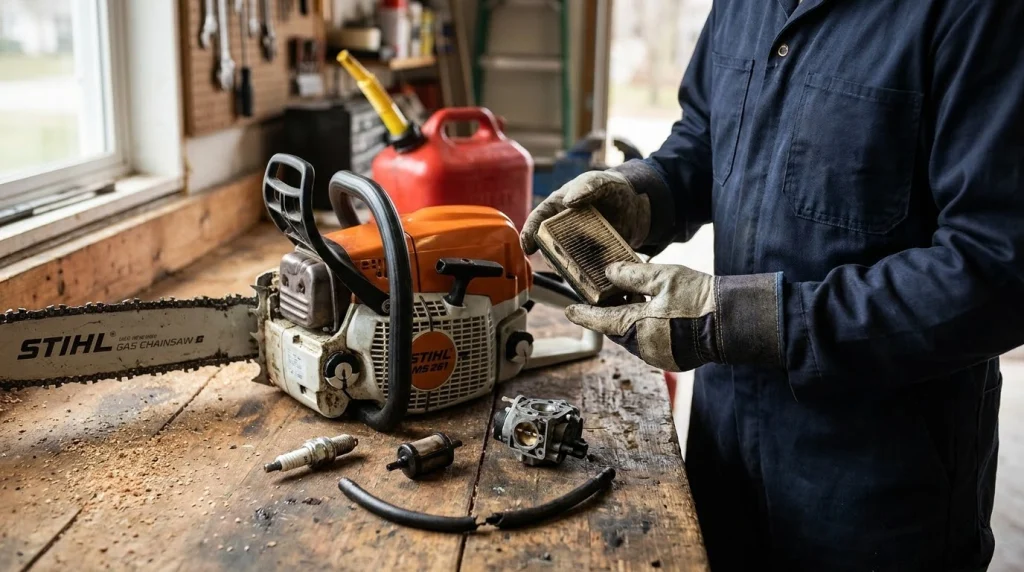
Incorrect starting procedures, deteriorated fuel, restricted airflow, and fuel delivery problems can prevent a cold chainsaw from staying running.
1. Incorrect Choke Operation
Incorrect choke operation can cause a chainsaw to stall immediately after its first ignition. Keeping the choke closed for too long may supply more fuel than the engine can burn.
Many conventional chainsaws require a change in choke position after the engine first fires. The correct sequence depends on the starting controls fitted to your chainsaw.
Common starting mistakes include:
- Leaving the choke fully closed after ignition.
- Opening the choke too early.
- Continuing to pull the starter after flooding the engine.
- Using the warm-start procedure on a cold engine.
- Ignoring model-specific starting instructions.
Follow the starting sequence in your owner’s manual before diagnosing a mechanical fault.
2. Old or Contaminated Fuel
Stale gasoline can prevent a cold chainsaw from maintaining steady combustion. Fuel deterioration and contamination may also contribute to deposits inside the carburetor.
A chainsaw that has remained unused for a long period may develop starting problems even if fuel remains in its tank.
Check whether the fuel was stored correctly and mixed according to the manufacturer’s requirements. Replace questionable fuel rather than adding fresh gasoline to an old mixture.
Husqvarna identifies fuel deterioration as a possible cause of chainsaw stalling after startup.
3. Clogged Fuel Filter
A restricted fuel filter can allow enough gasoline to reach the carburetor for initial ignition but prevent a continuous fuel supply.
Fuel starvation may become noticeable when you change the choke position or attempt to increase engine speed.
Possible signs include:
- The engine fires but stops shortly afterward.
- The chainsaw struggles to maintain its idle.
- The engine hesitates during acceleration.
- Starting becomes difficult after storage.
Inspect the fuel filter according to the owner’s manual. Replace a contaminated filter with a compatible replacement if the manufacturer recommends replacement.
4. Dirty Air Filter
A dirty air filter reduces airflow and can interfere with the fuel mixture needed for reliable cold starting.
Sawdust, oil, and other debris can accumulate around the filter during normal use. Restricted airflow may make an already rich starting mixture unsuitable for continued operation.
Remove the filter with the engine switched off and inspect its condition. Use the cleaning method specified for that filter material.
Replace damaged filters and allow washable filters to dry completely before reinstalling them.
5. Dirty or Restricted Carburetor
A contaminated carburetor may fail to deliver the correct fuel mixture when the engine moves from its starting setting to normal operation.
Small fuel passages inside the carburetor can become restricted by deposits. Internal components may also deteriorate during extended storage.
Carburetor problems become more likely when fresh fuel, correct choke operation, and clean filters do not resolve the stalling.
Professional carburetor inspection can help distinguish a blockage from worn internal components or an incorrect adjustment.
6. Fouled or Damaged Spark Plug
A fouled spark plug may produce unreliable ignition, allowing the chainsaw to fire briefly without maintaining steady combustion.
Excess fuel and combustion deposits can affect the plug’s ability to ignite the mixture consistently.
Inspect the spark plug for:
- Heavy carbon deposits.
- Excessive fuel wetness.
- Damaged electrodes.
- Cracks in the ceramic insulator.
- Incorrect electrode spacing.
Use a replacement spark plug that matches the manufacturer’s specifications. Do not assume that every wet spark plug has failed.
7. Damaged Fuel Lines
Cracked or deteriorated fuel lines can interrupt the supply of gasoline to the carburetor and contribute to repeated cold-start stalling.
Look for visible cracks, loose connections, and signs of fuel leakage. Damaged hoses require compatible replacement parts.
Warning
Leaking gasoline can ignite and cause serious burns. Do not attempt to restart a chainsaw with visible fuel leakage until the fault has been repaired.
Identify the Problem by How Your Chainsaw Stalls
The point at which a cold chainsaw stops running can help narrow down the underlying fault. Treat each symptom as a diagnostic clue rather than proof that a particular component has failed.
The following table compares common cold-start symptoms and the areas you should inspect first.
| Symptom | Possible Cause | First Check |
|---|---|---|
| Fires once and stops | Incorrect starting sequence | Choke position |
| Dies when choke opens | Insufficient fuel supply | Fuel filter and carburetor |
| Starts after repeated pulls | Fuel or ignition problem | Fuel condition and spark plug |
| Dies during idle | Low-speed fuel mixture problem | Carburetor condition |
| Sputters before stopping | Unstable combustion | Filters and fuel supply |
| Stalls only in cold weather | Temperature-sensitive starting issue | Winter operating instructions |
Begin with the easiest inspection that matches your symptom before considering more expensive repairs.
Why Does My Chainsaw Die When I Turn the Choke Off?
A chainsaw that runs with the choke engaged but dies when the choke opens may have insufficient fuel delivery or an excessively lean fuel mixture.
A lean mixture contains too much air relative to the available fuel. Engaging the choke may temporarily compensate for that imbalance.
Possible underlying faults include:
- A partially blocked fuel filter.
- Restricted carburetor fuel passages.
- A damaged fuel line.
- An incorrect carburetor setting.
- Air entering the intake system through a leak.
Keeping the choke engaged is not a permanent repair. A chainsaw should operate normally using the running settings specified by its manufacturer.
Why Does My Chainsaw Run Better After Warming Up?
A chainsaw may run better when warm because gasoline vaporizes more readily and the engine no longer requires the same cold-start enrichment.
A marginal fuel delivery problem may therefore become less noticeable as the engine temperature rises.
However, improved performance after warming up does not confirm that the chainsaw is mechanically sound.
If the engine repeatedly stalls before warming up, inspect the starting procedure, fuel delivery system, and carburetor condition.
Can Cold Weather Cause a Chainsaw to Stall?
Cold weather can make chainsaw starting more difficult by affecting fuel vaporization and operating conditions around the carburetor.
A cold engine and cold outdoor weather are different situations. An engine that has not been running can be cold even during warm weather.
If your chainsaw stalls specifically during winter, check whether it has a manufacturer-approved winter operating setting.
Some chainsaws feature a system that directs warmer air toward the carburetor. Use that feature only under the conditions specified in your owner’s manual.
How to Fix a Chainsaw That Starts Then Dies When Cold
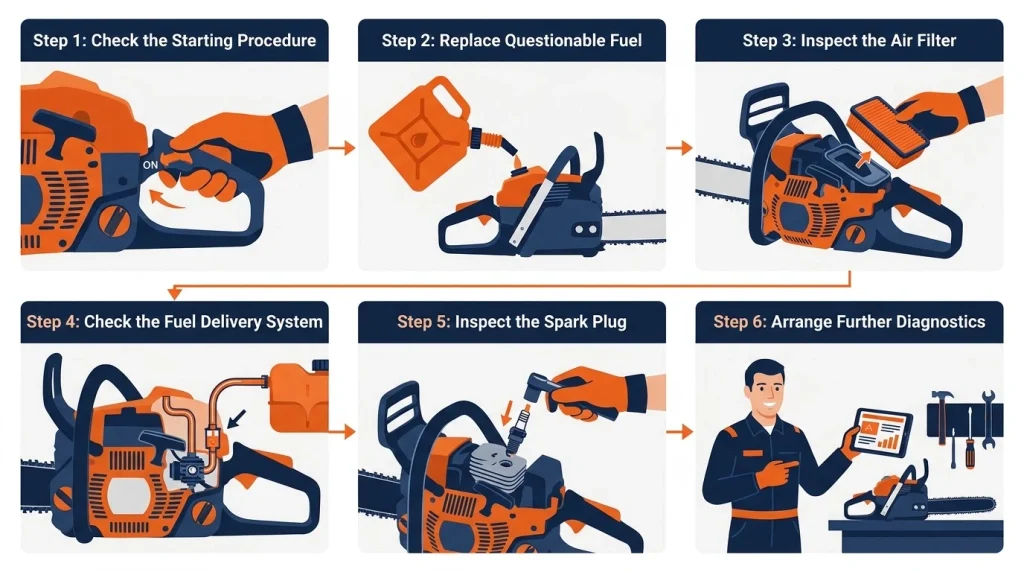
Fix cold-start stalling by checking the starting procedure first, followed by fuel quality, filters, ignition components, and professional fuel-system diagnostics when necessary.
Perform maintenance with the engine stopped and cool. Disconnect the spark plug lead before servicing components when instructed by the manufacturer.
Step 1
Check the Starting Procedure
Confirm the correct choke, primer, and starting control positions using your owner’s manual.
Step 2
Replace Questionable Fuel
Remove stale fuel safely and refill the tank with fresh fuel mixed according to the engine manufacturer’s requirements.
Step 3
Inspect the Air Filter
Check for dirt, damage, and restricted airflow. Clean or replace the filter as specified in the maintenance instructions.
Step 4
Check the Fuel Delivery System
Inspect the fuel filter and accessible fuel lines for contamination, damage, or leakage.
Step 5
Inspect the Spark Plug
Check for fouling or physical damage. Confirm that the spark plug matches the engine specifications.
Step 6
Arrange Further Diagnostics
If the fault continues, have a technician inspect the carburetor, intake seals, ignition system, and engine compression.
Testing the chainsaw after each completed maintenance task can help identify which fault caused the original problem.
How to Start a Cold Chainsaw Correctly
Starting a cold chainsaw correctly requires stable positioning, proper use of its starting controls, and a safe transition to normal idle.
- Place the chainsaw on stable ground in a clear outdoor area.
- Engage the chain brake before starting.
- Set the ignition and cold-start controls as instructed.
- Operate the primer bulb if your model requires it.
- Use the approved starting position and pull the starter cord.
- Change the choke position at the point specified in the manual.
- Return the engine to normal idle using the recommended procedure.
Starting controls differ between models. Some engines use automatic or combined starting systems rather than conventional manual choke controls.
Husqvarna’s chainsaw starting instructions illustrate why the correct procedure depends on the model and engine temperature.
Tip
Record the choke position at which the engine stalls. That detail can help a technician separate a starting-control problem from a fuel delivery fault.
Should You Adjust the Carburetor to Fix Cold Stalling?
Carburetor adjustment should only be considered after ruling out incorrect starting procedures, stale fuel, dirty filters, and damaged fuel lines.
Changing the carburetor settings without identifying the original fault may make diagnosis more difficult.
An excessively lean operating mixture can also increase the risk of engine damage.
Some chainsaws have electronically controlled fuel systems or restricted adjustment screws. These systems require model-specific service procedures.
Do not use generic carburetor screw settings from another chainsaw model. Have a qualified technician perform adjustments when the manufacturer requires specialist equipment.
Common Mistakes That Make Cold Starting Worse
Repeated choking, unnecessary adjustments, and incorrect maintenance can make an existing cold-start problem harder to resolve.
Do
- Use fresh, correctly mixed fuel.
- Follow model-specific starting instructions.
- Check simple maintenance items first.
- Use compatible replacement parts.
Avoid
- Repeated starting attempts on full choke.
- Random carburetor adjustments.
- Running without an air filter.
- Operating with fuel leaks.
Changing several components at once can also make it difficult to identify the original fault. Inspect and resolve each suspected problem systematically.
When Does a Cold Chainsaw Need Professional Repair?
A cold chainsaw needs professional inspection when basic maintenance fails to restore reliable starting or when symptoms indicate an internal mechanical fault.
Arrange professional service if you notice:
- Repeated stalling despite fresh fuel and clean filters.
- Uncontrolled changes in engine speed.
- A chain that moves during normal idle.
- Fuel leaking from the carburetor or hoses.
- Unusual mechanical noises.
- Persistent ignition or compression problems.
- Damaged starting or throttle controls.
A technician can inspect internal carburetor components, test engine compression, and check for intake or crankcase air leaks.
These tests help identify faults that may not be visible during routine maintenance.
How to Prevent Future Cold-Start Stalling
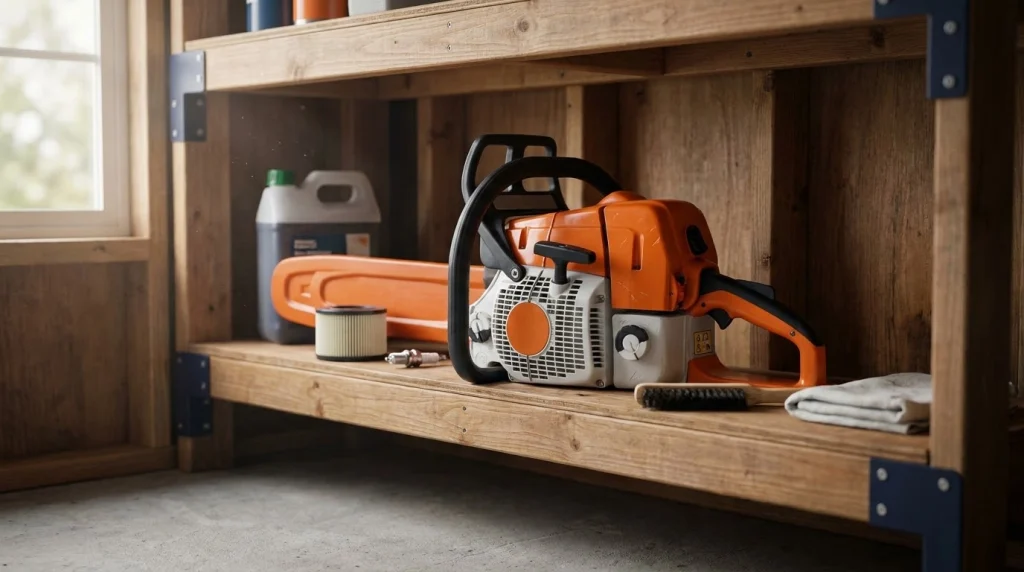
Regular maintenance and proper fuel storage can reduce the likelihood of repeated cold-start problems.
Develop a maintenance routine that includes:
- Using the fuel mixture recommended for your engine.
- Keeping gasoline in an approved, sealed fuel container.
- Cleaning the air filter at recommended intervals.
- Inspecting fuel lines for deterioration.
- Checking the spark plug during scheduled maintenance.
- Following the manufacturer’s seasonal storage procedure.
- Keeping the starting controls clean and functional.
A properly maintained chainsaw should start and settle into a stable idle using its approved starting procedure.
Persistent stalling should be diagnosed before using the chainsaw for cutting.
Chainsaw Fuel Filter
A compatible replacement fuel filter can restore fuel flow when the existing filter is restricted by contamination.
Frequently Asked Questions
Can a primer bulb cause cold-start stalling?
A damaged primer or purge bulb can contribute to cold-start problems when the chainsaw cannot prepare its fuel system correctly. Cracks or leaking connections may interfere with fuel movement. Inspect the bulb and its connections according to the maintenance instructions before replacing other fuel-system components.
Can a blocked fuel tank vent cause stalling?
A blocked fuel tank vent can restrict fuel delivery by preventing air from entering the tank as fuel is consumed. The resulting pressure imbalance may interrupt engine operation. Have the vent inspected according to the manufacturer’s service procedure, and never operate the chainsaw with a loose fuel cap.
Can low compression cause cold-start problems?
Low engine compression can contribute to difficult cold starting because the engine may struggle to maintain effective combustion. Worn piston rings or damaged internal components can cause compression loss. A professional compression test and further inspection can help identify whether internal engine wear is responsible.
Can a clogged spark arrestor cause cold stalling?
A clogged spark arrestor can contribute to engine stalling by restricting exhaust flow through the chainsaw muffler. The spark arrestor is a screen designed to limit escaping sparks. Inspect and maintain it according to the manufacturer’s instructions after the exhaust system has cooled completely.
Can a new chainsaw have cold-start problems?
A new chainsaw can experience cold-start stalling because of incorrect starting procedures, unsuitable fuel, or a manufacturing fault. Review the starting instructions and confirm that the fuel meets the required specifications. Contact the seller or an authorized service provider if the problem continues.
Can I use starting fluid on a cold chainsaw?
Starting fluid should not be used on a chainsaw unless its manufacturer specifically approves that product and starting method. Unapproved starting aids may introduce fire risks or damage the engine. Correct the underlying starting or fuel delivery problem rather than relying on a chemical starting aid.
Can a flooded chainsaw eventually start again?
A flooded chainsaw can usually restart after the excess fuel is cleared using the manufacturer’s approved flooded-engine starting procedure. Flooding does not necessarily mean that a mechanical component has failed. Avoid adding more fuel through repeated choking, and follow the recovery instructions for your specific model.
Conclusion
If your chainsaw starts then dies when cold, check the choke procedure, fuel condition, filters, and spark plug before considering carburetor repairs. If these checks do not restore a stable idle, arrange professional diagnostics before using the chainsaw for cutting.

I write about chainsaw maintenance, troubleshooting, replacement parts, safety, and buying guides. My goal is to make chainsaw information simple, practical, and helpful for homeowners and professionals.