
Chainsaw Engine Won’t Turn Over: Causes and Initial Checks
Quick Answer
A chainsaw engine won’t turn over when the recoil starter fails, the starter rope becomes jammed, or internal components prevent crankshaft rotation. Excess fuel, abnormal compression resistance, and engine seizure are other possible causes. Begin by checking starter rope movement, visible damage, and mechanical resistance before attempting repairs.
- A locked starter rope may indicate a mechanical obstruction.
- A loose starter rope may indicate failed starter engagement.
- Excess liquid fuel can restrict piston movement in severe cases.
- Sudden engine seizure requires professional inspection.
- Never force a starter rope that refuses to move.
When your chainsaw engine won’t turn over, repeated starting attempts can make the problem worse. Unlike an engine that cranks but fails to start, a non-turning engine may have a mechanical fault.
This guide explains the possible causes, initial inspection steps, and warning signs that help you identify the affected components without unnecessary part replacement.
In this article
- What does an engine that won’t turn over mean?
- Common causes of a chainsaw engine not turning over
- Initial checks before attempting repairs
- What starter rope behavior reveals
- Compression resistance and engine movement
- Can a flooded engine prevent rotation?
- Signs of a seized chainsaw engine
- Chain brake and clutch problems
- Troubleshooting based on symptoms
- When should you seek professional repair?
- How to prevent engine rotation problems
- Frequently Asked Questions
What Does It Mean When a Chainsaw Engine Won’t Turn Over?
A chainsaw engine that won’t turn over has a crankshaft that fails to rotate during a starting attempt. The crankshaft connects the piston to the rotating parts of the engine.
When you pull the starter rope, the recoil starter engages the engine and moves the piston inside the cylinder. This movement allows the engine to compress its fuel and air mixture.
If the crankshaft cannot rotate, the engine cannot complete its normal starting cycle.
Understanding the difference between starting symptoms helps you avoid checking unrelated components.
| Starting Symptom | Engine Behavior | Likely Problem Area |
|---|---|---|
| Won’t turn over | Crankshaft does not rotate | Starter or mechanical obstruction |
| Turns over but won’t start | Engine rotates without running | Fuel, ignition, or compression |
| Starts and stops | Engine runs briefly | Fuel delivery or running conditions |
| Hard to pull | Engine rotates with resistance | Compression or mechanical drag |
Confirm whether the engine rotates before investigating the carburetor, ignition coil, or fuel system.
Common Causes of a Chainsaw Engine Not Turning Over

A chainsaw engine may fail to turn over because of starter assembly damage, mechanical binding, abnormal cylinder resistance, or internal engine failure.
Damaged Recoil Starter Assembly
A damaged recoil starter assembly can prevent the starter rope from transferring movement to the crankshaft.
The assembly contains several moving parts that work together during starting. Damage to any engagement component may interrupt engine rotation.
Common recoil starter problems include:
- Broken starter pawls.
- Damaged starter pulley.
- Worn engagement components.
- Broken or displaced recoil spring.
- Loose or damaged starter housing.
According to Repair Clinic’s troubleshooting guidance, a defective recoil starter can prevent the engine from rotating.
Jammed or Damaged Starter Rope
A jammed starter rope can stop the recoil pulley from rotating even when the engine itself remains mechanically sound.
Frayed rope fibers may become trapped inside the starter housing. An incorrectly installed rope may also bind against the pulley.
Inspect the visible rope for uneven wear, loose fibers, knots, and damage near the starter handle.
Husqvarna’s starter rope replacement guide identifies rope wear, damaged handles, incorrect rope dimensions, and dirt buildup as reasons for replacement.
Debris Inside the Starter Housing
Sawdust, dirt, and sticky tree resin can interfere with movement around the starter pulley and flywheel.
Contamination may develop gradually during regular cutting. A damaged starter cover can also allow unwanted material to enter the assembly.
Restricted rope movement combined with poor retraction suggests that the starter mechanism needs inspection.
Excess Liquid Fuel Inside the Engine
Excess liquid fuel inside the cylinder can restrict piston movement when severe flooding causes liquid accumulation.
Ordinary flooding usually prevents ignition while allowing the engine to rotate. A cylinder containing enough liquid to obstruct piston travel presents a different problem.
This condition requires careful diagnosis because forcing the piston against trapped liquid may damage engine components.
Internal Engine Damage
Internal engine damage can physically prevent the piston or crankshaft from moving.
Possible faults include damaged bearings, piston scoring, broken piston rings, or severe overheating damage. These problems require more detailed inspection than ordinary starting faults.
A chainsaw that stopped suddenly during cutting and became impossible to restart deserves particular attention.
Initial Checks Before Attempting Chainsaw Repairs
Initial troubleshooting should begin with safe external inspection before removing engine components or purchasing replacement parts.
Allow the chainsaw to cool completely. Switch off the ignition, disconnect the spark plug boot, and place the chainsaw on a stable surface away from ignition sources.
Warning
Never use extra leverage or excessive pulling force on a locked starter rope. Forced rotation can damage internal components or cause sudden movement and injury.
Step 1
Inspect the starter handle
Look for cracks, loose connections, and visible damage where the handle attaches to the starter rope.
Step 2
Check starter rope condition
Inspect the exposed rope for fraying, swelling, damaged fibers, or signs of rubbing against the housing.
Step 3
Observe gentle starter movement
With the ignition disabled, check whether the rope moves normally. Stop immediately if you encounter a solid mechanical obstruction.
Step 4
Inspect accessible housing areas
Look for accumulated debris, damaged covers, loose screws, and signs of impact around the starter assembly.
Step 5
Review the previous operating conditions
Consider whether the chainsaw stopped suddenly, overheated, experienced an impact, or developed problems after extended storage.
Step 6
Identify the affected system
Use the observed symptoms to determine whether the starter assembly or engine requires further professional inspection.
These checks help narrow down the problem without disturbing spring-loaded parts or opening the engine.
What Does Starter Rope Behavior Reveal?
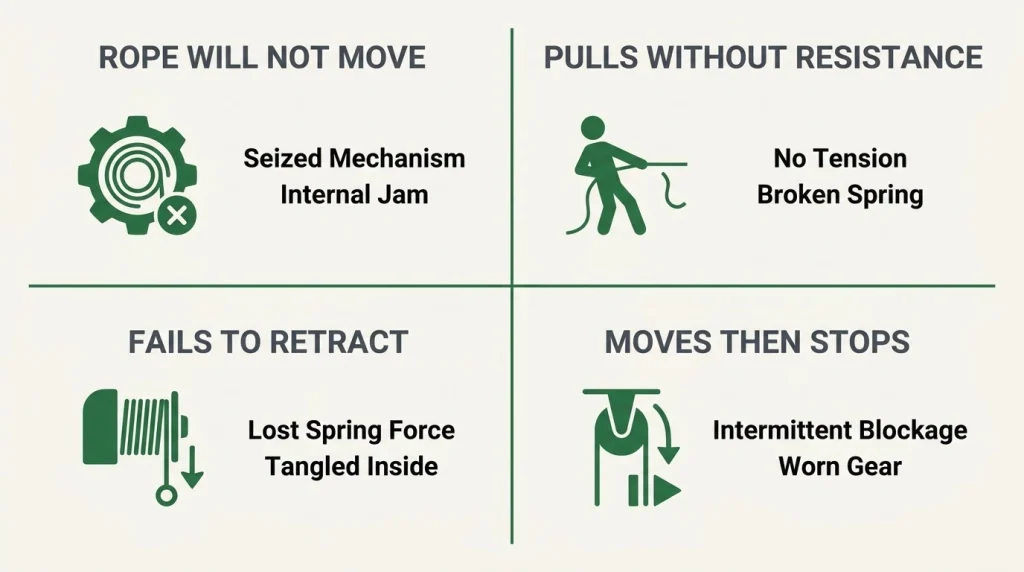
Starter rope behavior provides useful clues about whether the fault involves the recoil assembly, engine engagement, or internal mechanical resistance.
The Starter Rope Will Not Move
A completely immovable starter rope may indicate a jammed pulley, trapped rope, blocked flywheel, or seized engine.
Check whether the rope became stuck during a previous starting attempt. Recent starter repairs may also provide clues about incorrect assembly.
A locked rope alone does not confirm that the engine has seized.
The Starter Rope Pulls Without Resistance
A starter rope that extends without turning the engine may indicate damaged starter engagement parts.
Starter pawls are small components that connect the starter mechanism to the engine during pulling. Worn or broken pawls may fail to engage.
If the engine rotates but offers unusually little resistance, a loss of cylinder compression becomes another possibility.
The Starter Rope Does Not Retract
A starter rope that remains extended may indicate a damaged rewind spring, obstructed pulley, or incorrectly installed starter rope.
The rewind spring returns the rope into the starter housing after each pull. When the spring fails, the rope may remain outside the housing.
Inspecting the recoil assembly is more relevant than replacing fuel or ignition components for this symptom.
The Starter Rope Moves and Suddenly Stops
A starter rope that moves briefly before stopping may indicate a localized obstruction or excessive resistance during piston movement.
Normal compression creates repeating resistance as the piston travels through its cycle. A hard stop that prevents continued movement requires further investigation.
Do not repeatedly pull against the obstruction to determine whether it will disappear.
How Does Compression Affect Chainsaw Engine Rotation?
Engine compression creates normal resistance during starting because the piston compresses the mixture inside the cylinder.
Some chainsaws require more starting effort than others because of engine design and displacement. Normal compression resistance should not be confused with a completely locked engine.
Normal Engine Compression
Normal compression produces a repeating pattern of resistance and release as the engine rotates.
The starter rope should move through its normal range without encountering an abrupt mechanical stop. The amount of effort varies between chainsaw models.
Decompression Valve Problems
A decompression valve reduces cylinder pressure during starting and makes the engine easier to rotate.
Chainsaws equipped with this feature may become harder to pull when the valve fails to operate or remains closed.
Check your owner’s manual to determine whether your chainsaw has a decompression valve and how to operate it correctly.
Abnormal Cylinder Resistance
Abnormal cylinder resistance may result from liquid accumulation, mechanical interference, or damaged internal components.
Removing the spark plug changes cylinder pressure, but this diagnostic procedure must follow the manufacturer’s service instructions.
A technician can use the change in resistance to help distinguish cylinder pressure from mechanical binding.
Can a Flooded Chainsaw Engine Prevent Rotation?
Severe flooding can prevent engine rotation if enough liquid accumulates inside the cylinder, although ordinary flooding usually causes a crank-without-start condition.
Flooding develops when excessive fuel enters the combustion chamber. Repeated starting attempts with incorrect choke settings may contribute to this condition.
Possible signs of engine flooding include:
- A strong smell of gasoline.
- A fuel-wet spark plug.
- Repeated unsuccessful starting attempts.
- Unusual starting resistance in severe cases.
A wet spark plug does not automatically mean the engine is mechanically locked. Follow the model-specific flooded-engine procedure only when the engine can rotate normally.
If you suspect trapped liquid is preventing movement, stop attempting to start the chainsaw and arrange a safe inspection.
How Can You Tell If a Chainsaw Engine Is Seized?
A seized chainsaw engine has internal components that cannot move normally because of mechanical damage or severe binding.
Engine seizure can affect the piston, cylinder, crankshaft, or bearings. Confirming the fault usually requires separating starter problems from internal engine resistance.
Common Signs of Engine Seizure
Engine seizure becomes more likely when a chainsaw stops abruptly during operation and remains mechanically locked after cooling.
- Sudden engine stoppage during cutting.
- Unusual metallic sounds before shutdown.
- Evidence of severe overheating.
- A starter rope that remains locked.
- Visible piston or cylinder damage during inspection.
- Persistent resistance after starter faults are ruled out.
These symptoms suggest possible internal damage rather than confirming a seized engine by themselves.
What Causes a Chainsaw Engine to Seize?
Chainsaw engine seizure may develop from inadequate lubrication, excessive operating temperatures, incorrect fuel preparation, or damaged internal parts.
Gas-powered two-stroke chainsaw engines depend on the correct fuel and oil mixture for lubrication. Using fuel that does not meet the manufacturer’s requirements can increase wear.
Restricted cooling airflow and prolonged overheating may also contribute to mechanical damage.
Can a Seized Chainsaw Engine Be Repaired?
A seized chainsaw engine may be repairable depending on the condition of its piston, cylinder, crankshaft, and bearings.
Minor damage and extensive internal failure require different repair approaches. A qualified technician should inspect the affected components before recommending replacement parts.
Compare the repair estimate with the chainsaw’s condition and replacement value before approving major engine work.
Can the Chain Brake or Clutch Stop Engine Rotation?
A damaged clutch assembly or mechanical interference around the drive system may restrict engine rotation under abnormal conditions.
The centrifugal clutch connects engine power to the chain drive when engine speed increases. During normal starting, the clutch should not continuously drive the chain.
An engaged chain brake does not normally prevent a healthy gasoline chainsaw engine from turning over.
However, damaged or jammed drive components may create abnormal resistance. Suspect this area if the problem developed after chain damage, an impact, or clutch-related repairs.
Never disable the chain brake to overcome a mechanical starting problem.
Troubleshooting a Chainsaw That Won’t Turn Over
The appropriate troubleshooting approach depends on starter rope movement, engine resistance, and the circumstances surrounding the failure.
| Observed Symptom | Possible Cause | Recommended Action |
|---|---|---|
| Completely locked rope | Mechanical obstruction or seizure | Stop pulling and arrange inspection |
| Loose starter rope | Failed starter engagement | Inspect recoil starter assembly |
| Rope fails to retract | Rewind spring or pulley fault | Arrange starter assembly repair |
| High pulling resistance | Compression or mechanical drag | Check decompression controls and seek diagnosis if abnormal |
| Locked after overheating | Possible internal engine damage | Request professional engine inspection |
| Engine rotates normally | Fuel, ignition, or combustion fault | Continue with normal starting diagnostics |
Match the repair approach to the observed symptom rather than replacing parts based on assumptions.
Chainsaw Will Not Turn Over After Sitting
A chainsaw that will not turn over after storage may have a binding starter mechanism, internal corrosion, or unwanted liquid accumulation.
Long storage periods can expose equipment to moisture and contamination. Poor storage conditions may contribute to corrosion around moving components.
Stale fuel can also cause starting problems, but stale fuel alone does not normally prevent mechanical engine rotation.
Chainsaw Will Not Turn Over After Running
A chainsaw that becomes mechanically locked after running may have experienced overheating, lubrication failure, or another internal mechanical problem.
Allow the engine to cool before checking its external condition. Review whether you prepared the correct fuel mixture and noticed unusual operating sounds.
If the starter remains locked after cooling, avoid further starting attempts until a technician identifies the cause.
Chainsaw Will Not Turn Over After Starter Repair
Incorrect starter assembly installation may prevent normal engine rotation following a starter rope or recoil spring replacement.
Possible installation problems include incorrect rope dimensions, misaligned components, improper spring tension, or interference between the housing and flywheel.
Verify replacement part compatibility and compare the installation with the manufacturer’s service instructions.
When Should You Seek Professional Chainsaw Repair?
Professional chainsaw repair is appropriate when external checks cannot explain mechanical resistance or when internal engine damage is suspected.
Starter rope replacement may be manageable for someone familiar with the manufacturer’s maintenance procedure. Internal engine repairs require additional tools, technical knowledge, and model-specific specifications.
Arrange professional inspection when you notice:
- A completely immovable crankshaft.
- Repeated starter rope failure.
- Metallic grinding or knocking sounds.
- Evidence of piston or cylinder damage.
- Persistent resistance after the starter mechanism is checked.
- Fuel leakage combined with abnormal engine resistance.
- A locked engine following overheating.
Provide the technician with the chainsaw model, previous operating symptoms, fuel preparation details, and any repairs you performed.
This information can help distinguish a starter fault from a more expensive internal engine problem.
How to Prevent Chainsaw Engine Rotation Problems
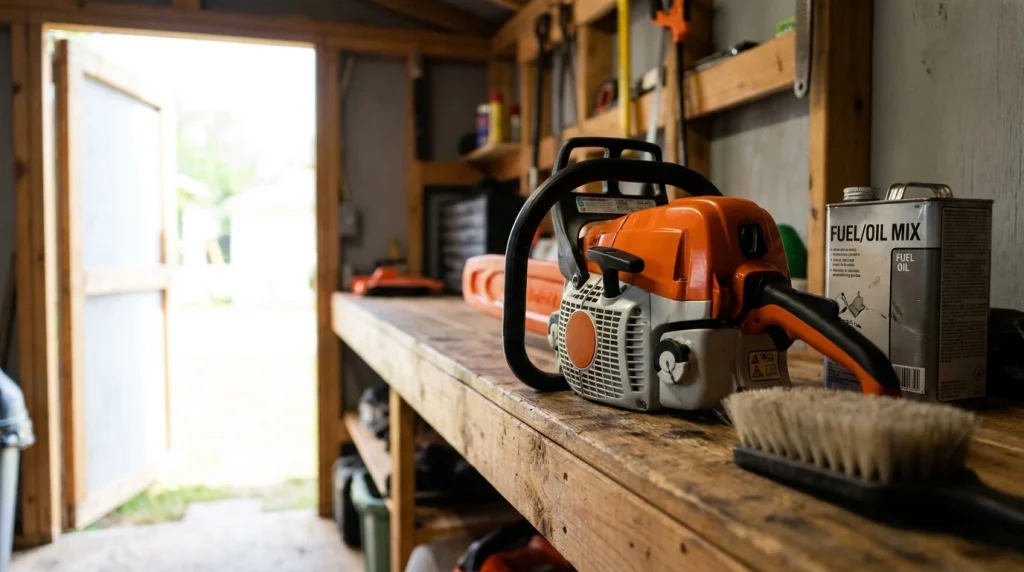
Proper lubrication, regular starter maintenance, clean cooling areas, and correct starting procedures help reduce preventable chainsaw rotation problems.
Maintain the Starter Assembly
Regular starter maintenance helps reduce rope wear, pulley obstruction, and engagement problems.
Inspect the starter handle and exposed rope during routine maintenance. Remove accessible dirt using methods approved in your owner’s manual.
Replace worn components before they fail during a starting attempt.
Use the Correct Fuel Mixture
The correct fuel mixture provides the lubrication required by conventional two-stroke gasoline chainsaw engines.
Always follow the fuel and oil specifications for your chainsaw model. Avoid estimating the mixture or using an unsuitable oil type.
Incorrect lubrication can contribute to excessive internal wear and engine damage.
Follow the Recommended Starting Procedure
The recommended starting procedure reduces unnecessary starter strain and helps prevent flooding caused by incorrect choke operation.
Cold and warm engines may require different starting control positions. Chainsaws with decompression valves may also require an additional starting step.
Follow the manufacturer’s chainsaw starting guidance and consult the instructions for your particular model.
Keep Engine Cooling Areas Clean
Clean engine cooling areas help maintain airflow around the cylinder during operation.
Sawdust and other debris may restrict cooling airflow when allowed to accumulate. Follow the manufacturer’s cleaning schedule and approved maintenance methods.
Stop operating the chainsaw if you notice unusual overheating or mechanical sounds.
Store Your Chainsaw Correctly
Correct chainsaw storage helps protect starter components and internal engine parts from moisture, dirt, and deterioration.
Clean the chainsaw before storage and follow the manufacturer’s fuel storage instructions. Keep the equipment in a dry, protected location.
Inspect its condition before the next use rather than immediately attempting to start an unfamiliar or long-stored engine.
Chainsaw Starter Rope
A compatible replacement starter rope can restore normal pulling operation when inspection confirms that the original rope is damaged.
Frequently Asked Questions
Can a Bad Spark Plug Prevent Engine Rotation?
A faulty spark plug normally prevents combustion rather than stopping the chainsaw crankshaft from rotating during a starting attempt.
Physical interference from an incorrect spark plug is a different issue. Always use the plug type and dimensions specified by the chainsaw manufacturer.
Can a Clogged Carburetor Lock a Chainsaw Engine?
A clogged chainsaw carburetor normally restricts fuel delivery without physically preventing the crankshaft and piston from moving during starting.
However, a separate carburetor fault that allows excessive fuel accumulation may contribute to liquid-related resistance. Mechanical locking requires diagnosis beyond ordinary carburetor cleaning.
Can Cold Weather Make a Chainsaw Hard to Turn Over?
Cold weather may increase starting resistance, particularly when moisture freezes around moving components or within accessible starter mechanism areas.
A completely locked starter should not be treated as normal cold-weather behavior. Let the equipment warm naturally in a suitable location before arranging further inspection if needed.
Does Low Bar Oil Cause a Chainsaw Engine to Lock?
Low bar oil primarily affects lubrication between the guide bar and cutting chain rather than directly lubricating the engine’s internal components.
Engine lubrication and cutting attachment lubrication serve different purposes. Problems caused by inadequate bar oil should be investigated separately from a mechanically locked engine.
Can an Incorrect Starter Rope Cause Starting Problems?
An incorrectly sized starter rope may interfere with pulley movement, rope retraction, or normal engagement of the chainsaw starter assembly.
Replacement rope dimensions must match the manufacturer’s specifications. Choosing a rope simply because it appears stronger or thicker can create compatibility problems.
Should You Use Starting Fluid on a Locked Chainsaw?
Starting fluid cannot correct a mechanical obstruction that prevents a chainsaw crankshaft from rotating during an attempted engine start.
Introducing flammable chemicals into an engine with an unidentified fault may create additional risks. Identify the mechanical problem and follow the manufacturer’s approved starting procedure instead.
Does a Locked Engine Always Require Replacement?
A mechanically locked chainsaw engine does not always require replacement because some apparent engine locks originate in repairable starter components.
Even confirmed internal engine damage may have repair options. The appropriate decision depends on component condition, replacement part availability, repair costs, and the overall equipment condition.
Conclusion
When a chainsaw engine won’t turn over, inspect the starter rope and recoil assembly before assuming internal engine failure. Distinguish normal compression resistance from mechanical locking, and never force a stuck starter. If external checks cannot explain the obstruction, arrange a professional engine inspection.
I write about chainsaw maintenance, troubleshooting, replacement parts, safety, and buying guides. My goal is to make chainsaw information simple, practical, and helpful for homeowners and professionals.