
Chainsaw Won’t Start After Refueling? Causes and Fixes
Quick Answer
A chainsaw that won’t start after refueling may have a flooded engine, incorrect fuel mixture, vapor lock, restricted fuel supply, or an incorrect starting procedure. Allow the engine to cool, confirm the fuel is correct, and follow the manufacturer’s restart instructions. Persistent starting problems may require fuel system or ignition inspection.
- Check whether the engine is flooded.
- Confirm you added the correct fuel mixture.
- Allow an overheated chainsaw to cool.
- Check for restricted fuel delivery.
- Follow the correct warm or cold starting procedure.
If your chainsaw won’t start after refueling, the problem is not necessarily a damaged engine. A chainsaw that worked normally before a fuel stop may fail to restart because of heat, flooding, or interrupted fuel delivery.
This guide explains how to identify the possible causes, troubleshoot the problem safely, and prevent starting difficulties during future refueling stops.
In this article
- Possible causes of starting failure
- Flooded chainsaw engine
- Incorrect or contaminated fuel
- Engine heat and vapor lock
- Restricted fuel delivery
- Incorrect starting procedure
- Spark plug and ignition problems
- Step-by-step troubleshooting
- Preventing future starting problems
- When professional repair is necessary
- Frequently asked questions
- Conclusion
Why Won’t a Chainsaw Start After Refueling?
A chainsaw may fail to restart after refueling because the engine receives too much fuel, too little fuel, or an unsuitable fuel mixture.
The timing of the problem provides a useful diagnostic clue. If the chainsaw worked normally before refueling, begin by checking fuel quality, engine temperature, and the restart procedure.
The following table compares common causes with their possible symptoms and appropriate responses.
| Possible Cause | Common Symptoms | Recommended Action |
|---|---|---|
| Flooded engine | Strong fuel smell or wet spark plug | Follow the flooded-engine restart procedure |
| Incorrect fuel | Failure after adding new fuel | Verify fuel type and mixture |
| Vapor lock | Starting difficulty while hot | Allow the chainsaw to cool |
| Clogged fuel filter | Engine starts briefly and stops | Inspect the fuel supply system |
| Incorrect choke position | Repeated unsuccessful starting attempts | Use the correct starting procedure |
| Ignition problem | Engine fails to fire | Arrange spark plug or ignition inspection |
These symptoms suggest possible causes rather than confirming a specific fault. Start with simple checks before replacing engine components.
1. Flooded Chainsaw Engine After Refueling
Engine flooding occurs when excessive fuel enters the combustion chamber and prevents the air-fuel mixture from igniting properly.
A warm chainsaw may become flooded when you use the cold-start procedure. Repeated starting attempts with the choke closed can make the problem worse.
Signs of a Flooded Chainsaw
A flooded chainsaw may produce a strong gasoline smell without starting successfully.
- Strong fuel odor around the engine.
- A fuel-wet spark plug.
- Repeated unsuccessful starting attempts.
- Brief sputtering without sustained operation.
- Starting failure after repeated choke use.
Fuel odor alone does not confirm flooding. Check for spilled fuel and external leaks before attempting another restart.
How to Deal With a Flooded Engine
Recover a flooded chainsaw by following the flooded-engine starting instructions provided in its owner’s manual.
Stop repeated starting attempts and allow the machine to cool. Confirm the correct choke and starting control positions before trying again.
Different chainsaw models use different control systems. Avoid applying a starting method from another model without checking your manual.
Warning
Gasoline vapors can ignite near sparks and hot surfaces. Never attempt to start a chainsaw with a fuel leak or visible spilled gasoline.
2. Incorrect or Contaminated Fuel Mixture
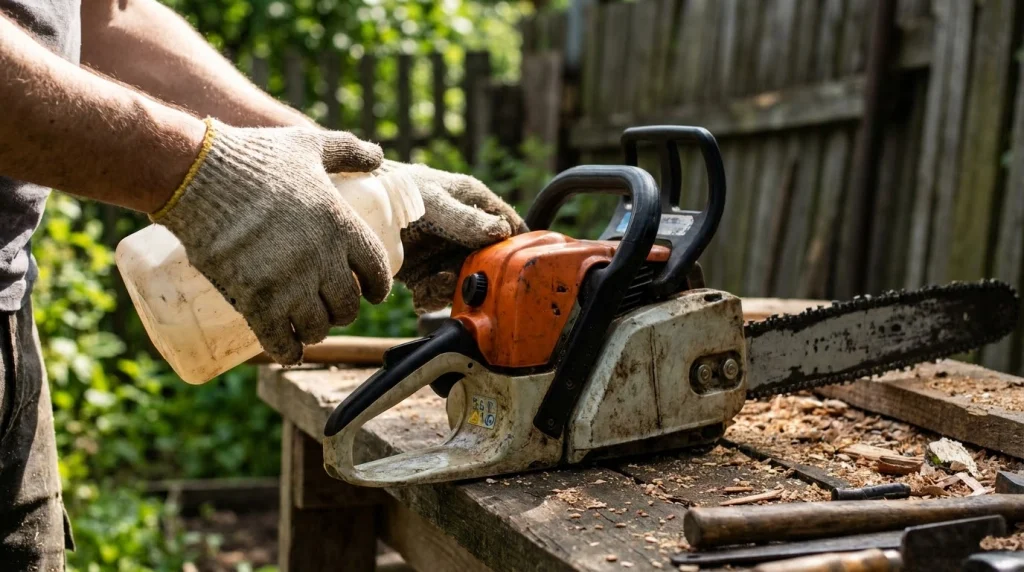
Incorrect fuel can prevent a gas-powered chainsaw from starting immediately after refueling, particularly when the replacement fuel does not meet engine requirements.
Most conventional gas-powered chainsaws use a two-stroke engine that requires an approved mixture of gasoline and two-stroke engine oil.
The correct mixture depends on the manufacturer’s specifications. Never assume that every chainsaw uses the same fuel-to-oil ratio.
Using Straight Gasoline
Using gasoline without the required two-stroke oil can damage an engine designed to operate on mixed fuel.
The oil provides lubrication for internal engine components. Without sufficient lubrication, moving parts can suffer excessive friction and damage.
If you suspect that straight gasoline entered a two-stroke chainsaw, stop attempting to start it. Consult the manufacturer or a service technician before operating the machine.
Using Old or Contaminated Fuel
Old or contaminated fuel can contribute to poor combustion and starting difficulties after refueling.
Fuel stored in an unsuitable container may contain moisture, dirt, or degraded gasoline. Contamination can also interfere with the small fuel passages inside a carburetor.
Check the fuel container before assuming that the chainsaw itself is defective. Replace unsuitable fuel using the procedure specified in your owner’s manual.
Confusing the Fuel Tank and Chain Oil Tank
Adding bar and chain oil to the fuel tank can interfere with fuel delivery and prevent normal engine operation.
Gas-powered chainsaws have separate tanks for engine fuel and chain lubrication. Check the markings beside each cap before refueling.
If you accidentally fill the wrong tank, do not attempt another restart. Have the affected system cleaned according to manufacturer guidance.
3. Engine Heat and Vapor Lock
A hot chainsaw may experience vapor lock when excessive heat causes fuel to vaporize inside the fuel delivery system.
Vapor lock can interrupt the supply of liquid fuel to the engine. The problem may occur after demanding cutting tasks or during operation in hot weather.
Husqvarna explains that excessive fuel temperature can cause hot chainsaw starting problems through vapor formation inside the carburetor.
How to Recognize Heat-Related Starting Problems
Heat-related starting problems are more likely when a chainsaw operates normally while cold but becomes difficult to restart after extended use.
- The chainsaw starts normally before cutting.
- The engine becomes difficult to restart after refueling.
- The problem occurs more frequently during hot weather.
- The chainsaw starts again after cooling.
- Starting difficulty returns when the engine becomes hot.
These symptoms may also indicate an ignition or carburetor fault. Cooling-related improvement does not automatically confirm vapor lock.
How to Handle Vapor Lock
Allowing the chainsaw to cool can help resolve temporary fuel vaporization caused by excessive engine heat.
Switch off the chainsaw and place it in a safe, shaded, well-ventilated location. Keep it away from combustible materials and ignition sources.
Once the machine has cooled, follow its recommended starting procedure. If the problem returns during normal operation, arrange a fuel system inspection.
4. Restricted Fuel Delivery After Refueling
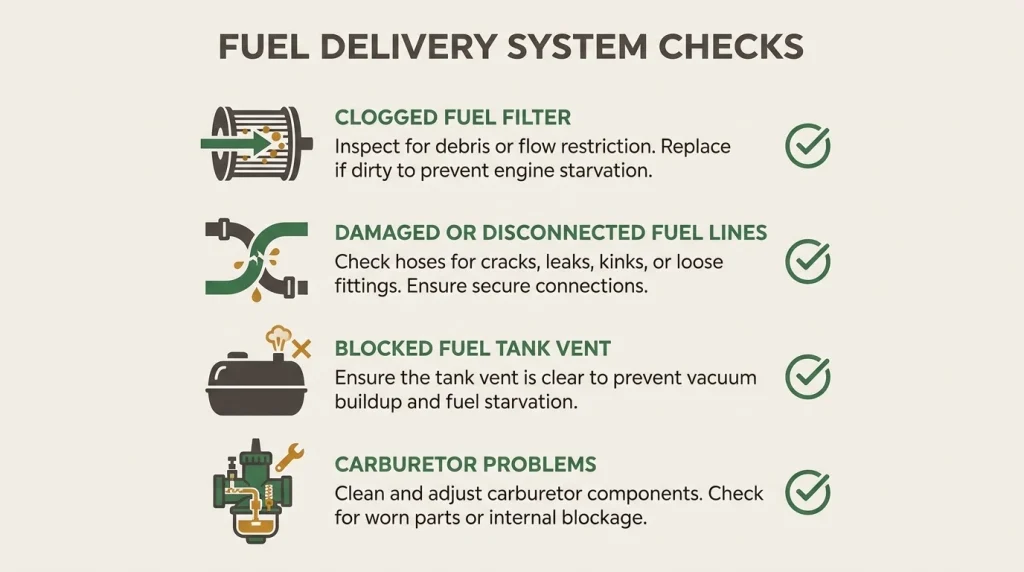
A chainsaw can have a full fuel tank and still fail to start because insufficient fuel reaches the engine.
The fuel delivery system includes the fuel filter, fuel lines, tank vent, and carburetor. A restriction or damaged component can interrupt the movement of fuel.
Clogged Fuel Filter
A clogged fuel filter can restrict gasoline flow from the fuel tank to the carburetor.
The filter prevents debris from entering sensitive engine components. Dirt introduced during refueling may contribute to an existing blockage.
According to Husqvarna fuel system guidance, damaged fuel lines and blocked filters are possible causes of inadequate fuel delivery.
Replace a blocked filter with a compatible component if the owner’s manual permits user replacement.
Damaged or Disconnected Fuel Lines
A cracked, loose, or damaged fuel line can prevent the carburetor from receiving a steady fuel supply.
Fuel lines connect the fuel tank to the carburetor. Their condition may deteriorate through age and exposure to fuel.
Inspect accessible components only when the engine is cool and switched off. A fuel leak requires repair before further operation.
Blocked Fuel Tank Vent
A blocked fuel tank vent can interfere with fuel delivery by preventing normal pressure equalization inside the tank.
The vent allows the fuel system to maintain suitable pressure as gasoline is consumed. A restriction may cause intermittent starting or running problems.
Suspect a vent problem when the chainsaw repeatedly starts and stops despite having suitable fuel. Have the vent inspected if the problem persists.
Never operate the chainsaw with a loose fuel cap or open fuel tank.
Carburetor Problems
A malfunctioning carburetor may supply too much or too little fuel for reliable engine starting.
The carburetor prepares the air-fuel mixture used by the engine. Deposits, damaged internal parts, or incorrect settings can interfere with this process.
If basic fuel checks do not resolve the problem, professional carburetor inspection may be necessary.
Avoid changing carburetor adjustment screws without the correct model-specific instructions. An unsuitable adjustment can affect engine performance and reliability.
5. Incorrect Starting Procedure After Refueling
Using an incorrect starting procedure can prevent a mechanically sound chainsaw from restarting after a fuel stop.
Cold engines and warm engines may require different starting control positions. Some chainsaws also use automatic engine management systems with their own starting procedures.
Cold Start Versus Warm Start
A cold chainsaw may require choke assistance, while a warm chainsaw often requires a different starting setting.
Cold Start
Best for: An engine that has cooled
- May require choke assistance.
- May require manual fuel priming.
- Follow the cold-start sequence in the manual.
Warm Start
Best for: An engine that retains operating warmth
- May require less choke assistance.
- Excessive choke use may cause flooding.
- Follow the model’s warm-start instructions.
The correct starting method depends on the engine design and temperature. Do not assume that every gas-powered chainsaw uses identical starting controls.
Incorrect Primer Bulb Use
Incorrect use of the primer or purge bulb can contribute to starting difficulties on chainsaws equipped with manual fuel pumps.
These bulbs help prepare the fuel system for starting. Their design and operation vary between chainsaw models.
Follow the recommended priming procedure in your owner’s manual. If the bulb remains empty or damaged, the fuel delivery system may require inspection.
Incorrect Engine Switch Position
An engine stop switch left in the OFF position can prevent a chainsaw from starting after refueling.
Some chainsaws require you to move a switch or control lever into the operating position before restarting. Other models use different control arrangements.
Verify the position of the starting controls before investigating more complicated mechanical problems.
6. Spark Plug and Ignition Problems
A spark plug or ignition fault can prevent the fuel mixture from igniting after you refill the chainsaw.
Although refueling may appear to trigger the problem, an existing ignition fault can become noticeable when the engine is stopped and restarted.
Fuel-Fouled Spark Plug
A fuel-fouled spark plug may fail to ignite the mixture because excessive gasoline has accumulated around its electrodes.
This condition can occur after repeated unsuccessful starting attempts. It is also associated with engine flooding.
If spark plug inspection is permitted by your owner’s manual, perform it only after the chainsaw has cooled and been secured against accidental starting.
Worn or Dirty Spark Plug
A worn or contaminated spark plug can cause unreliable ignition and repeated starting difficulties.
Deposits or electrode wear may reduce ignition performance. Replacing the spark plug with the manufacturer’s specified type may resolve a confirmed plug fault.
Use the replacement specifications provided in your chainsaw manual rather than selecting a plug based only on its appearance.
Heat-Sensitive Ignition Faults
An ignition system fault may cause a chainsaw to lose starting ability when its engine becomes hot.
If the chainsaw repeatedly starts when cold but fails when warm, the ignition system should be considered alongside fuel delivery and vaporization problems.
A qualified technician can distinguish an ignition failure from a fuel system problem using suitable diagnostic equipment.
How to Troubleshoot a Chainsaw After Refueling
Troubleshoot a chainsaw that will not restart by checking fuel safety, engine temperature, starting controls, and fuel delivery before investigating internal components.
Begin with checks that do not require dismantling the engine. Stop if you discover fuel leakage, damaged components, or unusual mechanical resistance.
Step 1
Check for Fuel Leakage
Inspect the outside of the chainsaw for spilled gasoline, leaking fuel, or a damaged fuel cap. Do not restart a leaking machine.
Step 2
Allow the Engine to Cool
Let excessive engine heat dissipate in a safe outdoor location before performing fuel system checks.
Step 3
Confirm Fuel Quality
Verify that the fuel matches the manufacturer’s gasoline and oil requirements. Check whether the fuel came from a clean storage container.
Step 4
Check the Starting Controls
Verify the engine switch, choke setting, and applicable priming instructions for the engine’s temperature.
Step 5
Consider Engine Flooding
If repeated choke-assisted attempts have failed, consult the model-specific flooded-engine recovery procedure.
Step 6
Inspect Fuel Delivery
Check accessible fuel system components according to the manual. Arrange service if you suspect a blocked filter, damaged hose, or carburetor fault.
Step 7
Arrange Further Diagnosis
Seek professional inspection of the ignition system and engine if the recommended starting procedure still fails.
Before attempting a restart, engage the chain brake and position the chainsaw securely outdoors with the cutting attachment clear of surrounding objects.
STIHL provides chainsaw starting safety instructions that explain how starting procedures differ between engine control systems.
How to Prevent Starting Problems After Refueling
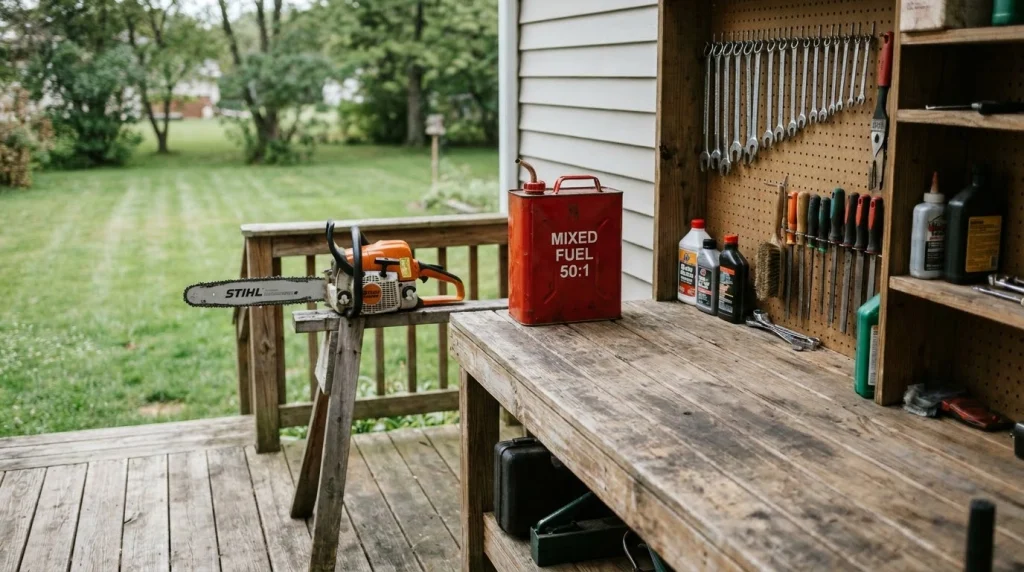
Preventing chainsaw starting problems requires correct fuel preparation, safe refueling habits, routine maintenance, and consistent use of the recommended starting procedure.
Use Suitable Fuel and Clean Containers
Fresh fuel that meets the engine’s specifications helps reduce fuel-related starting difficulties.
- Use gasoline approved by the chainsaw manufacturer.
- Add the specified two-stroke oil when required.
- Measure the fuel mixture accurately.
- Store fuel in an approved container.
- Keep dirt and moisture away from stored fuel.
- Label fuel containers to prevent accidental mix-ups.
Incorrectly mixed gasoline should not be used simply because the fuel tank is empty. Prepare suitable fuel before beginning a cutting session.
Follow Safe Refueling Practices
Safe refueling reduces the risk of fuel contamination, accidental ignition, and heat-related starting difficulties.
Switch off the engine and allow it to cool adequately before refueling. Clean the area around the fuel cap to prevent debris from entering the tank.
Do
- Refuel outdoors with the engine switched off.
- Secure the fuel cap properly.
- Move away from the refueling area before starting.
- Use the recommended starting method.
Avoid
- Refueling an excessively hot engine.
- Smoking near gasoline.
- Starting the engine near spilled fuel.
- Repeatedly using full choke without following the manual.
Check the fuel cap and surrounding area before every restart. Correct any fuel spill or leakage before operating the chainsaw.
Maintain the Fuel and Ignition Systems
Routine maintenance helps identify worn components before they cause unreliable starting.
Inspect and service these components according to the manufacturer’s maintenance schedule:
- Fuel filter.
- Fuel lines.
- Air filter.
- Spark plug.
- Fuel tank cap and vent.
- Primer or purge bulb, where fitted.
A clean air filter also supports proper airflow into the engine. Replace damaged filters and other worn components with compatible replacement parts.
When Does a Chainsaw Need Professional Repair?
A chainsaw needs professional inspection when correct fuel, safe starting procedures, and basic maintenance checks fail to restore reliable operation.
Repeated starting failure may indicate an internal carburetor problem, ignition fault, air leak, or inadequate engine compression.
Compression is the pressure created inside the engine cylinder before combustion. Insufficient compression can interfere with engine starting and performance.
Arrange professional service if you notice any of these conditions:
- Persistent gasoline leakage.
- A damaged fuel tank or fuel cap.
- Repeated starting failure with suitable fuel.
- Recurring failure whenever the engine becomes hot.
- Unusual mechanical noises during starting attempts.
- Abnormal resistance when pulling the starter cord.
- Suspected internal engine damage.
Warning
Never pour gasoline directly into the cylinder or use an open spark test near fuel vapors. Improvised starting methods can create a fire hazard.
Professional diagnosis is preferable to replacing several components without identifying the underlying problem. It can also help prevent unnecessary damage caused by incorrect repairs.
If maintenance identifies a blocked chainsaw fuel filter, select a replacement that matches the exact chainsaw model and manufacturer specifications.
Chainsaw Fuel Filter
A compatible replacement fuel filter can restore fuel delivery when an existing filter is confirmed to be blocked.
Frequently Asked Questions
Why won’t my chainsaw start after running out of gas?
A chainsaw that runs completely out of gasoline may require its fuel delivery system to be prepared again before starting. Follow the manufacturer’s priming instructions if the machine has a manual fuel pump. Avoid repeated choke-assisted starting attempts because excessive fuel can flood the engine.
Can overfilling a chainsaw fuel tank cause starting problems?
Overfilling a chainsaw fuel tank can reduce the space available for fuel expansion and increase the risk of gasoline spillage. Follow the manufacturer’s filling instructions and avoid filling beyond the recommended level. Overfilling alone does not confirm the cause of an engine starting failure.
Why does my chainsaw start but immediately stop after refueling?
A chainsaw that starts briefly after refueling may have an interrupted fuel supply, restricted airflow, or an unsuitable starting control setting. Check whether the engine receives suitable fuel and whether the air filter needs maintenance. Repeated stalling may require professional carburetor inspection.
Can too much two-stroke oil prevent a chainsaw from starting?
An excessive amount of two-stroke oil can contribute to combustion problems and spark plug contamination in a gasoline-powered chainsaw engine. Incorrect oil proportions may also increase exhaust smoke and deposits. Prepare the fuel according to the exact mixture specified in the owner’s manual.
Should I use starting fluid on a chainsaw?
Starting fluid should not be used as a routine solution for starting problems unless the chainsaw manufacturer specifically permits its use. Improvised starting methods may create ignition hazards or interfere with normal engine lubrication. Identify the underlying fuel or ignition fault instead.
Why won’t my chainsaw primer bulb fill with fuel?
A chainsaw primer or purge bulb that fails to fill may indicate a damaged bulb, restricted fuel filter, or fuel line problem. The exact cause depends on how the fuel system is designed. Inspect the system according to the manual before replacing individual components.
Can a new chainsaw fail to start after refueling?
A new chainsaw can experience starting problems after refueling because of incorrect fuel, flooding, or unfamiliarity with its starting controls. New equipment is not immune to fuel delivery faults. If correct starting procedures fail, contact the dealer before attempting repairs that could affect warranty coverage.
Conclusion
If your chainsaw won’t start after refueling, investigate flooding, fuel quality, engine heat, starting controls, and restricted fuel delivery first. Follow the manufacturer’s restart instructions after the engine has cooled. If starting problems persist, arrange professional diagnosis before replacing engine components.

I write about chainsaw maintenance, troubleshooting, replacement parts, safety, and buying guides. My goal is to make chainsaw information simple, practical, and helpful for homeowners and professionals.