
Why Won’t My Chainsaw Start? Causes and Diagnostic Steps
Quick Answer
A chainsaw won’t start because of stale fuel, a flooded engine, a faulty spark plug, restricted airflow, or insufficient compression. Incorrect starting procedures can also prevent ignition. Begin by checking the power source and starting controls. Then inspect the fuel, air filter, and ignition system before considering internal engine repairs.
- Check the starting switch, choke, and safety controls.
- Inspect the fuel quality and fuel delivery system.
- Look for signs of engine flooding or spark plug failure.
- Check the battery or electrical supply on electric models.
- Seek professional diagnosis if basic checks fail.
A chainsaw that refuses to start can interrupt firewood cutting, yard maintenance, or tree care. The problem may involve something as simple as an empty fuel tank or something more serious, such as internal engine damage.
This guide explains how to identify common chainsaw starting problems, recognize their symptoms, and determine which components need attention.
In this article
- Common reasons a chainsaw won’t start
- Step-by-step diagnostic checks
- Fuel system problems
- Flooded chainsaw engine
- Spark plug and ignition problems
- Airflow and exhaust restrictions
- Compression and mechanical problems
- Diagnosing problems by symptoms
- Electric chainsaw starting problems
- When to seek professional repair
- Preventing future starting problems
- Frequently Asked Questions
- Conclusion
What Are the Common Reasons a Chainsaw Won’t Start?
Chainsaw starting problems usually involve fuel delivery, ignition, airflow, compression, or incorrect operation. Battery-powered and corded chainsaws can also experience electrical supply problems.
A gas chainsaw requires a suitable fuel mixture, sufficient air, ignition, and adequate engine compression. A failure in any of these areas can prevent the engine from running.
The following table connects common starting symptoms with possible causes and initial checks.
| Possible Cause | Common Symptom | Initial Check |
|---|---|---|
| Stale fuel | Engine cranks without starting | Inspect fuel condition |
| Flooded engine | Fuel odor and failed ignition | Review choke use and check for leaks |
| Faulty spark plug | Engine fails to fire | Inspect plug condition |
| Dirty air filter | Difficult starting or poor running | Inspect filter blockage |
| Clogged carburetor | Engine starts briefly or fails to start | Check fuel delivery |
| Low compression | Unusual starter rope resistance | Arrange compression testing |
| Electrical supply fault | Electric motor remains inactive | Check battery or power supply |
Start with accessible components and operating controls before assuming that the chainsaw requires major repairs.
How to Diagnose a Chainsaw That Won’t Start
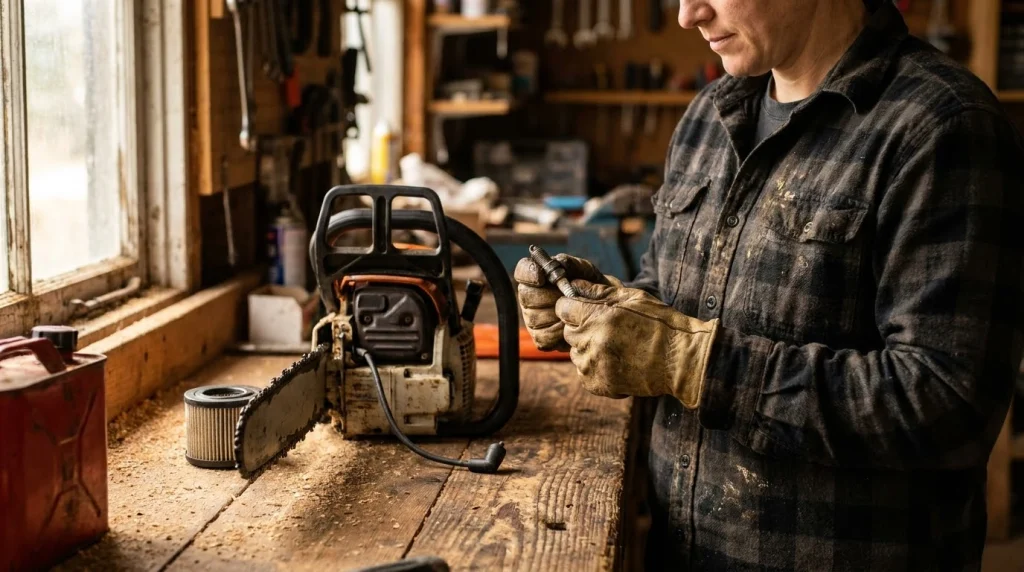
Diagnose a chainsaw that won’t start by following an ordered inspection of its controls, fuel supply, ignition components, and airflow. Testing components in sequence helps avoid unnecessary replacement parts.
Before inspecting components, stop the engine and allow the chainsaw to cool. Disconnect its spark plug lead, remove the battery, or unplug the power cord as appropriate.
Step 1
Check the starting controls
Confirm that the ignition switch, choke, and starting controls are positioned according to the owner’s manual.
Step 2
Inspect the fuel supply
Check whether the tank contains fresh fuel of the correct type. Inspect accessible fuel lines for damage.
Step 3
Inspect the spark plug
Look for excessive deposits, fuel contamination, electrode wear, or a damaged insulator.
Step 4
Check the air filter
Inspect the filter for sawdust, dirt, and other restrictions. Clean or replace it according to the manufacturer.
Step 5
Review the starting procedure
Reassemble the chainsaw and follow its designated starting sequence. Stop if you notice abnormal resistance, leaking fuel, or unusual noises.
Step 6
Arrange advanced diagnosis
If basic checks fail, have the ignition system, carburetor, and engine compression tested.
Keep track of the symptoms you observe during each check. Changing multiple components at once can make the original problem harder to identify.
For safe starting practices, follow the OSHA chainsaw safety guidance. Engage the chain brake and support the gas chainsaw firmly before attempting to start it.
Fuel System Problems That Prevent Chainsaw Starting
Fuel system problems prevent a chainsaw from starting when the engine receives contaminated fuel, insufficient fuel, or an unsuitable fuel mixture.
Empty Fuel Tank
An empty fuel tank prevents the carburetor from supplying gasoline to the engine. A low fuel level may also interrupt delivery when the chainsaw changes position.
Check the fuel level before removing components or purchasing replacement parts.
Old or Contaminated Fuel
Old gasoline can deteriorate during storage and contribute to deposits inside the fuel system. These deposits may restrict fuel passages and interfere with combustion.
If your chainsaw has been stored with gasoline inside the tank, replace questionable fuel with a fresh mixture that meets the manufacturer’s requirements.
Incorrect Fuel Mixture
An incorrect gasoline and oil mixture can affect starting, combustion, and engine lubrication in a two-stroke chainsaw.
Use the fuel ratio specified in your owner’s manual. Avoid assuming that every gas chainsaw requires the same mixture.
Clogged Fuel Filter
A clogged fuel filter restricts gasoline delivery from the tank to the carburetor. Dirt and fuel deposits can accumulate inside the filter over time.
Replacing a restricted fuel filter with a compatible replacement may restore normal fuel delivery.
Damaged Fuel Lines
Cracked or deteriorated fuel lines can interrupt fuel delivery and allow unwanted air into the system. Visible gasoline leakage indicates that the chainsaw needs attention before further operation.
Inspect accessible hoses for deterioration without pulling or stretching them unnecessarily. Have damaged fuel lines replaced before attempting another start.
Warning
Leaking gasoline can ignite and cause serious burns. Do not attempt to start a chainsaw with visible fuel leakage or damaged fuel hoses.
Clogged or Malfunctioning Carburetor
A malfunctioning carburetor can prevent the engine from receiving a combustible mixture of gasoline and air. Internal deposits, damaged diaphragms, and restricted passages can interfere with fuel delivery.
Carburetor problems become more likely when the chainsaw remains unused with fuel inside its system. However, a starting failure alone does not confirm that the carburetor needs replacement.
Rule out simpler fuel and airflow problems before arranging carburetor service.
How to Tell If Your Chainsaw Engine Is Flooded
A flooded chainsaw engine contains excessive fuel that prevents normal ignition. Repeated starting attempts with an unsuitable choke position can create this condition.
Common indications of possible engine flooding include:
- A noticeable gasoline odor after unsuccessful starting attempts.
- A spark plug that appears wet with fuel.
- Repeated engine cranking without successful ignition.
- Starting problems following excessive choke use.
- Brief ignition followed by repeated failure to start.
These symptoms can also occur with other faults. A wet spark plug, for example, may indicate that fuel reaches the engine but fails to ignite.
Why Excessive Choke Use Causes Flooding
The choke restricts incoming air to create a richer fuel mixture for starting a cold engine. Continuing to use full choke after the appropriate starting stage may introduce excessive fuel.
STIHL explains this problem in its chainsaw troubleshooting FAQ, including the connection between repeated full-choke starting attempts and engine flooding.
What Should You Do With a Flooded Chainsaw?
A flooded chainsaw should be restarted using the manufacturer’s designated flood-clearing procedure. Stop repeated starting attempts and consult the instructions for your specific model.
Different chainsaws use different starting controls. Following another model’s procedure may make the problem worse.
If the engine continues flooding despite correct operation, the carburetor or ignition system may require further diagnosis.
Spark Plug and Ignition System Problems
Ignition system faults prevent a gas chainsaw from starting when the spark plug cannot ignite the fuel and air mixture inside the cylinder.
Dirty or Worn Spark Plug
A worn or contaminated spark plug can interfere with reliable ignition. Carbon deposits, damaged electrodes, and fuel contamination may contribute to starting problems.
After safely disconnecting the ignition lead, inspect the plug according to the manufacturer’s maintenance instructions.
Look for these conditions:
- Heavy black carbon deposits.
- Damaged or worn electrodes.
- Cracked ceramic insulation.
- Excessive fuel or oil contamination.
- An electrode gap outside the specified setting.
A chainsaw spark plug wrench helps remove and install compatible spark plugs. Use the replacement plug type and tightening specifications listed in the owner’s manual.
Incorrect Spark Plug Gap
An incorrect spark plug gap can interfere with the electrical discharge needed for ignition. The gap is the space between the center electrode and the ground electrode.
Check the manufacturer’s specified gap rather than relying on a universal measurement. Different engines can require different settings.
Faulty Ignition Coil
A faulty ignition coil can prevent sufficient electrical voltage from reaching the spark plug. The ignition coil generates the voltage required to create an ignition spark.
Intermittent starting problems may also involve ignition wiring or other electrical components. A technician can test these parts before recommending replacement.
Damaged Stop Switch or Ignition Wiring
A defective stop switch or damaged wire may interrupt ignition even when the starting control appears correctly positioned.
Inspect accessible connections for obvious damage. Avoid bypassing the stop switch or modifying safety-related electrical circuits to make the engine start.
Airflow Problems That Stop a Chainsaw From Starting
Restricted airflow can prevent a chainsaw from starting by interfering with the fuel and air mixture or restricting exhaust movement.
Dirty Air Filter
A dirty air filter limits the air available for combustion. Sawdust, dirt, and oily residue can collect on the filter during normal chainsaw operation.
Remove the filter according to the owner’s manual and inspect its condition. Clean or replace the filter using the method approved for its material.
Do not assume that every chainsaw air filter can be washed or cleaned using the same technique.
Blocked Spark Arrestor Screen
A blocked spark arrestor screen can restrict exhaust flow and contribute to difficult starting or engine stalling. The screen helps reduce the release of hot particles from the exhaust.
Inspect the screen only when the engine and muffler have cooled. Follow the manufacturer’s cleaning or replacement procedure.
Husqvarna’s common chainsaw troubleshooting guide identifies airflow, fuel delivery, and ignition as key areas for investigating engine problems.
Engine Compression and Mechanical Starting Problems
Insufficient engine compression can prevent a gas chainsaw from starting even when fuel delivery and ignition appear normal.
Compression occurs when the piston squeezes the fuel and air mixture inside the cylinder. Mechanical damage or worn internal components can reduce this pressure.
Signs of Low Engine Compression
Possible signs of low compression include unusually weak starter rope resistance, repeated starting failure, and a history of declining engine performance.
Internal causes may include:
- Worn piston rings.
- Damaged cylinder surfaces.
- Piston damage.
- Internal sealing problems.
- Engine wear affecting normal compression.
Starter rope resistance alone cannot confirm a compression problem. A compression test performed using the correct procedure provides more useful diagnostic information.
Why Is the Chainsaw Starter Rope Hard to Pull?
A starter rope that becomes unusually difficult to pull may indicate a recoil starter fault or internal mechanical resistance.
Do not force a rope that suddenly locks or becomes difficult to move. Further pulling may damage the starter assembly or worsen an existing mechanical problem.
Have the chainsaw inspected when the starter mechanism does not operate normally.
How to Diagnose Chainsaw Starting Problems by Symptoms
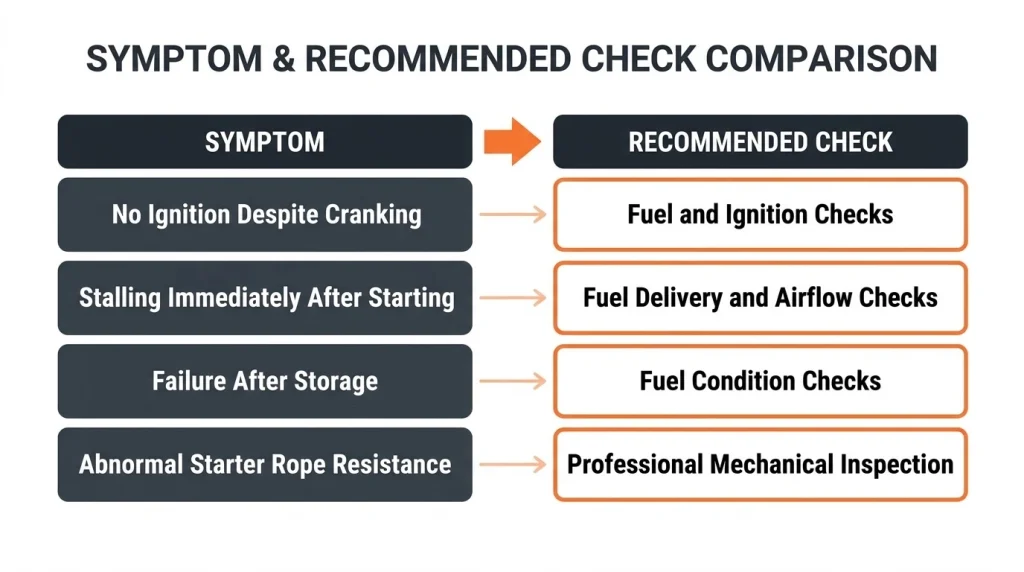
Observing how your chainsaw behaves during starting helps narrow the possible causes. Temperature, engine response, and starter resistance provide useful diagnostic clues.
If you
Notice no engine ignition despite normal cranking.
Choose fuel and ignition checks, because either system may be preventing combustion.
If you
Notice repeated stalling immediately after starting.
Choose fuel delivery and airflow checks, because the engine may not receive a suitable mixture.
If you
Experience starting failure after prolonged storage.
Choose fuel condition checks, because stored gasoline may deteriorate.
If you
Feel abnormal resistance while pulling the starter rope.
Choose professional mechanical inspection, because forcing the starter may worsen damage.
Chainsaw Won’t Start When Cold
A chainsaw that will not start when cold may have an unsuitable choke setting, poor fuel quality, or insufficient fuel delivery.
Review the cold-start instructions before assuming an engine component has failed. Models equipped with a primer bulb or decompression valve may require additional starting actions.
Chainsaw Won’t Start When Hot
A chainsaw that starts cold but fails to restart when warm may have temperature-related ignition or fuel delivery problems.
Use the manufacturer’s warm-start procedure instead of automatically repeating the cold-start sequence. Persistent temperature-related failures require further inspection.
Chainsaw Starts but Immediately Dies
A chainsaw that starts and then stops may have restricted fuel delivery, poor airflow, or an incorrect starting control position.
Inspect the fuel level and filter condition. If the engine repeatedly stalls after these checks, arrange further carburetor and fuel system diagnosis.
Chainsaw Won’t Start After Sitting
A chainsaw that fails to start after storage may contain deteriorated fuel or deposits inside the fuel system.
Begin with fresh manufacturer-approved fuel and inspect accessible components. Avoid replacing the carburetor before checking the fuel filter, air filter, and spark plug.
Why Won’t My Electric Chainsaw Start?
An electric chainsaw may fail to start because of an interrupted power supply, incorrect battery installation, engaged safety controls, or an electrical fault.
Unlike gasoline models, electric chainsaws do not require a carburetor, combustion chamber, or ignition spark plug to operate.
Battery-Powered Chainsaw Starting Problems
A battery chainsaw may remain inactive when its battery is discharged, incorrectly installed, incompatible, or outside its permitted operating temperature.
Check the following items:
- Battery charge level.
- Correct battery installation.
- Battery compatibility with the chainsaw.
- Power switch and trigger lockout position.
- Chain brake position.
- Battery or tool fault indicators.
Consult the owner’s manual to interpret warning lights. Persistent electrical faults may require service rather than battery replacement.
Corded Electric Chainsaw Starting Problems
A corded chainsaw may not start because of a disconnected plug, damaged power cord, interrupted electrical supply, or faulty operating controls.
Check the outlet and inspect the disconnected power cord for damage. Confirm that any extension cord meets the tool’s electrical requirements.
Do not operate a chainsaw with exposed wiring or a damaged plug. Internal electrical repairs should be performed by a qualified technician.
When Does a Chainsaw Need Professional Repair?
A chainsaw needs professional repair when basic maintenance fails, internal components appear damaged, or a fault affects safe operation.
Arrange an inspection when you encounter any of these conditions:
- Persistent fuel leakage.
- A starter rope that becomes locked.
- Suspected piston or cylinder damage.
- Repeated starting failure despite fresh fuel.
- Damaged safety controls or ignition wiring.
- Abnormal mechanical noises.
- Persistent electrical fault indicators.
Provide the technician with the chainsaw model, observed symptoms, and maintenance already performed. Accurate information can help narrow the diagnostic process.
If the chainsaw is covered by a warranty, check its service conditions before dismantling internal components.
How to Prevent Future Chainsaw Starting Problems

Regular maintenance helps prevent chainsaw starting problems by keeping the fuel, ignition, airflow, and starting systems in suitable operating condition.
Build these maintenance habits into your normal chainsaw care routine:
- Use fresh fuel that meets the manufacturer’s requirements.
- Follow the specified fuel and oil mixing instructions.
- Inspect and maintain the air filter regularly.
- Replace worn spark plugs with compatible parts.
- Follow the recommended long-term storage procedure.
- Inspect fuel hoses and accessible connections.
- Keep battery packs and electrical connections in suitable condition.
Follow the maintenance schedule in your owner’s manual rather than waiting for the chainsaw to stop working. Correct storage and routine inspections can reduce avoidable starting difficulties.
Chainsaw Spark Plug Wrench
A compatible spark plug wrench helps you remove and install the spark plug during routine ignition system inspections.
Frequently Asked Questions
Why won’t my brand-new chainsaw start?
A brand-new chainsaw may fail to start because of incorrect setup, unsuitable fuel, incomplete battery installation, or unfamiliar starting controls. Review the assembly and first-start instructions supplied with the tool. If the chainsaw still fails to operate, contact the manufacturer or retailer before attempting internal repairs.
Can a chainsaw have spark but still not start?
A chainsaw can produce an ignition spark without starting if the engine lacks suitable fuel, adequate airflow, or sufficient compression. A visible spark outside the engine does not establish that every ignition component works correctly under operating conditions. Additional diagnostic checks may be necessary.
Can using the wrong oil prevent chainsaw starting?
Using unsuitable oil in a gasoline chainsaw can affect combustion, lubrication, and spark plug condition, potentially contributing to starting difficulties. Bar and chain oil serves a different purpose from two-stroke engine oil. Consult the owner’s manual to identify the correct lubricant for each system.
Should I use starting fluid in my chainsaw?
Starting fluid should not be used in a chainsaw unless its manufacturer expressly permits the product and specifies a safe procedure. Unapproved starting aids can introduce fire risks or interfere with engine lubrication. Diagnose the original fuel delivery or ignition problem instead of relying on repeated starting fluid applications.
Can a loose spark plug stop a chainsaw from starting?
A loose spark plug may interfere with cylinder sealing and contribute to poor engine compression or unreliable starting performance. Inspect the plug installation using the manufacturer’s service instructions. Avoid excessive tightening because the cylinder threads and spark plug can become damaged during incorrect installation.
Why won’t my chainsaw start after replacing the spark plug?
A chainsaw may still fail to start after spark plug replacement because the original problem involves fuel delivery, ignition wiring, airflow, or compression. Confirm that the replacement plug matches the engine specifications. If the problem continues, investigate other systems rather than repeatedly replacing the plug.
Is a chainsaw worth repairing if it won’t start?
A chainsaw that will not start may be worth repairing when the problem involves routine maintenance or an accessible replacement component. Consider the repair estimate, overall condition, warranty coverage, and replacement cost. Obtain a professional diagnosis before deciding whether significant internal engine repairs make financial sense.
Conclusion
When a chainsaw won’t start, inspect its starting controls, power source, fuel condition, ignition system, and airflow before assuming major engine damage. Follow the manufacturer’s diagnostic instructions and arrange professional service if basic maintenance fails or mechanical damage is suspected.
I write about chainsaw maintenance, troubleshooting, replacement parts, safety, and buying guides. My goal is to make chainsaw information simple, practical, and helpful for homeowners and professionals.