
Chainsaw Dies When Hot and Won’t Restart: Causes and Fixes
Quick Answer
When a chainsaw dies when hot and won’t restart, possible causes include heat-related ignition failure, fuel starvation, vapor lock, carburetor problems, and restricted cooling airflow. Allow the engine to cool, follow the correct warm-start procedure, and check the fuel and ignition systems before replacing any parts.
- A failing ignition coil may stop producing a spark when hot.
- A restricted fuel tank vent can interrupt fuel delivery.
- Excessive heat can cause vapor lock inside the fuel system.
- Dirty cooling fins and air filters can contribute to engine problems.
- Repeated hot-start failure requires further diagnosis.
A chainsaw that starts easily when cold but stops working after warming up can interrupt your entire cutting job. The engine may refuse to restart until it has cooled completely.
This guide explains how to identify heat-related starting problems in gasoline chainsaws, check the likely causes, and determine which repairs your equipment may need.
In this article
- Why a Chainsaw Dies When Hot
- Symptoms and Possible Causes
- Correct Hot Restart Procedure
- Ignition Coil Problems
- Blocked Fuel Tank Vent
- Fuel Vapor Lock
- Carburetor Problems
- Spark Plug Problems
- Air Filter and Cooling Problems
- Engine Compression Problems
- Step-by-Step Troubleshooting
- How to Prevent Hot Starting Problems
- When to Seek Professional Repair
- Frequently Asked Questions
- Conclusion
Why Does a Chainsaw Die When Hot and Refuse to Restart?
A chainsaw can stop running when hot because engine temperature affects ignition components, fuel delivery, and internal engine operation.
A gasoline chainsaw needs an appropriate fuel and air mixture, sufficient compression, and a reliable spark. A problem in any of these areas can prevent combustion.
When an engine warms up, an existing mechanical or electrical fault may become more noticeable. Cooling can temporarily restore operation without resolving the underlying problem.
Why Does the Chainsaw Start Again After Cooling?
A chainsaw may restart after cooling because a temperature-sensitive component begins working again or fuel delivery returns to normal.
For example, an ignition module may operate normally when cold but fail after prolonged use. Excessive fuel temperature can also interfere with fuel delivery until the engine cools.
The ability to restart after cooling is a useful diagnostic clue. However, it does not confirm which component has failed.
Chainsaw Hot Starting Symptoms and Possible Causes
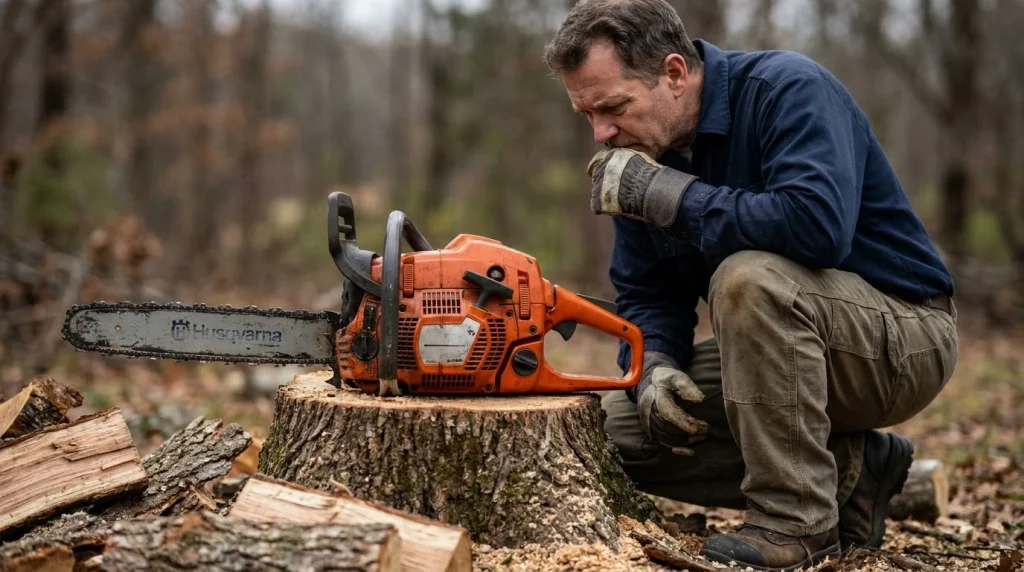
The way your chainsaw stops running can help narrow down the possible causes. Pay attention to whether the engine stops suddenly, loses power gradually, or stalls at idle.
The following table compares common symptoms with possible faults and the appropriate checks.
| Symptom | Possible Cause | What to Check |
|---|---|---|
| Sudden engine shutdown | Ignition failure | Ignition module and wiring |
| Gradual power loss | Fuel starvation | Fuel filter, lines, and vent |
| Won’t restart after stopping | Vapor lock or flooding | Fuel temperature and choke setting |
| Stalls at warm idle | Carburetor or air leak | Idle system and engine seals |
| Unusually hot engine | Cooling restriction or excessive load | Cooling fins and air intake |
| Starter becomes difficult to pull | Mechanical damage or binding | Professional engine inspection |
Use these symptoms to guide your inspection rather than treating them as proof that a particular part needs replacement.
How to Restart a Hot Chainsaw Correctly
A hot chainsaw should be restarted using the warm-start procedure specified in its operator’s manual.
Using the cold-start procedure on a warm engine can introduce excess fuel and cause flooding. However, choke settings and starting controls differ between chainsaw models.
Husqvarna provides a model-dependent hot-start procedure for gasoline chainsaws.
- Check for visible fuel leaks, smoke, or signs of overheating.
- Allow an excessively hot chainsaw to cool in a shaded area.
- Engage the chain brake before attempting to start the engine.
- Set the ignition and starting controls according to the operator’s manual.
- Place the chainsaw securely on the ground and use the approved starting technique.
- Return the engine to normal idle after starting, following the manufacturer’s instructions.
If the engine repeatedly fails to start, stop pulling the starter rope and investigate the cause.
Warning
Hot fuel can escape under pressure and ignite. Never open the fuel cap while the engine is running or excessively hot. Allow the chainsaw to cool first.
Check for a Heat-Related Ignition Coil Failure
A failing ignition coil can cause a chainsaw to stop running when hot and prevent it from restarting until the ignition system cools.
The ignition coil produces the electrical voltage needed to create a spark at the spark plug. An internal electrical fault may interrupt spark production as the component heats up.
Signs of a Failing Ignition Coil
A temperature-sensitive ignition fault often causes an engine to run normally when cold before shutting down unexpectedly.
- The engine stops abruptly during normal operation.
- Starting becomes difficult as the engine warms up.
- The ignition system loses spark while hot.
- Spark returns after the engine cools.
- The same shutdown pattern occurs during repeated use.
Damaged ignition wires, loose connections, and a faulty stop switch can produce similar symptoms.
How to Diagnose an Ignition Problem
Comparing ignition performance when the engine is cold and warm can help identify an intermittent electrical fault.
A qualified technician can use an appropriate ignition spark tester to check whether the ignition system continues working at operating temperature.
Testing must follow the equipment manufacturer’s service procedure. Avoid exposed spark testing near gasoline, fuel vapors, or hot engine components.
Replace the ignition coil only after confirming that the module is responsible for the fault.
Check for a Blocked Fuel Tank Vent
A blocked fuel tank vent can restrict fuel delivery and cause a chainsaw to lose power or stop running after extended use.
The tank vent helps balance air pressure inside the fuel tank as the engine consumes gasoline. A restriction can create a vacuum that interferes with fuel flow.
The engine may restart after sitting because the pressure inside the tank gradually changes.
Symptoms of a Restricted Fuel Tank Vent
Fuel tank ventilation problems can produce symptoms that resemble a dirty fuel filter or a faulty carburetor.
- The chainsaw starts normally when cold.
- Engine power decreases during cutting.
- The engine struggles to maintain speed.
- The chainsaw stalls despite having fuel in the tank.
- Starting becomes easier after the saw rests.
Inspect accessible vent components after the chainsaw has cooled. Follow the manufacturer’s instructions for cleaning, testing, or replacing the vent.
Never operate a chainsaw with a loose fuel cap to compensate for a blocked vent.
Can Fuel Vapor Lock Stop a Hot Chainsaw?
Fuel vapor lock can interfere with gasoline delivery when excessive heat causes fuel to vaporize inside the fuel system.
The condition may occur during demanding cutting work, hot weather, or exposure to direct sunlight. Fuel temperature can also rise after the engine stops.
Husqvarna identifies excessive fuel temperature as a possible cause of hot-start failure in its hot chainsaw restarting guide.
How to Reduce Fuel Vapor Lock
Reducing engine and fuel temperatures can help prevent heat-related fuel delivery problems.
- Use fresh fuel that meets the manufacturer’s requirements.
- Keep the chainsaw out of direct sunlight during breaks.
- Allow the equipment to cool between demanding cutting tasks.
- Keep the engine cooling system clean.
- Follow the recommended warm-start procedure.
Repeated vapor lock under ordinary working conditions may require inspection of the fuel system or engine cooling components.
Inspect the Carburetor and Fuel Delivery System
A chainsaw carburetor can cause warm-engine stalling when it cannot supply the correct fuel and air mixture.
The carburetor regulates fuel delivery according to engine speed and operating demand. Contamination, worn internal parts, and incorrect adjustments can interfere with this process.
Worn Carburetor Diaphragms
Worn or hardened carburetor diaphragms can interfere with the movement and regulation of fuel inside a diaphragm-type carburetor.
These flexible components can deteriorate with age and fuel exposure. An affected chainsaw may experience unstable idle, poor acceleration, or inconsistent restarting.
Carburetor testing can determine whether cleaning, rebuilding, or replacement is appropriate.
Restricted Fuel Filter or Damaged Fuel Lines
A clogged fuel filter or damaged fuel line can prevent the engine from receiving enough gasoline during operation.
Fuel delivery problems may become more noticeable during heavy cutting because the engine requires more fuel under load.
Inspect the fuel system for contamination, damaged hoses, and visible leakage after the engine cools. Replace damaged components with compatible parts.
Incorrect Carburetor Adjustment
An incorrect carburetor setting can produce an excessively rich or lean fuel mixture.
A lean mixture contains insufficient fuel relative to the incoming air and can contribute to excessive engine temperatures. A rich mixture can contribute to flooding and spark plug fouling.
Do not change carburetor adjustment screws to compensate for an unidentified engine problem. Some chainsaws require specialized tools or electronic diagnostic equipment.
Check the Spark Plug for Fouling or Damage
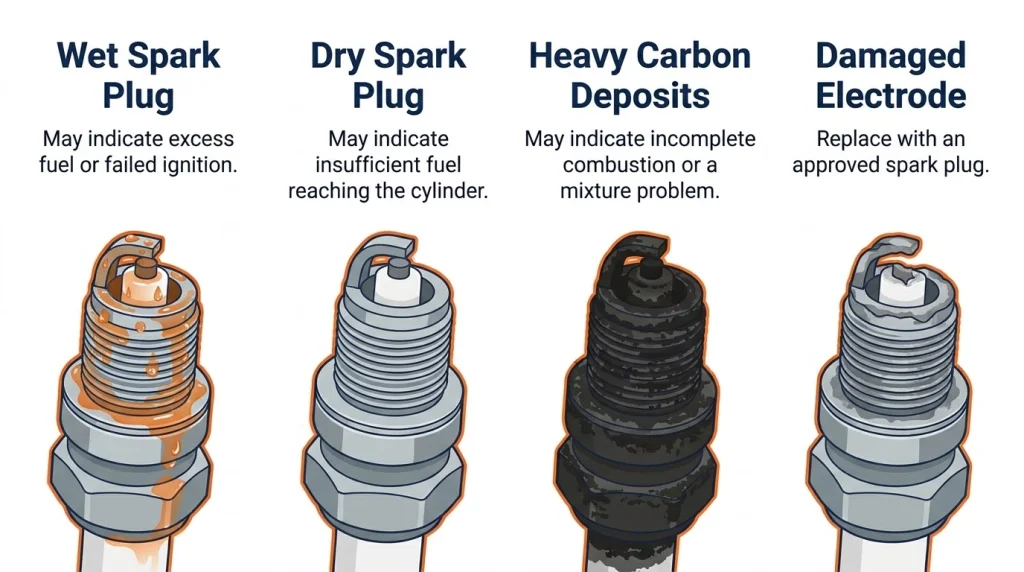
A worn, damaged, or fouled spark plug can contribute to difficult restarting when a chainsaw engine is warm.
The spark plug ignites the compressed fuel and air mixture inside the cylinder. Deposits and electrode damage can interfere with reliable ignition.
Allow the chainsaw to cool and disconnect the spark plug boot before removing the plug according to the operator’s manual.
- Wet spark plug: May indicate excess fuel or failed ignition.
- Dry spark plug: May indicate insufficient fuel reaching the cylinder.
- Heavy carbon deposits: May indicate incomplete combustion or a mixture problem.
- Damaged electrode: Requires replacement with an approved spark plug.
Spark plug appearance provides diagnostic clues but does not establish the cause by itself.
Use the spark plug type, electrode gap, and installation torque specified by the chainsaw manufacturer.
Inspect the Air Filter and Engine Cooling System
Restricted intake airflow, blocked cooling passages, and exhaust restrictions can contribute to chainsaw stalling and starting problems.
Dirty Air Filter
A dirty air filter restricts the air entering the carburetor and can interfere with normal combustion.
Inspect the filter for sawdust, oil residue, and accumulated dirt. Clean or replace the filter using the procedure appropriate for its material.
Never run the chainsaw without its air filter installed.
Blocked Cylinder Cooling Fins
Blocked cylinder cooling fins reduce the engine’s ability to release heat during operation.
Sawdust and oily debris can accumulate around cooling passages. Clean accessible cooling areas only after the engine has cooled and accidental starting has been prevented.
Persistent overheating despite a clean cooling system requires further diagnosis.
Clogged Spark Arrestor Screen
A clogged spark arrestor screen can restrict exhaust flow and reduce engine performance.
The spark arrestor is a screen designed to limit the release of hot particles from the exhaust. Carbon buildup can restrict the passage of exhaust gases.
Husqvarna discusses these restrictions in its chainsaw stalling troubleshooting guide.
Clean or replace the screen according to the manufacturer’s instructions. Never permanently remove a required spark arrestor.
Check for Engine Compression Problems
Insufficient engine compression can make a chainsaw difficult to start and cause poor performance as operating conditions change.
Compression is the pressure created when the piston squeezes the fuel and air mixture inside the cylinder. The engine needs sufficient compression for reliable combustion.
Possible Causes of Compression Loss
Internal wear or damage can reduce compression and interfere with normal engine operation.
- Worn piston rings.
- Damaged cylinder surfaces.
- Piston scoring.
- Leaking decompression valve, where fitted.
- Other internal mechanical damage.
A technician can use a compression tester and additional engine tests to determine whether internal repairs are necessary.
Compression specifications vary by model, so a universal pressure reading should not determine whether every chainsaw engine is healthy.
Step-by-Step Chainsaw Hot Restart Troubleshooting
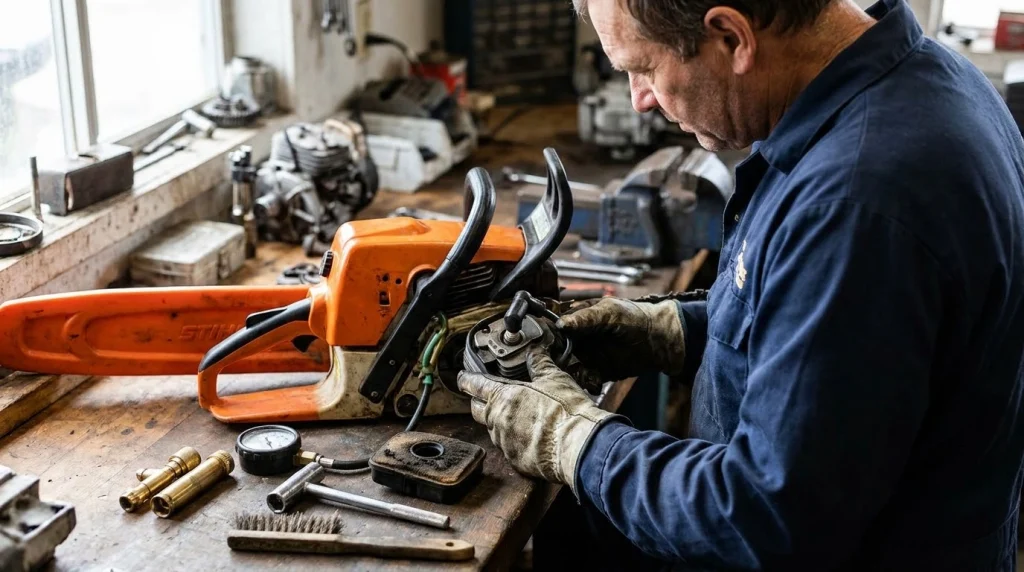
Diagnose hot restart failure by checking operating conditions, basic maintenance items, fuel delivery, ignition, and internal engine condition in a logical order.
Step 1
Record the shutdown symptoms
Notice whether the engine stops suddenly, loses power gradually, or stalls when you release the throttle.
Step 2
Allow the engine to cool
Switch off the chainsaw and move it to a safe, shaded location away from combustible materials.
Step 3
Inspect the basic maintenance items
Check the fuel condition, air filter, cooling passages, spark plug, and accessible fuel lines.
Step 4
Investigate the fuel system
Check for fuel delivery restrictions and arrange testing of the tank vent and carburetor when necessary.
Step 5
Test the ignition system
Have the ignition system checked for intermittent faults that appear as engine temperature increases.
Step 6
Arrange mechanical testing
Request compression, pressure, and vacuum testing if basic maintenance and ignition checks do not identify the fault.
Following a diagnostic sequence helps avoid unnecessary replacement of expensive components. Do not deliberately reproduce a shutdown if the chainsaw shows signs of unsafe operation.
How to Prevent Chainsaw Hot Starting Problems
Regular maintenance, correct fuel preparation, and appropriate operating practices can reduce the likelihood of heat-related chainsaw starting problems.
Do
- Use fresh fuel and the specified oil mixture.
- Clean filters and cooling passages regularly.
- Maintain proper chain sharpness and tension.
Avoid
- Operating with blocked cooling passages.
- Ignoring repeated engine shutdowns.
- Making unverified carburetor adjustments.
Maintain the Cutting Chain
A properly maintained cutting chain reduces unnecessary cutting resistance and engine workload.
A dull chain can make cutting more demanding and encourage excessive pressure on the guide bar. Keep the chain sharp and adjust its tension according to the operator’s manual.
Use the Correct Fuel Mixture
The correct gasoline and oil mixture supports combustion and internal lubrication in a two-stroke chainsaw engine.
Use the fuel grade, oil type, and mixing ratio specified for your model. Avoid assuming that every gasoline chainsaw uses the same mixture.
Allow Cooling Breaks During Demanding Work
Cooling breaks help manage equipment temperatures during demanding cutting tasks and hot weather.
Stop working if the engine develops unusual heat, unstable operation, or repeated power loss. Inspect the equipment before continuing.
When Should You Take a Chainsaw to a Repair Shop?
Professional repair is appropriate when hot-start problems persist after basic maintenance or when the chainsaw shows signs of mechanical damage.
Arrange professional inspection if you notice any of the following conditions:
- Repeated shutdowns after the engine warms up.
- Visible fuel leakage or damaged fuel lines.
- Unusual knocking, grinding, or metallic engine noises.
- A starter rope that suddenly becomes difficult to pull.
- Persistent overheating during normal cutting.
- Uncontrolled engine speed or a chain moving at normal idle.
- Suspected piston, cylinder, or crankcase seal damage.
Provide the technician with your chainsaw model, fuel condition, maintenance history, and a description of when the engine stops.
These details can help distinguish an intermittent ignition fault from fuel starvation, overheating, or internal engine damage.
Ignition Spark Tester
A compatible ignition spark tester can help diagnose intermittent ignition faults when used according to the equipment manufacturer’s service instructions.
Frequently Asked Questions
Can a new chainsaw have hot starting problems?
A new chainsaw can experience hot starting problems because of incorrect starting procedures, unsuitable fuel, or a defective component. Check the operator’s manual before changing any factory settings. If the problem persists under normal operating conditions, contact an authorized service center to discuss warranty coverage.
Can an air leak cause warm-engine stalling?
An air leak can cause warm-engine stalling by allowing unmetered air to enter the engine and disrupt its fuel mixture. Possible leak locations include intake connections, gaskets, and crankshaft seals. Professional pressure and vacuum testing can help locate leaks without unnecessary component replacement.
Should I use starting fluid on a hot chainsaw?
Starting fluid should not be used on a hot chainsaw unless the manufacturer explicitly approves it for that engine. Flammable starting fluids can create fire hazards and may interfere with proper lubrication in two-stroke engines. Diagnose the underlying starting problem instead of relying on temporary starting aids.
Can a bad decompression valve prevent hot restarting?
A faulty decompression valve can contribute to difficult hot restarting if the valve fails to seal properly during engine operation. Not every chainsaw has a decompression valve. A technician can inspect the valve and determine whether it is affecting cylinder compression or requires replacement.
Can low bar oil cause a chainsaw to stall?
Insufficient bar and chain lubrication can increase cutting resistance and place additional load on the chainsaw engine during cutting. Low bar oil does not directly establish the cause of a hot-start failure. Stop cutting and inspect the lubrication system if the bar becomes unusually hot.
Why does my chainsaw stall only at full throttle?
A chainsaw that stalls at full throttle may have restricted fuel delivery, an exhaust blockage, or a fuel mixture problem. These faults can become more noticeable as engine demand increases. Avoid repeated high-speed testing until the fuel supply, exhaust system, and carburetor have been inspected.
Does a hot-start problem mean the engine is ruined?
A hot-start problem does not automatically mean that a chainsaw engine has suffered permanent internal damage or needs replacement. Fuel restrictions and intermittent electrical faults may be repairable without rebuilding the engine. Mechanical testing is appropriate when the equipment develops abnormal noises, binding, or persistent compression problems.
Conclusion
When a chainsaw dies when hot and won’t restart, check fuel delivery, ignition performance, cooling airflow, and the correct starting procedure. If basic maintenance does not resolve repeated hot-start failure, arrange professional ignition and fuel system testing before replacing components.

I write about chainsaw maintenance, troubleshooting, replacement parts, safety, and buying guides. My goal is to make chainsaw information simple, practical, and helpful for homeowners and professionals.