
Why Won’t My Chainsaw Start When Hot? Causes and Fixes
Quick Answer
A chainsaw that won’t start when hot may have a failing ignition coil, vapor lock, a flooded engine, restricted fuel delivery, or an incorrect warm-start procedure. If the chainsaw starts normally after cooling down, focus on temperature-sensitive ignition and fuel system problems before replacing expensive engine components.
- A failing ignition coil may stop producing a spark when heated.
- Excessive fuel temperature can interrupt fuel delivery.
- Using full choke on a warm engine can cause flooding.
- A blocked fuel tank vent may restrict fuel flow.
- Recurring hot-start problems require proper diagnosis.
Why won’t my chainsaw start when hot? If your chainsaw starts easily before cutting but refuses to restart afterward, engine temperature may be affecting its ignition or fuel system.
This guide explains how to identify the underlying problem, restart your chainsaw safely, and prevent repeated warm-start failures.
In this article
- Why chainsaws fail to start when hot
- Heat-sensitive ignition coil
- Fuel vapor lock
- Engine flooding
- Blocked fuel tank vent
- Carburetor problems
- Spark plug problems
- Engine overheating
- Low engine compression
- Hot-start troubleshooting
- Safe warm-start procedure
- Preventing hot-start problems
- When professional repair is necessary
- Frequently Asked Questions
- Conclusion
Why Won’t a Chainsaw Start When Hot?
A chainsaw may fail to start when hot because rising temperatures affect ignition performance, fuel delivery, or the air and fuel mixture inside the engine.
A gasoline chainsaw needs fuel, air, compression, and a functioning ignition system. A problem with any of these can prevent the engine from restarting.
However, a chainsaw that starts normally when cold presents a more specific troubleshooting situation. The difference between cold and warm operation provides a useful diagnostic clue.
The following table compares common hot-start problems and their associated symptoms.
| Possible Cause | Common Symptom | Next Check |
|---|---|---|
| Ignition coil | Spark disappears when hot | Ignition system diagnosis |
| Vapor lock | Starting improves after cooling | Fuel temperature and condition |
| Flooded engine | Failure after repeated choke use | Starting procedure |
| Blocked tank vent | Gradual power loss or stalling | Fuel tank ventilation |
| Carburetor | Poor idle or difficult restarting | Fuel metering system |
| Low compression | Weak performance and difficult starting | Engine condition |
These symptoms help narrow the possible causes, but none confirms a defective component without further inspection.
A Failing Ignition Coil When the Engine Is Hot
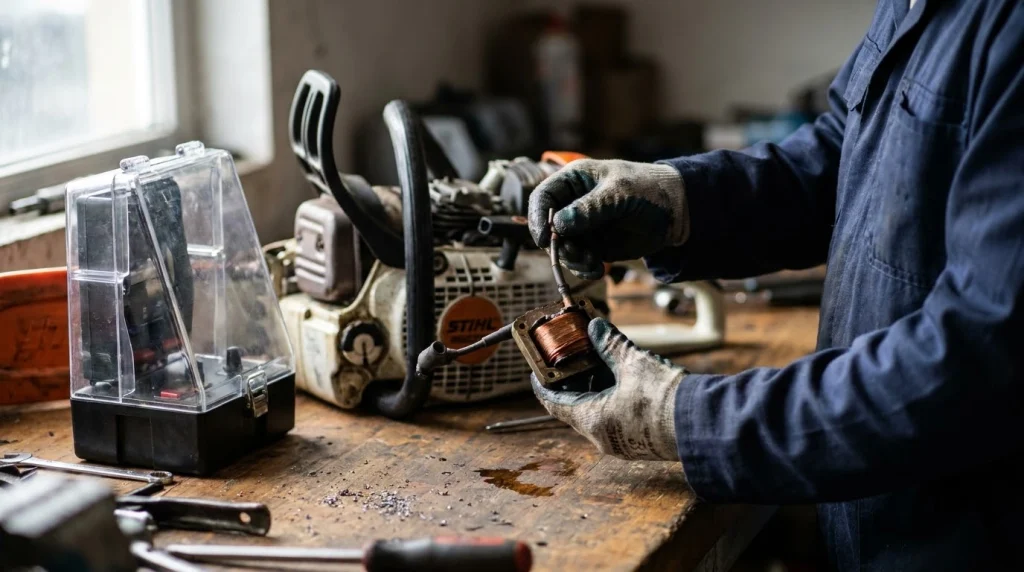
A damaged ignition coil can develop temperature-sensitive electrical faults that prevent a chainsaw from producing a reliable spark when the engine becomes hot.
The ignition coil supplies the electrical energy needed by the spark plug. Without sufficient spark, the engine cannot ignite its fuel and air mixture.
Some ignition faults disappear temporarily as the engine cools. This can make a defective ignition system difficult to diagnose when the chainsaw is cold.
Signs of a Heat-Sensitive Ignition Problem
Heat-sensitive ignition problems often produce a repeating pattern of normal cold starts followed by difficult warm starts.
- The chainsaw starts normally before use.
- The engine stops unexpectedly after warming up.
- The starter rope turns the engine without ignition.
- The chainsaw restarts after cooling.
- The same failure returns during subsequent use.
A technician can compare ignition performance under cold and warm conditions using a suitable spark tester. The spark plug, ignition wiring, and stop switch should also be checked.
Warning
Exposed ignition sparks can ignite gasoline vapors. Avoid improvised spark tests near fuel, and have a technician inspect the ignition system if necessary.
Fuel Vapor Lock in a Hot Chainsaw
Vapor lock occurs when excessive heat causes fuel to vaporize inside the fuel delivery system, interfering with the liquid fuel supply needed for engine operation.
Chainsaws produce heat during normal cutting. Heavy workloads, high outdoor temperatures, and direct sunlight can increase the temperature of the fuel system.
After you stop the engine, remaining engine heat can continue warming nearby components. This may contribute to a starting problem even though the chainsaw operated normally moments earlier.
How to Recognize Fuel Vapor Lock
Fuel vapor lock becomes more plausible when starting problems appear during hot weather, after demanding cutting sessions, or shortly after shutting down a warm engine.
- The chainsaw becomes difficult to restart after cutting.
- Starting problems occur more often in hot weather.
- The engine may briefly start and then stop.
- The problem improves after the chainsaw cools.
Husqvarna recommends moving an affected chainsaw into a shaded, cooler area for at least 20 minutes before attempting another start.
Its hot chainsaw restart guidance also identifies excessive fuel temperature as a potential cause of warm-weather starting failures.
Cooling the saw can help resolve a temporary fuel temperature problem. However, repeated failures may indicate another issue requiring inspection.
Using Too Much Choke Can Flood a Warm Engine
A warm chainsaw can become flooded when repeated starting attempts introduce more fuel than the engine can successfully ignite.
The choke restricts incoming air to create a richer fuel mixture during cold starting. A warm engine generally needs less enrichment than a cold engine.
Using an inappropriate choke setting can therefore introduce excess fuel into the combustion chamber.
Symptoms of a Flooded Chainsaw
A flooded chainsaw may fail to ignite after repeated starter pulls, particularly when the choke remains in its cold-start position.
- A strong gasoline smell.
- Repeated unsuccessful starting attempts.
- A fuel-wet spark plug found during inspection.
- Brief ignition followed by another failure to start.
STIHL identifies excessive starting attempts with the choke engaged as a frequent reason for flooding in its chainsaw troubleshooting FAQ.
If you suspect flooding, stop repeated starting attempts. Follow the flooded-engine recovery procedure in your particular chainsaw’s instruction manual.
Do not assume that every chainsaw uses the same choke, primer bulb, or fast-idle settings.
A Blocked Fuel Tank Vent Restricts Fuel Flow
A blocked fuel tank vent can prevent air from entering the fuel tank as gasoline is consumed, creating negative pressure that restricts fuel delivery.
The tank vent helps maintain suitable pressure inside the fuel system. When the vent becomes restricted, the engine may struggle to receive enough fuel.
This problem can appear after extended operation rather than during the initial cold start. It can therefore resemble a temperature-related ignition failure.
Signs of a Fuel Tank Vent Problem
A restricted fuel tank vent may cause gradual power loss, inconsistent running, or an engine that stops and becomes difficult to restart.
- The chainsaw loses power while cutting.
- The engine hesitates before stopping.
- Starting becomes difficult after continued operation.
- The problem returns despite having sufficient fuel.
These symptoms can also occur with a blocked fuel filter or damaged fuel line. Proper fuel system diagnosis helps distinguish between these faults.
Never loosen the fuel cap on a hot or running chainsaw to test the vent. Allow the engine to cool before any fuel system inspection.
Carburetor Problems Affect Warm Starting
A dirty, damaged, or incorrectly adjusted carburetor can prevent a warm chainsaw from receiving the correct mixture of fuel and air.
The carburetor controls how much fuel enters the engine. Deposits, damaged internal parts, or incorrect settings can interfere with that process.
Many gasoline chainsaws use a diaphragm carburetor. The diaphragm is a flexible internal component involved in fuel pumping or metering.
Common Carburetor-Related Symptoms
Carburetor faults often affect engine behavior beyond warm starting, including idle stability, acceleration, and fuel consumption.
- The engine starts but cannot maintain idle.
- The chainsaw hesitates during acceleration.
- The engine stalls after releasing the throttle.
- Fuel consumption appears abnormal.
- Starting requires unusual choke settings.
Do not randomly adjust carburetor screws to compensate for an unexplained hot-start problem. Incorrect fuel mixture settings can affect engine performance and durability.
Have the carburetor inspected according to the manufacturer’s specifications, especially if basic fuel and ignition checks do not identify the problem.
A Worn or Fouled Spark Plug
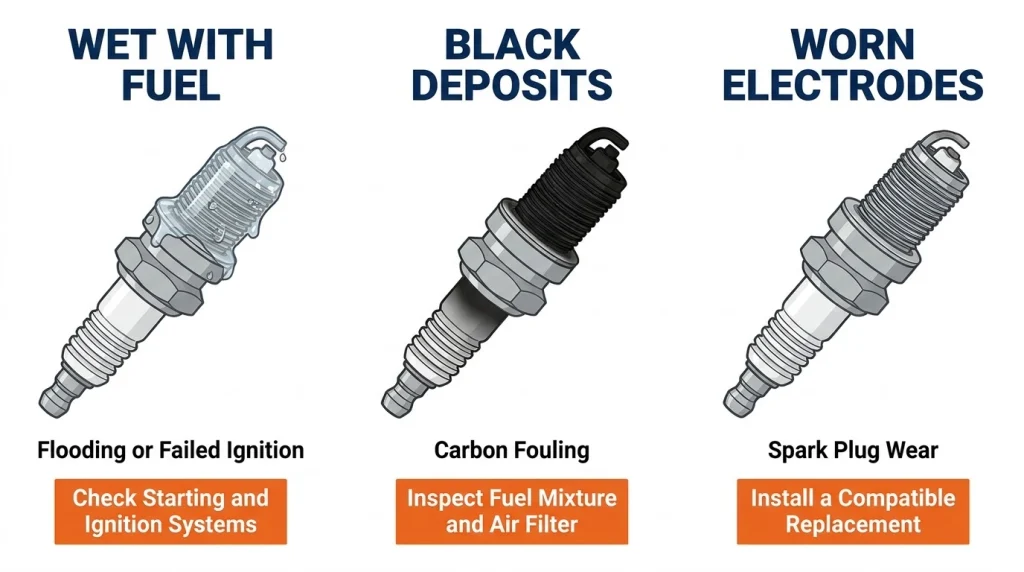
A worn, damaged, or contaminated spark plug can make ignition unreliable and contribute to difficult restarting when a chainsaw is warm.
The spark plug ignites the compressed fuel and air mixture. Electrode wear, carbon deposits, and incorrect electrode spacing can interfere with reliable ignition.
A replacement plug must match the specifications listed in the chainsaw’s instruction manual.
What Spark Plug Condition Can Tell You
Spark plug appearance can provide clues about ignition and fuel mixture problems, although appearance alone cannot confirm the underlying fault.
| Plug Condition | Possible Explanation | Next Action |
|---|---|---|
| Wet with fuel | Flooding or failed ignition | Check starting and ignition systems |
| Black deposits | Carbon fouling | Inspect fuel mixture and air filter |
| Worn electrodes | Spark plug wear | Install a compatible replacement |
A new spark plug may resolve a plug-related fault, but it will not repair a defective ignition coil or restricted fuel system.
Engine Overheating and Restricted Airflow
Excessive engine temperature can contribute to hot-start problems by increasing heat around the carburetor, fuel system, and ignition components.
Gasoline chainsaws generally use air cooling to control engine temperature. Cooling fins and air passages help transfer heat away from the engine.
Sawdust, dirt, and other debris can interfere with this process when they accumulate around cooling passages.
Conditions That Increase Chainsaw Operating Temperature
Demanding cutting conditions and poor maintenance can increase engine workload or reduce the effectiveness of its cooling system.
- Blocked engine cooling passages.
- Heavy cutting during hot weather.
- A dull cutting chain.
- Incorrect fuel and oil mixture.
- Improper carburetor settings.
- Accumulated debris around the engine.
Allow the chainsaw to cool before cleaning accessible cooling areas. Follow the maintenance instructions for removing covers and inspecting the engine.
Persistent overheating should not be treated as a normal warm-start characteristic.
Low Engine Compression and Hot-Start Failure
Insufficient engine compression can make a chainsaw difficult to start because the combustion chamber cannot maintain the pressure needed for reliable operation.
Compression problems may result from worn piston rings, cylinder damage, or other internal engine faults. These faults can also reduce cutting performance.
Starting difficulty alone does not establish that the engine has low compression. A temperature-related fuel or ignition problem may produce similar symptoms.
Husqvarna’s guide to common chainsaw problems identifies piston damage, piston ring problems, and leaking seals as possible causes of poor engine performance.
Have compression and engine sealing checked against model-specific service requirements before deciding whether internal repairs are necessary.
How to Diagnose a Chainsaw That Won’t Start Hot
Diagnose a hot-start problem by checking the starting procedure, fuel condition, operating symptoms, and ignition system before considering carburetor or internal engine repairs.
Step 1
Identify the Failure Pattern
Determine whether the chainsaw stopped during cutting or refused to restart after an intentional shutdown.
Step 2
Confirm the Warm-Start Settings
Check the manufacturer’s recommended choke, ignition switch, and starting control positions.
Step 3
Allow the Chainsaw to Cool
Move the stopped chainsaw away from direct sunlight. Note whether normal starting returns after cooling.
Step 4
Check Basic Fuel and Air Maintenance
Once the engine is cool, check fuel condition and accessible filters according to the instruction manual.
Step 5
Arrange an Ignition and Fuel System Test
Have a technician compare ignition performance when cold and warm. Request fuel delivery checks if ignition performance is normal.
Step 6
Check Engine Condition
Consider carburetor, compression, and engine sealing tests when simpler checks do not explain the fault.
A systematic diagnosis reduces unnecessary component replacement and helps identify faults that appear only at operating temperature.
How to Safely Restart a Hot Chainsaw
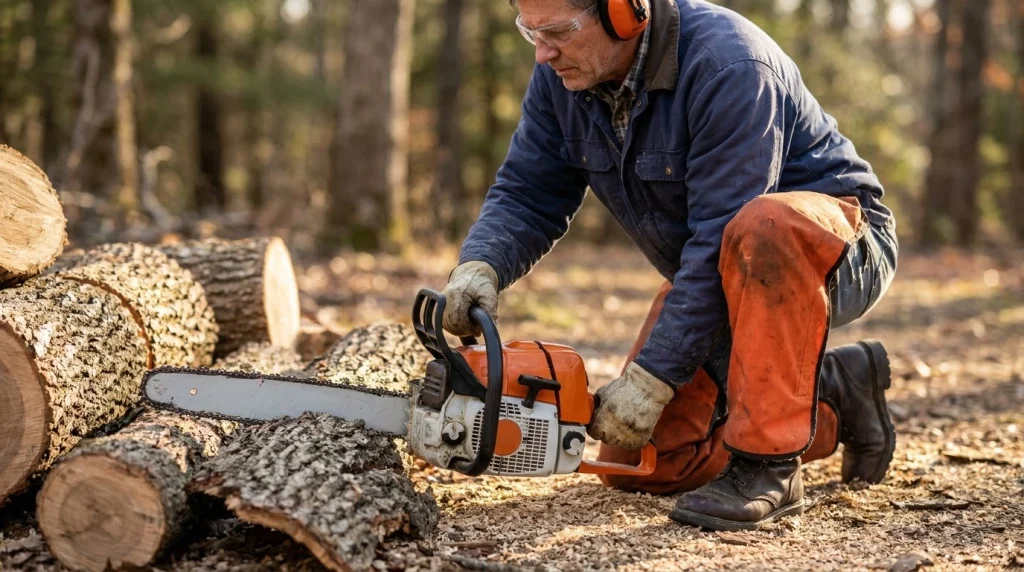
Restart a hot chainsaw using its model-specific warm-start procedure rather than automatically repeating the cold-start sequence.
Starting controls vary between manufacturers and models. Some chainsaws have combined choke and fast-idle controls, while others use separate settings.
- Check for visible damage, fuel leakage, or other unsafe conditions.
- Engage the chain brake.
- Set the ignition and starting controls as directed by the instruction manual.
- Position the chainsaw securely with the cutting attachment clear of obstructions.
- Use the manufacturer’s approved starting position and starter procedure.
- Stop repeated attempts if the engine fails to start.
- Allow the engine to cool before further inspection.
Once the engine starts, follow the manufacturer’s instructions for returning the engine to idle and releasing the chain brake before cutting.
Do not continue using a chainsaw that stalls unpredictably or cannot maintain normal idle speed.
How to Prevent Chainsaw Hot-Start Problems
Proper fuel preparation, routine maintenance, correct starting techniques, and suitable operating conditions can reduce avoidable hot-start problems.
Use Fresh Fuel With the Correct Oil Mixture
Fresh fuel prepared according to the manufacturer’s requirements supports reliable combustion and helps prevent problems associated with degraded gasoline.
Use the specified fuel type and oil ratio for your particular chainsaw. Avoid assuming that every gasoline chainsaw requires the same mixture.
Maintain the Air Filter and Cooling System
Regular air filter and cooling system maintenance helps maintain suitable airflow and engine operating conditions.
Inspect accessible cooling areas and clean the air filter according to its material and the manufacturer’s instructions. Replace damaged components when necessary.
Keep the Cutting Chain Sharp
A properly sharpened cutting chain reduces unnecessary cutting effort and helps avoid placing excessive demands on the engine.
Inspect the chain when cutting performance declines. Check chain tension and lubrication according to the operating manual.
Record Repeated Starting Problems
Recording when a starting problem occurs helps distinguish between overheating, fuel delivery faults, and temperature-sensitive ignition failures.
Note the outdoor conditions, cutting workload, starting control settings, and whether the engine stopped during use.
This information gives a service technician a clearer picture of an intermittent fault.
When Does a Hot-Start Problem Need Professional Repair?
A chainsaw needs professional diagnosis when hot-start failures repeatedly return despite correct starting procedures, suitable fuel, and routine maintenance.
Arrange an inspection when you notice any of the following conditions.
- Repeated engine shutdown during cutting.
- Persistent overheating.
- Unexplained fuel leakage.
- Suspected temperature-sensitive ignition failure.
- Significant loss of engine power.
- Possible internal engine damage.
A technician may use an ignition spark tester, fuel system testing equipment, and model-specific service procedures to isolate the problem.
Correct diagnosis is particularly useful when the chainsaw operates normally during cold inspections but fails after warming up.
As an Amazon Associate, this site earns from qualifying purchases.
Ignition Spark Tester
A compatible ignition spark tester helps identify ignition faults when used according to the equipment manufacturer’s safe testing instructions.
Frequently Asked Questions
Can a new chainsaw have hot-start problems?
A new chainsaw can experience warm-start difficulties because of incorrect starting controls, unsuitable fuel, flooding, or a component fault. Age alone does not rule out mechanical problems.
If the problem repeatedly occurs on a new machine, contact the authorized servicing dealer before attempting repairs that could affect warranty coverage.
Can old gasoline cause hot-start problems?
Old gasoline can contribute to poor combustion and fuel system deposits that make chainsaw starting less reliable. However, degraded fuel can also cause problems when the engine is cold.
Replace questionable fuel according to the manufacturer’s instructions before assuming that a temperature-sensitive electrical component has failed.
Should I use starting fluid on a hot chainsaw?
Starting fluid should not be used on a hot chainsaw unless the manufacturer specifically approves the product and its application. Flammable sprays introduce additional ignition hazards.
Follow the approved starting procedure and investigate the fuel or ignition fault instead of attempting to force the engine to start.
Can a blocked exhaust affect warm starting?
A restricted exhaust can contribute to poor engine performance and difficult starting by interfering with the movement of exhaust gases. A contaminated spark arrestor screen is one possible restriction.
Inspect and maintain the exhaust system only after the engine has cooled, following the manufacturer’s approved cleaning procedures.
Does a hot-start problem mean the engine is damaged?
A hot-start problem does not automatically indicate internal engine damage because starting controls, fuel temperature, and ignition faults can produce similar symptoms. Internal repairs require supporting diagnostic evidence.
Investigate simpler causes before deciding that the chainsaw needs a piston, cylinder, or complete engine replacement.
Is replacing the ignition coil always necessary?
Replacing the ignition coil is appropriate only when diagnosis identifies the coil as the source of unreliable ignition. Cooling-related improvements alone cannot confirm a defective coil.
Checking the spark plug, electrical connections, and fuel system can help prevent replacing an ignition component that still works correctly.
Can refueling cause a chainsaw hot-start problem?
A chainsaw that refuses to restart after refueling may have a warm-start control problem or an existing temperature-related fuel fault. The timing of the failure does not prove the cause.
Always allow the engine to cool before refueling and follow the manufacturer’s fuel handling and restart instructions.
Conclusion
If you are wondering why won’t my chainsaw start when hot, check the warm-start procedure, fuel delivery, and ignition system first. A chainsaw that repeatedly fails after warming up needs proper diagnosis before further use or component replacement.

I write about chainsaw maintenance, troubleshooting, replacement parts, safety, and buying guides. My goal is to make chainsaw information simple, practical, and helpful for homeowners and professionals.