
Why Won’t My Chainsaw Start When Cold? Causes and Fixes
Quick Answer
If your chainsaw won’t start when cold, the likely causes include incorrect choke settings, stale fuel, a flooded engine, a faulty spark plug, or restricted fuel flow. Cold engines need a richer fuel mixture to start. Check the starting controls, fuel condition, and ignition system before considering more complex repairs.
- Follow the cold-start procedure in your owner’s manual.
- Replace stale fuel with the correct fresh fuel mixture.
- Avoid repeated starting attempts with the full choke engaged.
- Inspect the spark plug and fuel delivery system.
- Have persistent carburetor or compression problems professionally diagnosed.
Why won’t my chainsaw start when cold, even though it runs normally after warming up? This frustrating problem can develop after overnight storage, seasonal inactivity, or a drop in outdoor temperature.
Understanding how cold temperatures affect your chainsaw helps you identify the cause without replacing unnecessary parts. This guide explains the common causes, safe troubleshooting steps, and ways to prevent future cold-start problems.
In this article
- Why chainsaws struggle to start when cold
- Common reasons for cold-start failure
- Correct cold-start procedure
- Diagnosing cold-start problems
- Chainsaw starts warm but not cold
- Chainsaw starts cold and then dies
- Cold weather and freezing temperatures
- Preventing cold-start problems
- When professional repair is necessary
- Frequently Asked Questions
- Conclusion
Why Won’t a Chainsaw Start When Cold?
A chainsaw struggles to start when cold because gasoline does not evaporate as easily at lower temperatures. The engine needs a suitable mixture of fuel vapor and air for successful ignition.
Most gasoline chainsaws use a choke or an automatic fuel enrichment system to help the engine start. A traditional choke limits incoming air, creating a richer mixture during startup.
Once the engine begins running, it needs a more balanced mixture. Keeping the choke fully engaged for too long can introduce excessive fuel and prevent ignition.
A gasoline chainsaw requires the following conditions to start:
- Fuel: A fresh mixture that reaches the combustion chamber.
- Air: Enough airflow to support combustion.
- Spark: Reliable ignition from the spark plug.
- Compression: Sufficient pressure inside the cylinder.
- Correct controls: Suitable choke and ignition switch positions.
A problem with any of these conditions can make cold starting difficult. Start with the controls and fuel before investigating internal engine components.
Common Reasons Your Chainsaw Won’t Start Cold
Cold-start failure commonly results from incorrect starting procedures, fuel delivery problems, ignition faults, or poor engine condition. The symptoms can help you narrow down which system needs attention.
Incorrect Choke Position
An incorrect choke position can prevent a cold chainsaw from receiving the enriched fuel mixture needed for startup.
Starting a cold engine with the choke open may provide insufficient fuel enrichment. However, leaving the choke closed after the engine first attempts to fire may cause flooding.
Follow your manufacturer’s instructions for moving between cold-start, intermediate, and normal running positions. Some chainsaws use automatic systems instead of traditional manual choke controls.
Old or Contaminated Fuel
Old gasoline can lose its starting effectiveness and contribute to deposits inside the chainsaw’s fuel system.
This problem often becomes noticeable when you attempt to start a chainsaw after extended storage. Fuel left inside the carburetor may also interfere with normal fuel delivery.
Check the fuel condition and replace questionable fuel with a fresh mixture that meets your manufacturer’s specifications.
Do not confuse chainsaw bar oil with engine mixing oil. They perform different functions and are not interchangeable.
Flooded Engine
A flooded chainsaw engine contains more fuel than the available air can support during ignition.
Flooding can occur when you repeatedly pull the starter rope while using full choke. The engine may briefly attempt to start before becoming unresponsive.
Possible signs of flooding include:
- A noticeable gasoline odor after starting attempts.
- A spark plug that is wet with fuel.
- An engine that briefly fires but does not continue running.
- Repeated unsuccessful attempts after excessive choke use.
Stop repeated starting attempts and follow the flooded-engine procedure in your owner’s manual. Different chainsaw models use different recovery procedures.
Dirty or Worn Spark Plug
A dirty, damaged, or worn spark plug may fail to ignite the fuel mixture reliably during a cold start.
Carbon deposits and excess fuel can interfere with normal ignition. A damaged electrode or incorrect spark plug gap may also contribute to starting problems.
With the engine switched off and cool, inspect the spark plug according to your maintenance instructions. Replace it if its condition requires replacement.
Use the specified plug type and electrode gap for your chainsaw model rather than relying on a universal setting.
Blocked Fuel Filter or Damaged Fuel Line
A restricted fuel filter or damaged fuel line can prevent enough gasoline from reaching the carburetor during startup.
The fuel filter traps contaminants before they enter the engine’s fuel delivery system. A cracked hose may allow air into the system or cause a dangerous fuel leak.
Check accessible fuel components for visible damage, contamination, or deterioration. Follow the manufacturer’s replacement instructions for serviceable parts.
Warning
Gasoline leaks create a fire hazard. Do not attempt to start a chainsaw with leaking fuel, damaged fuel hoses, or a defective fuel tank.
Dirty Air Filter
A heavily contaminated air filter can restrict airflow and disrupt the fuel-to-air balance needed for starting and continued operation.
Sawdust, dirt, and oil can accumulate on the filter during normal cutting. Inspect the filter and clean it using the method approved for its material.
Replace damaged filters or filters that cannot be cleaned properly. Never operate your chainsaw without its required air filter.
Carburetor Problems
A dirty or defective carburetor can prevent the engine from receiving the correct fuel mixture during a cold start.
The carburetor regulates the amount of fuel and air entering the engine. Deposits, internal wear, or damaged diaphragms may interfere with this process.
Carburetor trouble becomes more likely when fresh fuel, correct starting controls, and routine maintenance do not resolve the problem.
Avoid adjusting carburetor screws without the correct service specifications. Incorrect adjustment can affect engine performance and reliability.
Low Engine Compression
Insufficient engine compression can make it difficult for the chainsaw to ignite its fuel mixture and maintain operation.
Potential causes include worn piston rings, cylinder damage, or other internal engine problems. Unusually low resistance at the starter rope may be a clue.
However, starter resistance alone cannot confirm a compression fault. Models with decompression valves or assisted starting systems may naturally feel different.
A technician can perform a compression test and compare the results with the requirements of your specific engine.
How to Start a Cold Chainsaw Correctly
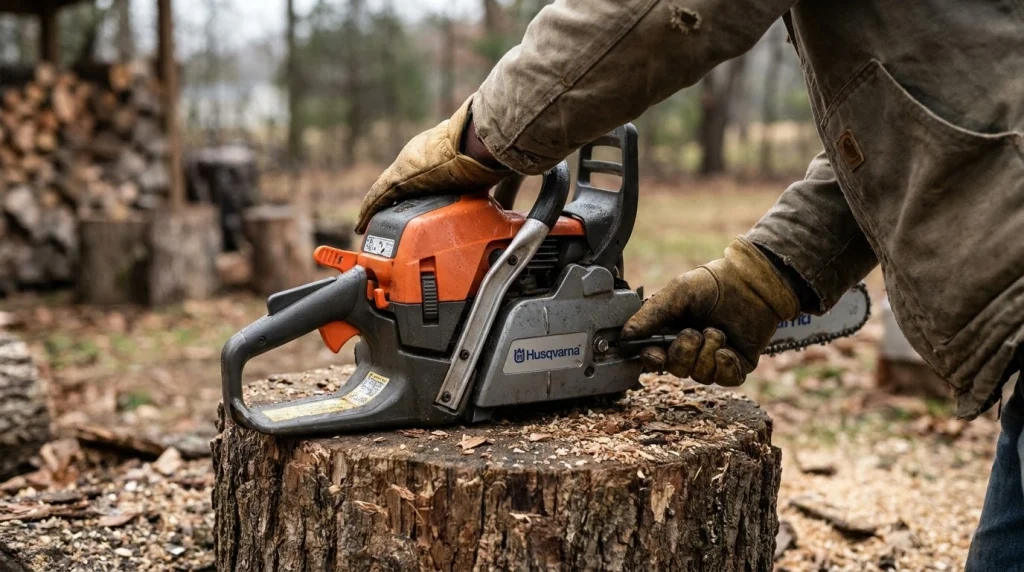
Starting a cold chainsaw correctly requires safe positioning, suitable fuel, proper choke control, and the starting sequence specified for your model.
Prepare your chainsaw outdoors on a stable surface. Wear appropriate protective equipment and keep the guide bar and chain clear of nearby objects.
Step 1
Prepare the chainsaw
Check the fuel supply, chain condition, and required safety features before attempting to start the engine.
Step 2
Engage the chain brake
Secure the chainsaw in an approved starting position and engage its chain brake.
Step 3
Set the starting controls
Select the cold-start setting and operate the primer bulb or decompression valve if your model requires them.
Step 4
Pull the starter rope
Pull the starter using the approved technique until the engine responds as described in your starting instructions.
Step 5
Adjust the choke
Move the choke to the specified next position when the engine first attempts to fire, if required by your model.
Step 6
Return the engine to normal idle
Once the engine starts, follow the manufacturer’s procedure for disengaging fast idle and completing the required safety checks.
Husqvarna provides detailed guidance on starting a chainsaw safely, including procedures for cold and warm engines.
Starting systems differ between models, so your operator’s manual takes priority over general instructions. Do not continue running the engine at high speed against an engaged chain brake.
How to Diagnose Chainsaw Cold-Start Problems
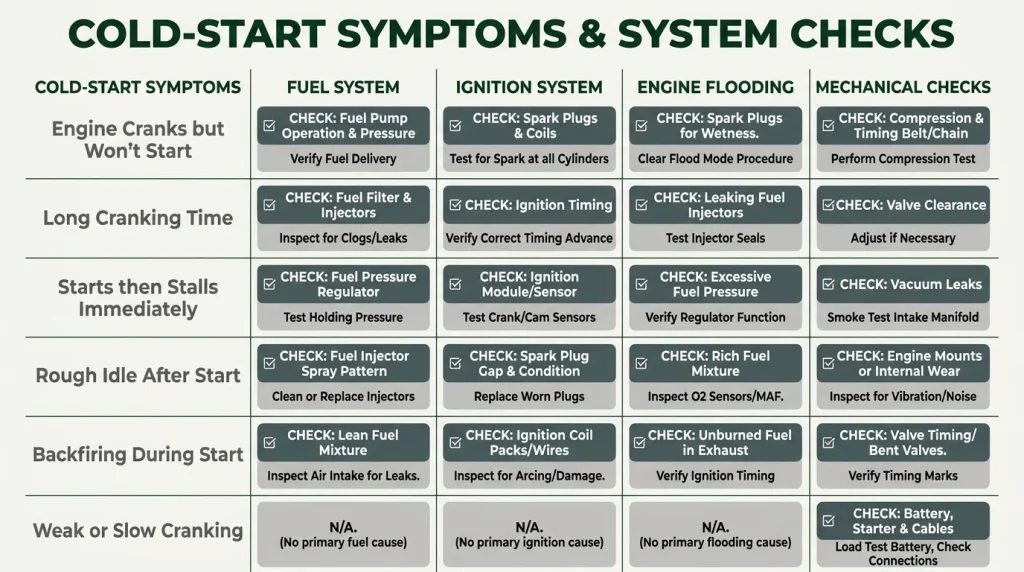
Diagnose cold-start problems by matching the chainsaw’s behavior to possible faults before replacing components.
The following table compares common starting symptoms, likely causes, and appropriate initial checks.
| Starting Symptom | Possible Cause | Recommended Check |
|---|---|---|
| Engine does not fire | Fuel or ignition problem | Check controls, fuel, and spark plug. |
| Strong gasoline smell | Flooding or fuel leakage | Stop starting attempts and inspect for leakage. |
| Spark plug remains dry | Insufficient fuel delivery | Inspect the fuel filter and fuel lines. |
| Spark plug is wet | Flooding or ignition failure | Inspect the plug and follow recovery instructions. |
| Starts only with choke | Lean fuel mixture or restricted fuel supply | Investigate fuel delivery and carburetor condition. |
| Starts warm but not cold | Cold-start enrichment problem | Inspect the starting controls and fuel system. |
| Unusual starter resistance | Starter or internal engine problem | Arrange a mechanical inspection. |
These symptoms suggest possible causes rather than confirming a specific fault. Begin with the simplest checks and investigate further only when necessary.
What Does a Wet Spark Plug Mean?
A wet spark plug suggests that fuel has reached the cylinder but may not have burned successfully.
Excessive choke use can cause this condition. Ignition faults can also leave unburned gasoline inside the combustion chamber.
If your spark plug is wet, follow the manufacturer’s instructions for inspecting the plug and recovering a flooded engine. Do not assume the carburetor needs replacement.
What Does a Dry Spark Plug Mean?
A spark plug that remains dry after unsuccessful starting attempts can indicate insufficient fuel delivery to the combustion chamber.
Possible causes include a restricted fuel filter, damaged hose, or a carburetor fault. Incorrect starting control settings may also contribute.
Husqvarna’s fuel delivery troubleshooting guidance explains how dry plug inspection and fuel system checks can help identify this problem.
Why Does My Chainsaw Start Warm but Not Cold?
A chainsaw that starts easily when warm but struggles when cold may have a problem with fuel enrichment, ignition quality, or engine compression.
A warm engine does not require the same starting mixture as a cold engine. Consequently, a fault that interferes with cold starting may become less noticeable after the engine warms up.
Pay particular attention to the choke mechanism and primer system. A chainsaw that runs normally after starting may still have a restricted or defective starting fuel circuit.
Compare its behavior after overnight storage with its behavior immediately after normal operation. Record whether the engine fires, stalls, or refuses to respond.
This information helps distinguish a cold-start problem from a general engine fault.
Why Does My Chainsaw Start Cold and Then Die?
A chainsaw that starts cold and immediately stalls may have restricted fuel delivery, an incorrect choke setting, or difficulty maintaining normal idle.
The engine receives enough fuel for initial ignition but cannot sustain normal operation. Moving the choke away from its starting position may reveal an underlying fuel mixture problem.
Investigate the following areas:
- Fuel freshness and the required mixing ratio.
- Correct transition between starting and running settings.
- Fuel filter and fuel line condition.
- Air filter contamination.
- Restricted exhaust components.
- Carburetor and idle system condition.
Husqvarna identifies contaminated filters, old fuel, and restricted exhaust flow in its chainsaw stalling troubleshooting guide.
If the engine continues to stall after routine checks, arrange an inspection rather than repeatedly adjusting its fuel settings.
Can Freezing Weather Stop a Chainsaw From Starting?
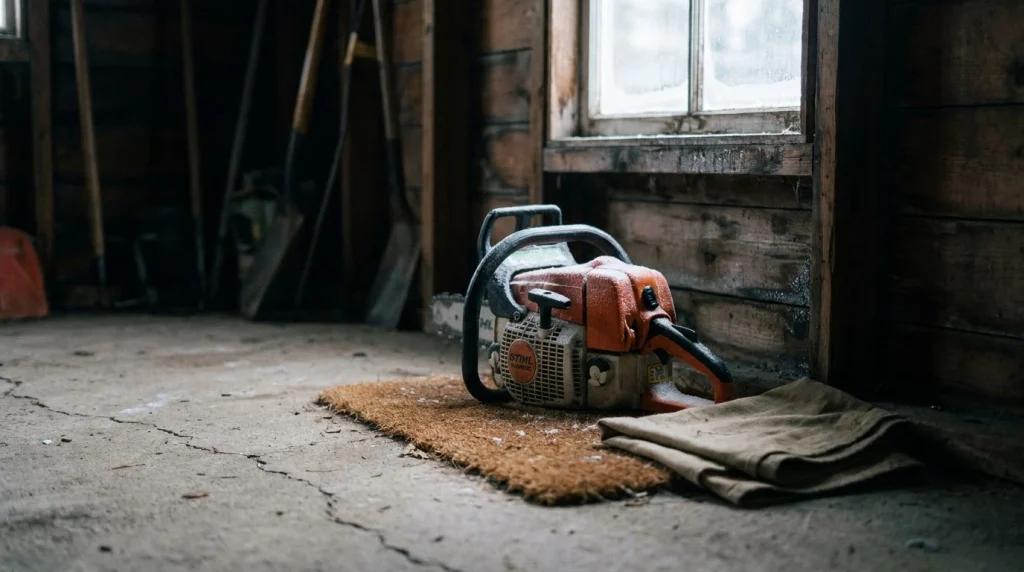
Freezing weather can make gasoline chainsaws more difficult to start by reducing fuel evaporation and changing normal operating conditions.
Cold outdoor conditions can also make moisture contamination and existing fuel system problems more noticeable. However, low temperature alone does not prove that a component has failed.
Check the Winter Operating Settings
Some chainsaws include manufacturer-approved winter operating settings intended for use in cold environmental conditions.
These systems vary by model. Consult the operator’s manual to determine whether your chainsaw has a winter setting and when it should be used.
Do not modify air intake covers or engine ventilation openings to create a homemade winter setting.
Keep the Chainsaw Dry
Keeping the chainsaw dry helps reduce problems associated with moisture, snow, and ice around accessible starting components.
Remove external snow and debris before operation. Allow a cold, damp chainsaw to dry in a suitable storage area before attempting maintenance.
Never use an open flame, heat gun, or other direct heating method to warm a fuel-powered chainsaw.
Battery Chainsaws Have Different Cold-Start Problems
A battery chainsaw that refuses to start in cold weather requires electrical troubleshooting rather than gasoline engine troubleshooting.
Low battery temperature, insufficient charge, or protective battery controls can prevent operation. Check the permitted operating temperature range in the battery and chainsaw manuals.
Allow the battery to return naturally to an approved temperature before charging or operating it. Do not apply direct heat to the battery.
How to Prevent Chainsaw Cold-Start Problems
Regular maintenance, correct starting habits, and suitable fuel storage can help prevent recurring chainsaw cold-start problems.
Focus on keeping the fuel, air, and ignition systems in good condition. Follow maintenance intervals and storage procedures specified for your chainsaw.
Do
- Use fresh fuel with the specified oil mixture.
- Inspect filters and spark plugs regularly.
- Follow the manufacturer’s seasonal storage procedure.
Avoid
- Repeated pulling with full choke engaged.
- Using unapproved starting fluids.
- Changing carburetor settings without specifications.
Use the Correct Fuel Mixture
The correct fuel mixture supports reliable ignition and provides the lubrication required by applicable two-stroke chainsaw engines.
Always use the gasoline and mixing oil specified by the manufacturer. Measure the ingredients accurately when preparing mixed fuel.
Store fuel in an approved container and avoid keeping questionable fuel for future use.
Maintain the Spark Plug and Filters
Routine spark plug and filter maintenance helps preserve reliable ignition and unrestricted airflow and fuel delivery.
Clean or replace components according to their condition and your maintenance schedule. A chainsaw spark plug wrench can help with plug inspection when it fits the specified plug.
Disconnect the spark plug boot before performing maintenance that could expose you to accidental engine operation.
Prepare the Chainsaw for Seasonal Storage
Proper seasonal storage reduces the likelihood of fuel deterioration and contamination affecting the next cold start.
Follow your manufacturer’s fuel storage procedure before putting the chainsaw away for an extended period. Different fuel types and engine systems may require different preparations.
Clean the machine and store it in a dry, secure location away from ignition sources.
When Should You Take Your Chainsaw for Repair?
Professional chainsaw repair is appropriate when correct starting procedures and routine maintenance do not resolve persistent cold-start problems.
Internal engine faults and carburetor adjustments require suitable diagnostic equipment and model-specific service knowledge.
Arrange professional service if you notice any of the following conditions:
- Persistent starting failure despite fresh fuel.
- Visible gasoline leakage or damaged fuel components.
- Unusual mechanical noises or starter resistance.
- Repeated stalling after routine maintenance.
- Suspected ignition module or compression problems.
- A chain that continues moving at normal idle.
- Defective starting controls or safety mechanisms.
A technician can evaluate the ignition system, carburetor, engine compression, and other components. Accurate diagnosis helps avoid unnecessary replacement of working parts.
Chainsaw Spark Plug Wrench
A correctly sized spark plug wrench helps you remove and inspect your chainsaw’s spark plug during routine cold-start troubleshooting.
Frequently Asked Questions
How many pulls should a cold chainsaw need?
The number of pulls required to start a cold chainsaw depends on its engine design, fuel condition, temperature, and starting system. There is no universal number that applies to every chainsaw. Follow the recommended starting sequence and investigate repeated failure instead of continuing indefinitely.
Can I start a cold chainsaw without choke?
A cold chainsaw may start without manual choke if its engine design includes an automatic fuel enrichment or alternative starting system. Conventional models may struggle without their required cold-start setting. Consult your owner’s manual to determine whether manual choke operation is necessary.
Should I use starting fluid on my chainsaw?
Starting fluid should not be used in a chainsaw unless the manufacturer specifically approves it for that engine and application. An unsuitable starting fluid may introduce fire and engine damage risks. Diagnose the underlying fuel or ignition problem rather than relying on starting fluid.
Why is my chainsaw starter rope hard to pull?
A chainsaw starter rope that becomes unusually difficult to pull may indicate a starter mechanism fault or an internal engine problem. Normal compression resistance varies between engine designs. Do not force a starter rope that feels jammed, and arrange an inspection if the condition persists.
Can a new chainsaw have cold-start problems?
A new chainsaw can experience cold-start problems if its starting controls, initial fuel preparation, or fuel priming procedure are incorrect. Review the supplied operating instructions before attempting further diagnosis. If the correct procedure fails, contact the seller or authorized service provider before modifying any components.
Does bar oil affect cold chainsaw starting?
Bar and chain oil lubricates the cutting assembly rather than supplying the fuel mixture needed to ignite a gasoline chainsaw engine. Thickened oil may affect chain lubrication in cold conditions. Use an approved lubricant for the operating temperature and investigate engine starting faults separately.
Should I let my chainsaw warm up before cutting?
A cold chainsaw should reach stable operation according to its manufacturer’s instructions before you begin cutting wood under normal working loads. Avoid unnecessary high-speed operation while the engine is cold. Complete the required safety checks and confirm that the cutting system receives proper lubrication.
Conclusion
If your chainsaw won’t start when cold, check the starting controls, fuel freshness, spark plug, and fuel delivery system before investigating internal engine faults. Follow the correct cold-start procedure for your model and arrange professional diagnosis if routine maintenance does not restore reliable starting.

I write about chainsaw maintenance, troubleshooting, replacement parts, safety, and buying guides. My goal is to make chainsaw information simple, practical, and helpful for homeowners and professionals.