
Chainsaw Won’t Start After Getting Wet? What to Check
Quick Answer
If your chainsaw won’t start after getting wet, check for moisture around the spark plug, a wet air filter, contaminated fuel, and electrical damage. Disconnect the power source and let the chainsaw dry safely before troubleshooting. A submerged chainsaw requires professional inspection before you attempt to restart it.
- Dry the chainsaw exterior and accessible components.
- Inspect the spark plug and ignition connections on gas models.
- Check the air filter and fuel for water contamination.
- Inspect battery connections or electrical components for moisture.
- Never force a starter cord that has become difficult to pull.
A chainsaw that stops working after exposure to rain, washing, or accidental immersion may have moisture-related starting problems. Water can interfere with ignition, fuel delivery, airflow, and electrical connections.
This guide explains what to inspect, which problems you can address safely, and when your chainsaw needs professional repair.
Why Won’t a Chainsaw Start After Getting Wet?
A chainsaw may fail to start after getting wet because moisture interferes with the systems responsible for starting and running the engine or motor.
Gas-powered chainsaws need an appropriate mixture of fuel and air, reliable ignition, and sufficient engine compression. Battery-powered and corded chainsaws depend on functioning electrical components and safety controls.
Common moisture-related starting problems include:
- Moisture around the spark plug boot.
- A saturated or obstructed air filter.
- Water contamination inside the fuel tank.
- Moisture inside the carburetor.
- Wet or corroded electrical connections.
- Water entering the engine cylinder.
- Electrical damage inside a battery-powered or corded chainsaw.
The severity of the problem depends on how much water entered the chainsaw and which components were exposed.
Identify How Your Chainsaw Got Wet
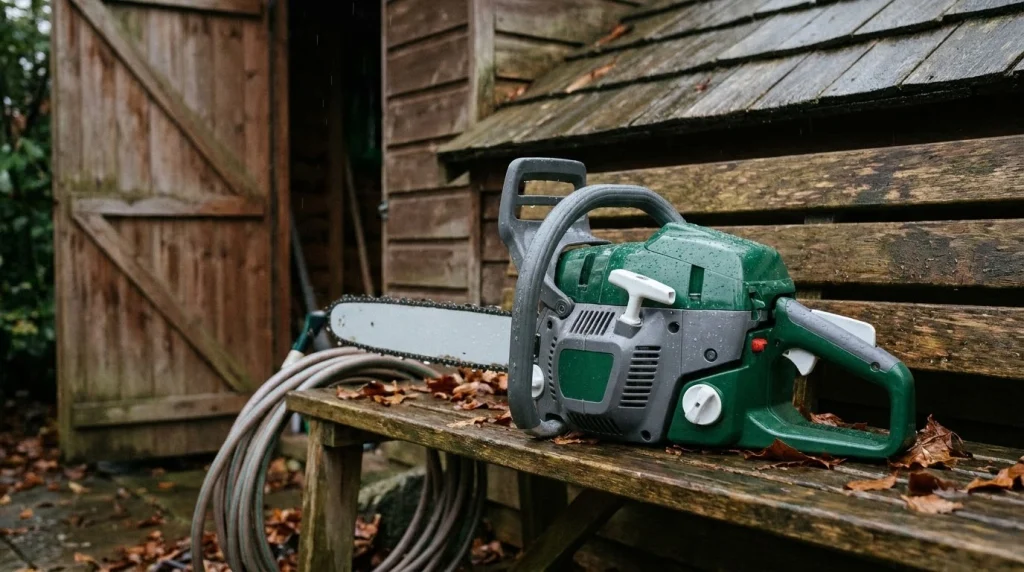
The type of water exposure helps determine whether drying and basic maintenance are sufficient or whether the chainsaw requires professional repair.
A chainsaw exposed to light rain faces different risks from one that has fallen into a pond or been cleaned with a pressure washer.
The following table compares common types of water exposure and the appropriate response.
| Water Exposure | Possible Problem | Recommended Action |
|---|---|---|
| Light rain | Surface moisture | Dry and inspect |
| Heavy rain | Moisture inside covers or intake | Inspect accessible components |
| Pressure washing | Water entering sensitive components | Check for internal water exposure |
| Complete immersion | Internal contamination or damage | Professional inspection before restarting |
Surface moisture is generally easier to address than water that has entered an engine, battery pack, or electrical housing.
What to Check When a Wet Chainsaw Will Not Start
Start with safe external inspections before checking the air intake, ignition system, fuel system, or electrical connections.
Switch off the chainsaw and engage the chain brake. Allow a gas-powered engine to cool before performing maintenance.
- Disconnect the spark plug boot, remove the battery, or unplug the power cord, depending on the chainsaw type.
- Wipe away visible water with a clean, dry cloth.
- Inspect accessible air intake openings and covers.
- Check for signs of water contamination or damaged seals.
- Follow the manufacturer’s drying and maintenance instructions.
- Arrange professional inspection if water may have entered internal components.
Warning
Never attempt to start a submerged chainsaw. Internal water contamination can damage engine components, while water inside electrical equipment can create shock or fire hazards.
Check the Spark Plug and Ignition System
Moisture around the spark plug or its electrical connections can interfere with reliable ignition in a gas-powered chainsaw.
The spark plug ignites the fuel and air mixture inside the engine. Starting becomes difficult when the ignition system cannot produce an effective spark.
Inspect the spark plug boot
A wet spark plug boot may allow moisture to interfere with the electrical connection between the ignition lead and spark plug.
With the engine switched off and cooled, remove the boot according to the owner’s manual. Inspect the accessible connection for moisture, cracks, dirt, or corrosion.
Allow the connection to dry completely before reinstalling it.
Inspect the spark plug
A contaminated, damaged, or excessively wet spark plug can prevent a gas chainsaw from starting.
Remove the plug only as instructed in your owner’s manual. Look for moisture, heavy deposits, damaged electrodes, and cracks in the ceramic insulator.
Use a compatible replacement spark plug if the existing one is damaged or cannot be restored through approved maintenance.
Distinguish water from excess gasoline
A wet spark plug does not automatically mean rainwater has entered the engine. Repeated starting attempts can introduce excess gasoline into the combustion chamber.
This condition is called engine flooding. Follow the model-specific instructions for clearing a fuel-flooded engine after ruling out water intrusion.
The STIHL chainsaw troubleshooting FAQ identifies incorrect choke use as a common cause of engine flooding.
Inspect the Air Filter for Moisture
A wet or clogged air filter can restrict the airflow that a gas chainsaw needs for combustion.
Rainwater may enter the filter compartment through intake openings. Wet sawdust and dirt can also collect around the filter and reduce airflow.
How to inspect a wet chainsaw air filter
A wet air filter should be inspected, cleaned using an approved method, and dried completely before reinstallation.
- Switch off the chainsaw and disconnect the spark plug boot.
- Remove the air filter cover according to the manual.
- Inspect the filter for moisture, debris, and physical damage.
- Clean the filter using the manufacturer’s recommended method.
- Allow washable filters to dry completely.
- Replace damaged filters or filters that cannot be cleaned safely.
Different air filter materials require different cleaning methods. Do not assume that every foam, mesh, or paper filter can be washed with water.
Reinstall the correct filter before attempting to operate the chainsaw. Running without proper filtration can allow debris to enter the engine.
Check for Water in the Fuel Tank
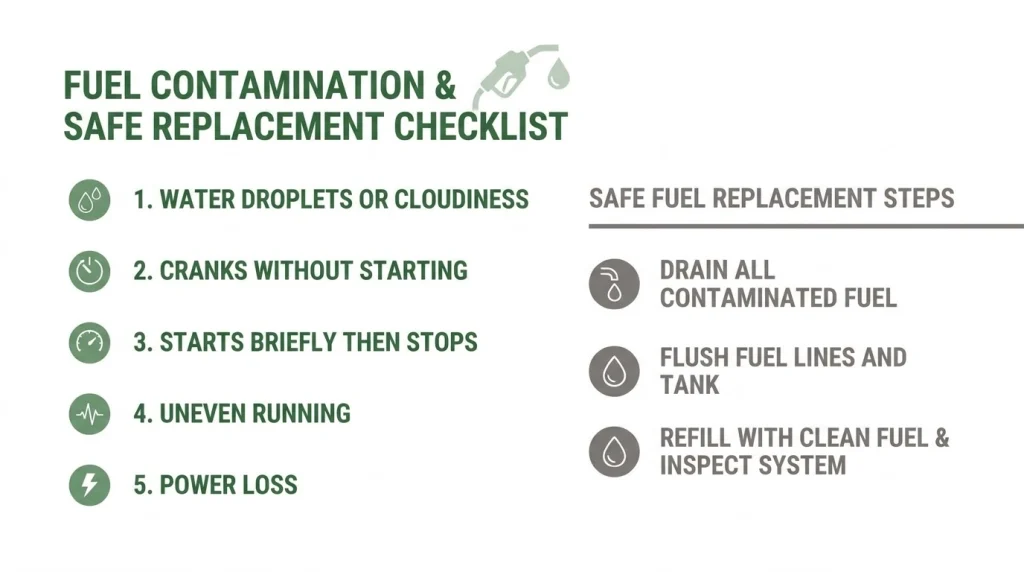
Water contamination inside a gas chainsaw’s fuel tank can interrupt combustion and cause starting problems.
Water may enter through a damaged fuel cap seal or during exposure to heavy rain. Accidental immersion creates a greater risk of internal contamination.
Signs of water-contaminated chainsaw fuel
Visible separation, water droplets, or unusual cloudiness in fuel can indicate contamination, although appearance alone cannot confirm every fuel problem.
Other possible symptoms include:
- The engine cranks without starting.
- The chainsaw starts briefly and stops.
- The engine runs unevenly.
- The chainsaw loses power during operation.
- Starting problems continue after external components have dried.
What to do with contaminated fuel
Suspected water-contaminated fuel should be removed safely and replaced with fresh fuel that meets the chainsaw manufacturer’s specifications.
Work outdoors with a cooled engine, away from flames and ignition sources. Follow the owner’s manual and use an approved fuel container.
Do not dispose of contaminated gasoline on the ground or down a drain. Follow local hazardous waste disposal requirements.
If contaminated fuel has entered the carburetor, replacing the fuel inside the tank may not resolve the problem completely.
Inspect the Carburetor for Water Contamination
Water inside a chainsaw carburetor can interfere with fuel delivery and prevent the engine from starting or running correctly.
The carburetor controls the fuel and air mixture entering the engine. Contamination inside its passages may disrupt normal operation.
Possible signs include repeated stalling, inconsistent idle speed, and starting problems despite fresh fuel and a serviceable spark plug.
Do not adjust carburetor screws simply because the chainsaw stopped working after getting wet. Incorrect adjustments may create additional engine problems without removing the original contamination.
If water intrusion is suspected, arrange carburetor inspection and cleaning by a qualified small-engine technician.
What If the Chainsaw Starter Cord Will Not Pull?
A starter cord that becomes unusually difficult to pull after water exposure may indicate a mechanical obstruction or internal engine problem.
Water inside the cylinder can prevent the piston from moving normally. This condition is commonly called hydrolock.
Other possible causes include damage to the recoil starter or internal engine components. A stiff starter cord alone does not establish which problem has occurred.
Stop pulling the starter cord if resistance suddenly increases after immersion or heavy water exposure. Forcing the engine to turn may worsen internal damage.
Have a technician inspect the engine before attempting another start.
What to Check on a Wet Battery Chainsaw
A battery-powered chainsaw that fails to start after getting wet may have moisture around its battery terminals, controls, or internal electrical components.
Battery chainsaws do not use spark plugs, carburetors, or gasoline. Troubleshooting must focus on electrical safety and the condition of the battery system.
Inspect the battery compartment
Moisture inside the battery compartment can interfere with electrical connections and may increase the risk of corrosion or electrical faults.
If the battery can be removed safely according to the manual, disconnect it. Inspect accessible contacts for moisture, discoloration, and visible damage.
Do not open the battery pack or motor housing.
Check whether the battery was submerged
A submerged chainsaw battery should not be charged, tested, or reinstalled without guidance from its manufacturer or a qualified service provider.
Water resistance varies between battery systems. A battery designed for rain exposure is not necessarily suitable for complete immersion.
If the battery shows swelling, unusual heat, smoke, or other signs of damage, stop handling it and seek appropriate emergency assistance if needed.
Inspect the safety controls
Battery chainsaw safety controls can prevent motor operation when the chain brake, trigger lockout, or another protective mechanism is engaged.
Once the equipment has been confirmed safe and dry, check the controls according to the manufacturer’s instructions.
Never bypass a safety switch to make a wet chainsaw start.
What to Check on a Wet Corded Electric Chainsaw
A corded electric chainsaw that fails to start after water exposure may have moisture inside its switch, motor housing, plug, or electrical connections.
Disconnect the power supply safely before inspecting the equipment. If the outlet or plug is wet, isolate the electricity at the breaker if safe.
Check the following components without opening the motor housing:
- Power cord insulation.
- Extension cord connections.
- Power plug condition.
- Visible moisture around the motor housing.
- Trigger and safety lockout mechanism.
A tripped ground fault circuit interrupter, or GFCI, may indicate an electrical fault. Do not repeatedly reset the protection device to operate a wet chainsaw.
Arrange professional electrical inspection if the chainsaw stopped working immediately after water entered its housing.
How to Dry a Chainsaw After Getting Wet
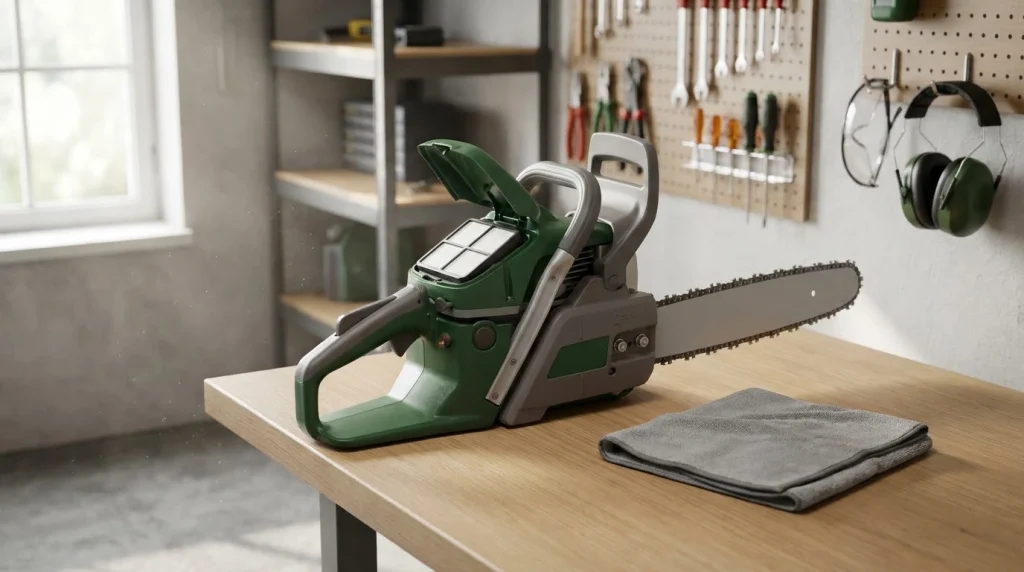
Dry a chainsaw in a sheltered, ventilated location using the maintenance methods approved by its manufacturer.
Remove visible water and moisture from accessible surfaces without introducing additional liquid into the engine or electrical components.
Step 1
Disconnect the power source
Prevent accidental starting before handling the chainsaw or removing accessible maintenance covers.
Step 2
Remove surface moisture
Use a clean, dry cloth to absorb water from the housing, handles, and accessible surfaces.
Step 3
Inspect accessible components
Check the air filter and approved maintenance areas for trapped moisture or contamination.
Step 4
Allow natural drying
Keep the chainsaw in a dry, ventilated location without exposing it to excessive heat.
Step 5
Assess internal water exposure
Arrange professional inspection when water may have entered the engine, battery, or motor housing.
Drying the exterior does not guarantee that internal components are free of moisture. Avoid restarting the chainsaw until the equipment is safe to operate.
How Long Should a Wet Chainsaw Dry Before Starting?
A wet chainsaw has no universal drying time because the amount of moisture, exposure severity, airflow, and equipment design vary.
Surface moisture may disappear before water trapped beneath covers or inside electrical components has evaporated. An apparently dry housing does not confirm that the equipment is safe.
Follow the manufacturer’s instructions instead of relying on a fixed waiting period. A submerged chainsaw requires inspection rather than simply additional drying time.
Do not use a heat gun, open flame, oven, or other intense heat source to accelerate drying.
How to Restart a Chainsaw Safely After Water Exposure
A chainsaw should only be restarted after moisture-related problems have been resolved and internal water damage has been ruled out.
For a gas chainsaw exposed only to surface moisture, confirm that the accessible ignition components and air filter are dry. Check that the fuel is suitable and uncontaminated.
For electric models, follow the manufacturer’s electrical safety instructions before reconnecting the power source.
Complete the following checks before attempting a restart:
- All maintenance covers are correctly installed.
- There are no visible fuel leaks or electrical defects.
- The air filter and ignition components are serviceable.
- The guide bar and chain have adequate lubrication.
- The chain brake and other safety controls function correctly.
- The manufacturer permits operation after the type of exposure involved.
Follow the starting procedure specified in your owner’s manual. Operate a gas chainsaw outdoors and wear appropriate protective equipment.
Stop immediately if you notice abnormal noise, smoke, unusual heat, inconsistent operation, or electrical faults.
Why Does My Chainsaw Start and Then Die After Getting Wet?
A chainsaw that starts and then dies after getting wet may have an unresolved fuel delivery, airflow, ignition, or electrical problem.
On gas models, contaminated fuel and a restricted air filter can cause intermittent operation. Moisture-related ignition problems may also prevent consistent engine performance.
Battery and corded models may stop because of an electrical fault or protective shutdown.
Do not continue operating a chainsaw that repeatedly stalls following water exposure. Identify the cause or arrange professional inspection before returning it to service.
Husqvarna’s chainsaw troubleshooting guide explains how fuel, airflow, and ignition problems affect engine performance.
Common Mistakes When Fixing a Wet Chainsaw
The most damaging troubleshooting mistakes involve attempting to start wet equipment, applying excessive heat, or replacing components without identifying the cause.
Do
- Disconnect the power source before inspection.
- Follow model-specific cleaning and drying instructions.
- Seek professional help for suspected internal water damage.
Avoid
- Repeated starting attempts before inspection.
- Using intense heat to remove moisture.
- Charging or reinstalling a water-damaged battery.
A careful inspection can prevent unnecessary replacement of spark plugs, carburetors, ignition coils, batteries, and other expensive components.
When Does a Water-Damaged Chainsaw Need Professional Repair?
A water-damaged chainsaw needs professional repair when moisture may have reached internal engine components, electrical circuits, or battery cells.
Arrange an inspection if you notice any of the following conditions:
- The chainsaw was completely submerged.
- The starter cord became unusually difficult to pull.
- Water is suspected inside the engine cylinder.
- Fuel contamination persists after approved maintenance.
- The chainsaw has electrical faults or damaged wiring.
- The battery shows unusual heat, swelling, or damage.
- The chainsaw continues to stall or refuses to start.
A qualified technician can inspect internal components and determine whether cleaning, replacement, or further diagnostic testing is necessary.
Replacing a damaged chainsaw may be more practical when repair costs approach the cost of suitable replacement equipment.
How to Prevent Chainsaw Starting Problems Caused by Water
Proper storage, approved cleaning methods, and protection from excessive moisture can reduce water-related chainsaw starting problems.
Store your chainsaw in a dry location
Dry storage helps protect chainsaw components from unnecessary moisture exposure and corrosion.
Keep the equipment in a sheltered garage, shed, or suitable storage area. Install the guide bar cover and follow the manufacturer’s storage recommendations.
Do not leave the chainsaw outdoors where rainwater can collect around the housing or fuel cap.
Avoid pressure washing sensitive components
Pressure washing can force water into openings that are not designed to withstand concentrated water spray.
Clean the chainsaw using approved brushes, cloths, and maintenance products. Follow the cleaning instructions for your specific chainsaw model.
The STIHL chainsaw cleaning guide provides maintenance recommendations for gas, battery, and corded electric chainsaws.
Inspect fuel caps and protective covers
Damaged fuel cap seals and missing protective covers may increase the risk of moisture entering sensitive chainsaw components.
Inspect these parts during routine maintenance. Replace damaged components using compatible parts recommended for your equipment.
Follow the manufacturer’s weather restrictions
Chainsaw weather resistance depends on the design and specifications of the individual model.
Check whether your equipment is approved for operation in rain or damp conditions. Do not assume that all chainsaws have the same level of water protection.
Chainsaw Spark Plug
A compatible replacement spark plug may help restore ignition when inspection confirms that the existing plug is damaged.
Frequently Asked Questions
Can rain permanently damage a chainsaw?
Rain can permanently damage a chainsaw if moisture enters sensitive engine components, electrical circuits, or battery systems and causes deterioration. Light surface exposure may not result in permanent damage. The outcome depends on the chainsaw’s design, exposure conditions, and whether appropriate inspection and maintenance take place.
Can a wet chainsaw ignition coil recover?
A wet chainsaw ignition coil may function again after external moisture dries, provided the coil and its insulation remain undamaged. Persistent ignition failure may indicate a defective coil or another electrical fault. Professional ignition testing can help distinguish temporary moisture interference from permanent component damage.
Can water enter a chainsaw bar oil tank?
Water can enter a chainsaw bar oil tank through a damaged cap seal, an open filler port, or accidental immersion. Contaminated bar oil may compromise chain lubrication even when the engine starts normally. Follow the manufacturer’s maintenance instructions if you suspect water has entered the oil reservoir.
Will a wet chainsaw rust if left untreated?
A wet chainsaw can develop rust on exposed steel components, including the cutting chain, guide bar, and certain fasteners. Dry these components and maintain appropriate lubrication according to the owner’s manual. Inspect the cutting attachment for corrosion or damage before using the chainsaw again.
Can I use starting fluid on a wet chainsaw?
Starting fluid is not a suitable remedy for a chainsaw with suspected internal water contamination or unresolved moisture-related ignition problems. It does not remove water from the engine or repair electrical damage. Use only starting methods and products specifically approved by the chainsaw manufacturer.
Can a chainsaw get wet during outdoor storage?
A chainsaw stored outdoors can collect moisture from rainfall, condensation, and humidity, even when it is not being used. A protective cover may reduce direct rain exposure but does not necessarily prevent condensation. A sheltered and dry storage location offers better protection for sensitive components.
Conclusion
If your chainsaw won’t start after getting wet, inspect the ignition system, air filter, fuel, and electrical components before attempting another restart. Follow the manufacturer’s maintenance instructions for minor moisture exposure. If the chainsaw was submerged or shows signs of internal damage, arrange professional inspection.
I write about chainsaw maintenance, troubleshooting, replacement parts, safety, and buying guides. My goal is to make chainsaw information simple, practical, and helpful for homeowners and professionals.