
Chainsaw Starting Safety: Essential Pre-Start Checks
Quick Answer
Chainsaw starting safety begins with inspecting the saw, wearing protective equipment, engaging the chain brake, and choosing a stable starting surface. Check for fuel leaks, confirm proper chain tension, and keep the guide bar clear of obstacles. Follow your manufacturer’s starting instructions and never drop-start a chainsaw.
- Inspect the chainsaw before attempting to start it.
- Engage the chain brake before pulling the starter.
- Wear appropriate chainsaw protective equipment.
- Keep the starting area clear of people and obstacles.
- Never start a damaged or leaking chainsaw.
Starting a chainsaw involves more than pulling the starter cord. An unexpected engine response, moving chain, fuel leak, or unstable starting position can result in serious injury.
Whether you are starting a cold chainsaw or troubleshooting an engine that refuses to start, following the correct safety practices helps you maintain control.
Why Is Chainsaw Starting Safety Important?
Chainsaw starting safety helps prevent accidental chain movement, loss of control, fuel-related fires, and injuries during engine startup.
Some gasoline chainsaws use a fast-idle setting during startup. Without an engaged chain brake, the cutting chain may begin moving unexpectedly.
A proper starting routine also helps you identify mechanical problems before operating the equipment.
The main hazards associated with unsafe chainsaw starting include:
- Unexpected cutting chain movement.
- Loss of control while pulling the starter rope.
- Fire caused by spilled gasoline.
- Contact with exposed cutting teeth.
- Injuries caused by unstable footing.
- Exposure to harmful engine exhaust.
Safe starting practices apply even when you are only testing whether the engine works.
What Should You Check Before Starting a Chainsaw?
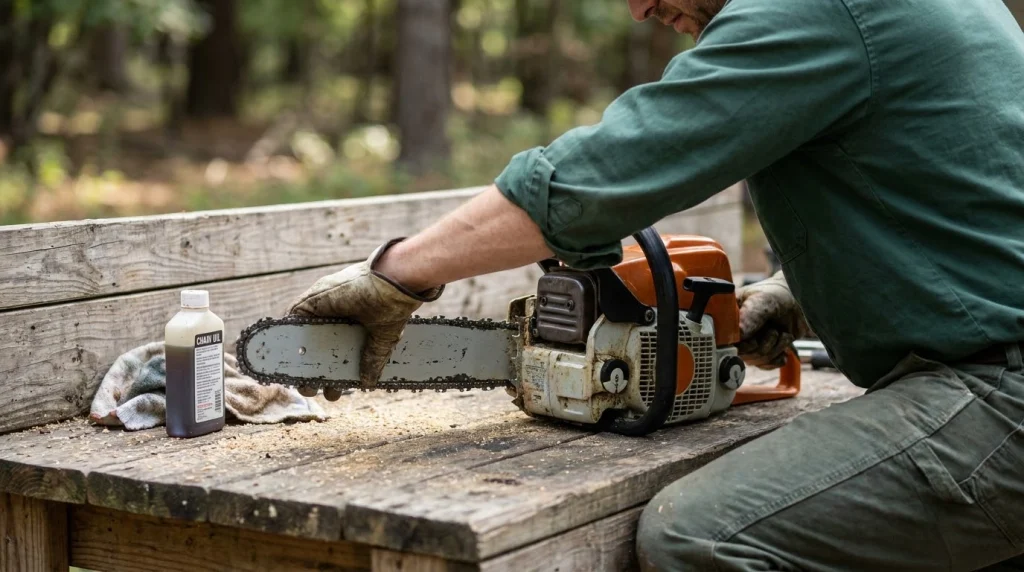
Before starting a chainsaw, inspect its cutting components, safety devices, fuel system, handles, and operating controls.
The Occupational Safety and Health Administration recommends checking chain adjustment, controls, handles, and fasteners before operating a chainsaw.
Inspect the Chain and Guide Bar
The chain and guide bar should be correctly installed, properly lubricated, and free from visible damage.
Look for damaged cutting teeth, loose components, and signs of excessive wear. A poorly adjusted chain can create unsafe operating conditions.
Follow your owner’s manual when checking chain tension. The chain should fit the guide bar correctly without binding.
Check the Chain Brake
The chain brake must be functional and engaged before starting the engine.
Inspect the front hand guard and brake mechanism according to the manufacturer’s instructions. Do not operate the chainsaw if its brake is damaged or fails its prescribed inspection.
Inspect the Handles and Controls
Chainsaw handles must be secure, clean, and free from damage that could affect your grip.
Check the throttle trigger, throttle lockout, and engine stop control before starting. Familiarize yourself with their operation so you can respond quickly if a problem occurs.
Look for Fuel and Oil Leaks
Fuel leaks must be corrected before attempting to start a gasoline chainsaw.
Inspect the fuel tank, filler cap, and surrounding housing for signs of gasoline leakage. Check the chain oil reservoir and confirm that its cap is secure.
Do not attempt to start the engine if you discover an unresolved fuel leak.
Check the Chain Catcher
The chain catcher is a protective component that helps reduce injury risks if the cutting chain breaks or leaves the guide bar.
Inspect the catcher for damage or missing parts. Have defective safety components replaced before operating the saw.
Essential Chainsaw Pre-Start Safety Checklist
A pre-start checklist helps you identify unsafe conditions before activating the ignition or pulling the starter cord.
| Component | Safe Condition | When to Stop |
|---|---|---|
| Chain brake | Functional and engaged | Damaged or ineffective |
| Cutting chain | Correct tension and lubrication | Loose, damaged, or binding |
| Fuel system | Secure cap and no leaks | Visible gasoline leakage |
| Guide bar | Secure and undamaged | Loose or visibly damaged |
| Throttle controls | Operate as designed | Sticking or damaged controls |
| Handles | Clean and secure | Cracked or loose handles |
| Starting area | Level and unobstructed | Unsafe footing or nearby obstacles |
Correct any unsafe condition before attempting to start the chainsaw, even if the engine appears capable of running.
What Protective Equipment Should You Wear?
Chainsaw operators should wear suitable personal protective equipment before starting the engine, not after the chainsaw begins running.
Personal protective equipment, commonly called PPE, helps reduce exposure to cutting injuries, flying debris, noise, and other operating hazards.
- Chainsaw chaps: Provide additional protection against cutting injuries to the legs.
- Safety glasses: Protect your eyes from flying particles.
- Face protection: Helps shield your face from debris.
- Hearing protection: Reduces exposure to harmful engine noise.
- Protective footwear: Supports secure footing and foot protection.
- Work gloves: Protect your hands and support a secure grip.
- Safety helmet: Provides head protection where falling objects present a hazard.
Choose protective equipment designed for your chainsaw type and working environment. Follow the manufacturer’s safety recommendations.
How to Prepare a Safe Chainsaw Starting Area
A safe chainsaw starting area provides stable footing, adequate space, ventilation, and separation from combustible materials.
Choose a firm, level outdoor surface where the chainsaw can remain steady. Remove loose branches and other objects that might interfere with the starter cord or cutting attachment.
Make sure children, pets, and other people remain outside the immediate work area.
Before pulling the starter, confirm that the guide bar and cutting chain cannot contact nearby objects.
Warning
Gasoline chainsaw exhaust contains carbon monoxide, which can cause fatal poisoning. Start and operate gasoline-powered chainsaws outdoors, away from enclosed spaces and building openings.
How to Start a Chainsaw Safely on the Ground
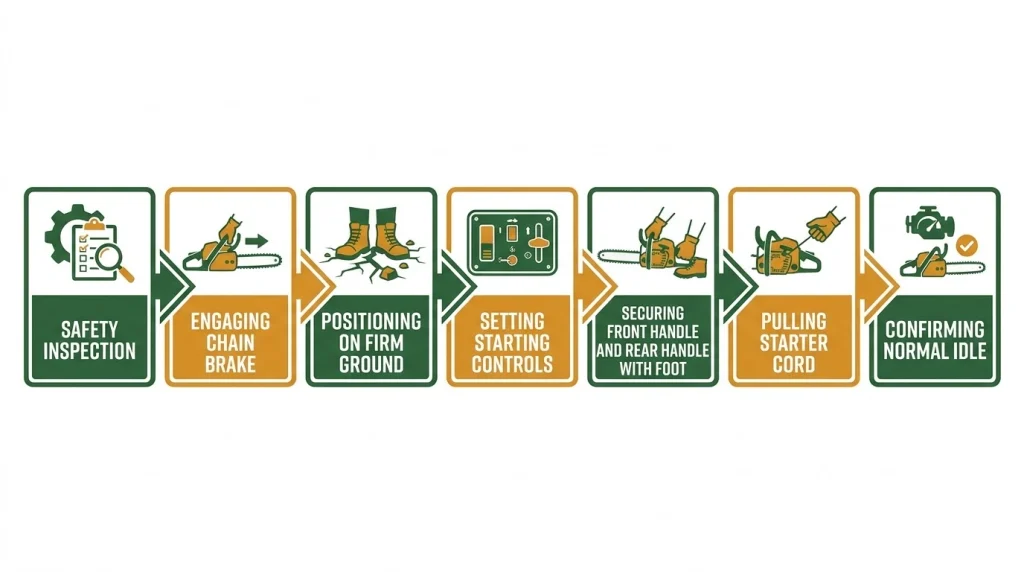
The ground-start method stabilizes the chainsaw against a firm surface while you maintain control of its handles and starter mechanism.
This method is particularly useful for beginners because the chainsaw does not need to be suspended during startup.
Step 1
Complete the safety inspection
Put on protective equipment and inspect the chain, guide bar, handles, controls, and fuel system.
Step 2
Engage the chain brake
Activate the chain brake according to your owner’s manual before attempting to start the engine.
Step 3
Position the chainsaw
Place the saw on firm, level ground with the guide bar clear of the ground and surrounding objects.
Step 4
Set the starting controls
Follow the manufacturer’s instructions for the ignition switch, choke, primer bulb, and other starting controls.
Step 5
Secure the chainsaw
Grip the front handle with your left hand. Secure the rear handle with your right foot as directed by the manufacturer.
Step 6
Pull the starter cord
Operate the starter with your right hand while keeping the saw stable. Follow the prescribed starting sequence for your model.
Step 7
Confirm normal engine operation
Return the engine to its normal idle setting as instructed. Complete the manufacturer’s safety checks before beginning work.
Starting controls differ between chainsaw models. Always prioritize the instructions supplied with your specific equipment.
Should the Chain Brake Be On When Starting?
The chain brake should remain engaged during chainsaw startup to help prevent unexpected movement of the cutting chain.
Some engines start at an elevated speed before returning to normal idle. This makes the chain brake an important safety feature during ignition.
The brake does not replace proper handling or protective equipment. You must still keep the cutting attachment clear of your body and nearby objects.
Follow your manufacturer’s instructions for returning the engine to idle and releasing the brake. Avoid sustained engine acceleration against an engaged chain brake.
Why You Should Never Drop-Start a Chainsaw
Drop-starting a chainsaw is unsafe because the equipment lacks firm support while the starter cord is being pulled.
This starting technique involves suspending the saw rather than securing it on a stable surface. It reduces your ability to maintain control if the engine starts unexpectedly.
The Cornell University chainsaw safety guidance identifies drop-starting as a dangerous practice and recommends a supported starting position.
Do
- Use a stable starting position.
- Keep the chain brake engaged.
- Maintain secure footing and grip.
Avoid
- Starting an unsupported saw.
- Pulling the starter with poor balance.
- Starting near people or obstacles.
Experience does not eliminate the risks associated with an unsupported starting technique.
Fuel Safety Before Starting a Gasoline Chainsaw

Safe fueling requires shutting down the engine, allowing hot components to cool, and preventing gasoline exposure to ignition sources.
Use an approved fuel container and the fuel mixture specified in your owner’s manual. Secure the fuel cap and clean up any spills before starting.
OSHA’s logging safety guidance specifies starting a chainsaw at least 10 feet from its fueling location.
Never smoke while handling gasoline or attempt to refill a chainsaw while its engine is running.
The Canadian Centre for Occupational Health and Safety provides additional guidance on chainsaw fueling, equipment inspection, and safe operation.
Cold Start vs. Warm Start Safety
Cold and warm chainsaw starts require the same basic safety precautions, although their engine control settings may differ.
Starting a Cold Chainsaw
A cold chainsaw may require a choke setting or another cold-start function specified by the manufacturer.
Confirm the correct control positions before pulling the starter. Avoid continuing an incorrect starting sequence because it may create additional starting difficulties.
Restarting a Warm Chainsaw
A warm chainsaw may require a different ignition or choke setting from a cold engine.
Do not assume that a recently stopped chainsaw is safe to restart without inspection. Check its surroundings, engage the brake, and avoid touching hot engine components.
Follow the warm-start instructions for your particular model.
What If Your Chainsaw Will Not Start?
A chainsaw that refuses to start should be inspected safely rather than subjected to repeated uncontrolled starter pulls.
Stop attempting to start the engine and review the manufacturer’s troubleshooting instructions. Confirm that you are using the correct starting procedure.
Possible starting problems include:
- Incorrect ignition control position.
- Improper choke setting.
- Fuel supply problems.
- A flooded engine.
- Restricted airflow.
- A damaged starter mechanism.
Never bypass a safety device to determine whether the engine will run. Stop using the equipment if you discover damaged controls, fuel leaks, or mechanical defects.
Persistent starting problems should be assessed by a qualified chainsaw service technician when the recommended troubleshooting procedures do not resolve them.
Safety Checks Immediately After Starting
A successful engine start should be followed by the manufacturer’s prescribed operating checks before the chainsaw is used for cutting.
Make sure the engine returns to its normal idle setting. Confirm that the throttle controls and safety mechanisms operate correctly.
Complete the recommended chain lubrication and brake function checks. These procedures can differ between models.
Shut down the chainsaw if the cutting chain continues moving at normal idle, the stop control malfunctions, or another unsafe condition develops.
Frequently Asked Questions
Can you start a chainsaw with the bar cover on?
The guide bar cover should be removed before starting a chainsaw so the cutting attachment remains unobstructed. Remove the cover while the engine is off and inspect the exposed cutting components. Keep the guide bar clear of your body and surrounding objects throughout startup.
Should you wrap the starter cord around your hand?
The starter cord should never be wrapped around your hand because the starting mechanism can pull against your fingers. Hold the designated starter handle and maintain a controlled grip. Follow the manufacturer’s instructions for pulling the cord and allowing it to retract.
Can a chainsaw be started with damaged starter housing?
A chainsaw with damaged starter housing should not be started until the defective components have been inspected and repaired. Damaged housing can interfere with normal starter operation or equipment control. Have a qualified technician assess the damage if you cannot establish that the equipment is safe.
Can you start a chainsaw while wearing loose clothing?
Loose clothing is unsuitable for chainsaw starting and operation because hanging material can become caught in equipment. Wear properly fitted protective clothing and secure anything that could interfere with moving components. Select clothing that allows you to maintain balance and operate the controls comfortably.
Can beginners start a chainsaw without professional training?
Beginners should obtain appropriate instruction and understand their chainsaw’s operating manual before attempting to start or use the equipment. Practical training helps new operators recognize unsafe conditions and respond to unexpected engine behavior. Workplace operators must also follow applicable training requirements.
Is starting a chainsaw during wet weather safe?
Wet conditions can make chainsaw starting unsafe when they reduce footing, grip, visibility, or control of the equipment. Assess the starting surface and surrounding environment before attempting ignition. Follow your manufacturer’s weather-related restrictions and postpone work whenever conditions prevent safe handling.
Conclusion
Chainsaw starting safety depends on proper equipment inspection, protective clothing, an engaged chain brake, and a stable starting position. Follow your model’s operating instructions before pulling the starter cord. If you discover a damaged safety component, fuel leak, or unresolved mechanical problem, correct it before attempting another start.
I write about chainsaw maintenance, troubleshooting, replacement parts, safety, and buying guides. My goal is to make chainsaw information simple, practical, and helpful for homeowners and professionals.