
Chainsaw Turns Over but Won’t Start: Diagnosis Guide
Quick Answer
When a chainsaw turns over but won’t start, check the fuel supply, spark plug, ignition system, air filter, carburetor, and engine compression. A flooded engine, stale fuel, incorrect choke position, or damaged fuel line can prevent combustion even when the starter rope operates normally.
- Confirm that the ignition switch is on.
- Check the fuel quality and correct fuel mixture.
- Inspect the spark plug for fuel, carbon, or damage.
- Check the air filter and fuel delivery system.
- Investigate ignition and compression problems if basic checks fail.
A chainsaw that turns over without starting can leave you wondering whether the engine needs a simple adjustment or a major repair. The starter rope may feel normal, yet the engine refuses to fire.
This guide helps gas-powered chainsaw owners identify the cause through a logical diagnostic process without replacing unnecessary parts.
In this article
- What turning over means
- What to diagnose first
- Starting controls
- Fuel quality
- Engine flooding
- Spark plug condition
- Ignition system
- Fuel delivery
- Airflow restrictions
- Carburetor problems
- Engine compression
- Diagnostic symptoms
- When professional repair is needed
- Preventing starting problems
- Frequently Asked Questions
- Conclusion
What Does It Mean When a Chainsaw Turns Over?
A chainsaw turns over when the starter mechanism rotates the crankshaft and moves the piston inside the engine. However, engine rotation does not guarantee successful combustion.
A conventional gas-powered chainsaw needs several conditions to start:
- Fuel: A suitable gasoline and oil mixture.
- Air: Sufficient airflow into the engine.
- Spark: An electrical discharge that ignites the mixture.
- Compression: Adequate pressure inside the cylinder.
- Timing: Ignition occurring at the correct point.
A problem with any of these conditions can stop the engine from running.
Turning over differs from starting. Turning over describes mechanical movement, while starting requires combustion that keeps the engine running without assistance from the starter.
If the starter rope moves without rotating the engine, you have a different problem involving the recoil starter or its engagement mechanism.
Chainsaw Turns Over but Won’t Start: What to Diagnose First
Begin with the starting controls and fuel condition before investigating internal engine components. This approach helps eliminate simple faults before spending money on replacement parts.
Step 1
Check the Starting Controls
Confirm the ignition switch and choke are in the positions specified by the operator’s manual.
Step 2
Inspect the Fuel
Replace questionable fuel with a fresh mixture approved for your chainsaw.
Step 3
Check for Flooding
Look for a strong gasoline smell or excessive fuel on the spark plug.
Step 4
Inspect the Spark Plug
Check for carbon deposits, damaged electrodes, cracked insulation, or excessive fuel.
Step 5
Examine Fuel and Airflow
Inspect accessible filters and fuel lines for restrictions, contamination, or damage.
Step 6
Investigate Internal Faults
Arrange ignition, carburetor, or compression testing if the basic inspections reveal no clear cause.
The Husqvarna chainsaw troubleshooting guide identifies fuel, ignition, airflow, and compression as important areas to examine during starting failure.
Check the Ignition Switch and Starting Controls
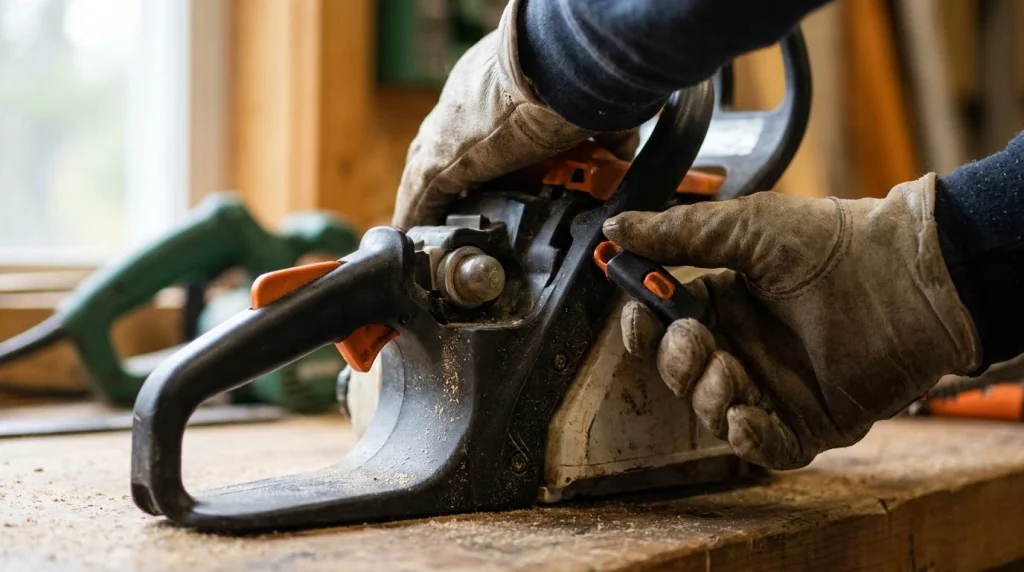
Incorrect starting control positions can prevent a mechanically sound chainsaw from starting. Check these settings before assuming an engine component has failed.
Ignition Switch Position
The ignition switch must permit the ignition system to operate during starting. A switch left in the stop position prevents normal ignition even when the crankshaft rotates.
A damaged switch or electrical connection can also interrupt ignition. Professional electrical testing may be necessary if the switch appears normal but the engine never fires.
Choke Position
The choke changes the air and fuel mixture to help a cold engine start. Leaving the choke engaged too long can supply more fuel than the engine can burn.
A warm engine may require a different starting procedure from a cold engine. Follow the manufacturer’s instructions instead of using full choke for every restart.
Primer or Purge Bulb
A primer or purge bulb helps prepare the fuel system for starting on chainsaws equipped with one.
Inspect the bulb for visible cracks, leaks, or failure to return to its normal shape. Use the operating procedure specified for your model.
Warning
Gasoline vapors can ignite. Work outdoors with a cool engine, away from ignition sources, and disconnect the spark plug boot before maintenance.
Check Fuel Quality and the Fuel Mixture
Stale, contaminated, or incorrectly mixed fuel can prevent a chainsaw from starting even when the ignition system functions normally.
Gasoline deteriorates during storage. Fuel that has remained in the tank for an extended period may no longer provide reliable combustion.
Signs of a Fuel Quality Problem
Fuel quality becomes a strong diagnostic possibility when starting problems develop after storage or refueling.
- The chainsaw worked before being stored.
- The fuel has an unusual appearance.
- Water or debris is visible in the fuel.
- The fuel mixture has an unknown origin.
- The engine stopped starting after refueling.
How to Address Questionable Fuel
Replace questionable fuel with fresh fuel that meets the engine manufacturer’s requirements.
- Switch off the chainsaw and allow the engine to cool.
- Drain questionable fuel into an approved fuel container.
- Prepare the fuel mixture specified in the operator’s manual.
- Refill the fuel tank without spilling gasoline.
- Secure the fuel cap and follow the correct starting procedure.
Do not assume that every chainsaw uses the same gasoline-to-oil ratio. Incorrect lubrication can damage internal engine components.
Determine Whether the Chainsaw Engine Is Flooded
A flooded chainsaw contains excessive fuel in the combustion chamber, making normal ignition difficult. Flooding often develops after repeated starting attempts with excessive choke.
The STIHL chainsaw FAQ explains that repeated starting attempts with the choke engaged can introduce excessive fuel into the engine.
Common Signs of Engine Flooding
Engine flooding can produce several clues that distinguish excessive fuel from a lack of fuel.
- A strong gasoline odor around the exhaust.
- A spark plug covered with liquid fuel.
- Repeated unsuccessful starting attempts.
- Brief sputtering without sustained operation.
- Starting difficulty after excessive choke use.
A wet spark plug does not prove flooding by itself. Ignition failure can also leave unburned fuel inside the cylinder.
What to Do With a Flooded Chainsaw
Clear a flooded chainsaw using the flooded-engine starting procedure in its operator’s manual.
Stop repeated starting attempts with full choke. Allow the engine to cool if necessary, and follow the manufacturer’s instructions for clearing excess fuel.
Different chainsaws use different control arrangements. Avoid applying an unfamiliar starting procedure to your particular model.
If flooding returns despite correct starting technique, investigate the spark plug, ignition system, and carburetor.
Inspect the Spark Plug for Starting Problems
A damaged, contaminated, or worn spark plug can prevent the fuel mixture from igniting inside the cylinder.
The spark plug also provides useful clues about fuel delivery and combustion conditions. Its appearance can help guide further diagnosis.
The following table compares common spark plug conditions and their possible meanings.
| Spark Plug Condition | Possible Cause | Next Diagnostic Action |
|---|---|---|
| Dry plug | Insufficient fuel delivery | Inspect the fuel filter and lines |
| Fuel-soaked plug | Flooding or failed ignition | Check flooding and ignition |
| Black carbon deposits | Plug fouling or excessive fuel | Inspect fuel mixture and airflow |
| Cracked insulation | Physical spark plug damage | Install an approved replacement |
| Worn electrodes | Normal wear or deterioration | Check plug specifications |
Spark plug appearance provides diagnostic clues rather than a guaranteed diagnosis. Combine your observations with other starting symptoms before replacing components.
Follow the manufacturer’s spark plug maintenance instructions when inspecting or replacing the plug.
Diagnose Ignition System Problems
An ignition system fault can prevent combustion even when the chainsaw receives fresh fuel and adequate air.
The ignition coil produces the electrical energy required for the spark plug. Other electrical components control and deliver that energy.
What Causes a Chainsaw to Have No Spark?
A missing spark may result from a failed plug, damaged electrical connection, ignition coil fault, or stop-switch problem.
Common areas requiring inspection include:
- Spark plug condition.
- Spark plug boot connection.
- Ignition wire condition.
- Ignition coil operation.
- Stop-switch wiring.
A compatible small-engine spark tester can help identify ignition problems when used according to the manufacturer’s testing procedure.
Have a technician perform ignition testing if you lack the correct equipment or experience. Avoid creating exposed sparks near gasoline or fuel vapors.
Can a Chainsaw Have Spark and Still Not Start?
A chainsaw can produce a visible spark and still fail to start because of fuel delivery, compression, or ignition timing problems.
Successful ignition also depends on the spark occurring under suitable cylinder conditions. An observed spark alone does not confirm that the entire ignition system operates correctly.
Inspect the Chainsaw Fuel Delivery System
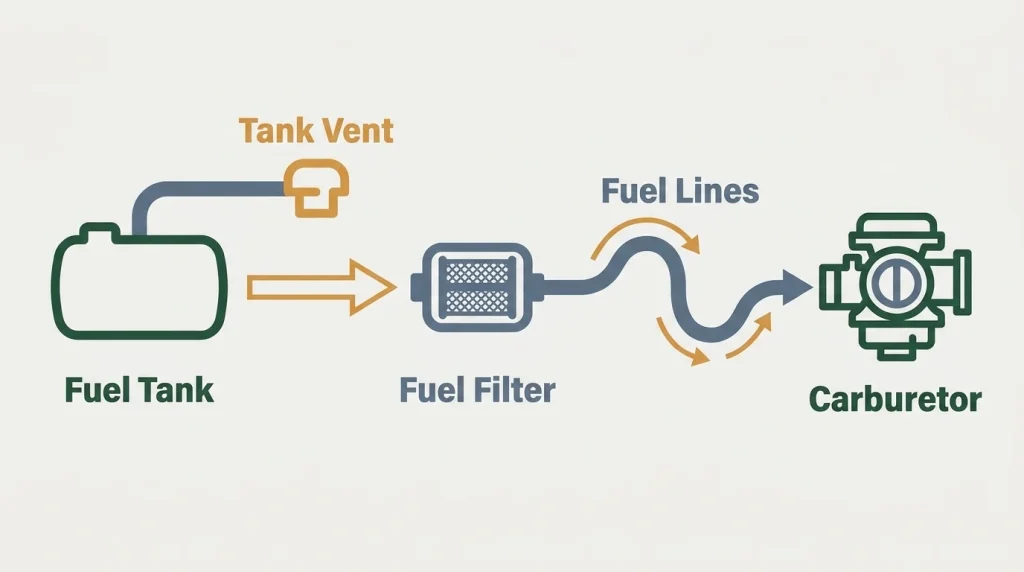
A chainsaw cannot maintain combustion when its fuel delivery system fails to supply the required mixture to the engine.
Fuel must travel from the tank through the fuel lines and carburetor before reaching the combustion chamber.
Clogged Fuel Filter
A clogged fuel filter restricts gasoline flow from the tank to the carburetor.
Contamination inside the fuel tank can contribute to filter blockage. A restricted filter may cause hard starting, brief engine operation, or complete starting failure.
Replace a contaminated filter with a compatible component according to the service instructions.
Damaged Fuel Lines
Cracked or deteriorated fuel lines can interrupt fuel delivery by leaking gasoline or allowing unwanted air into the system.
Inspect accessible fuel lines for visible damage, loose connections, and leakage. Replace damaged components before attempting to operate the chainsaw.
Blocked Fuel Tank Vent
A restricted fuel tank vent can interfere with gasoline flow by preventing normal pressure equalization inside the tank.
Fuel vent problems may become more noticeable after the engine has been running. A chainsaw that stalls and refuses to restart may require vent inspection.
Have the vent tested or serviced according to the manufacturer’s instructions. Do not operate the chainsaw with a loose fuel cap.
Check the Air Filter and Exhaust System
Restricted intake or exhaust airflow can interfere with combustion and contribute to chainsaw starting failure.
Dirty Air Filter
A dirty air filter limits the air entering the engine, which can disturb the balance between fuel and oxygen.
Sawdust, dust, and debris can accumulate on the filter during normal cutting operations.
Inspect the filter and clean or replace it using the procedure appropriate for its material. Some filters require different cleaning methods.
Do not operate a chainsaw without its air filter. Unfiltered debris can enter the engine and damage internal surfaces.
Blocked Spark Arrestor
A heavily restricted spark arrestor can reduce exhaust flow and interfere with engine performance.
The spark arrestor is a screen that helps limit the release of hot particles from the exhaust. Carbon accumulation can restrict the screen over time.
Allow the muffler to cool before inspection. Clean or replace the screen according to the operator’s manual without permanently removing it.
Investigate Carburetor Problems
A malfunctioning carburetor can prevent a chainsaw from starting by supplying too much fuel, too little fuel, or an unsuitable air-fuel mixture.
Carburetor problems become more likely when the fuel is fresh, the starting controls are correct, and basic ignition checks reveal no obvious fault.
Blocked Carburetor Passages
Fuel deposits inside the carburetor can restrict the small passages responsible for delivering gasoline to the engine.
Chainsaws stored with deteriorating fuel may develop these restrictions. Replacing the fuel alone may not remove deposits already present inside the carburetor.
Damaged Carburetor Diaphragm
A damaged or stiff carburetor diaphragm can interfere with fuel pumping and metering.
Many handheld chainsaws use diaphragm carburetors to deliver fuel while the equipment operates in different positions.
Internal diaphragm deterioration may require a compatible rebuild kit or carburetor replacement. Confirm the diagnosis before purchasing parts.
Incorrect Carburetor Adjustment
Incorrect carburetor settings can produce a fuel mixture unsuitable for normal starting and engine operation.
Avoid turning adjustment screws randomly to correct a no-start condition. Different carburetor designs require different settings and service procedures.
Improper adjustment can create additional engine problems. A qualified technician can determine whether cleaning, adjustment, rebuilding, or replacement is appropriate.
Tip
Record your chainsaw’s model number before ordering carburetor parts, fuel filters, or spark plugs to avoid incompatible replacements.
Check for Low Engine Compression
Low engine compression can prevent a chainsaw from starting because the cylinder cannot develop suitable pressure for combustion.
Compression problems are more likely when the starter rope feels unusually easy to pull or the engine has a history of internal damage.
What Causes Low Chainsaw Compression?
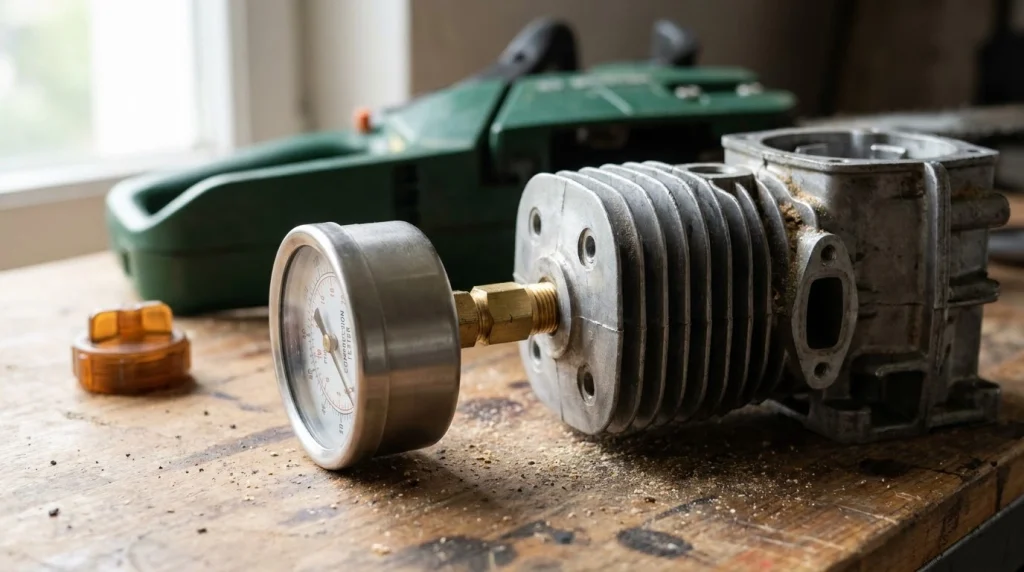
Low compression can result from worn piston rings, cylinder damage, piston damage, or a leaking decompression valve.
- Worn or damaged piston rings.
- Scoring on the cylinder wall.
- Damaged piston surfaces.
- Internal sealing problems.
- A faulty decompression valve, where fitted.
Some engine designs reduce starting resistance intentionally. A light starter rope does not automatically prove that compression is too low.
How Is Chainsaw Compression Diagnosed?
Engine compression can be evaluated with a compatible compression gauge and the testing procedure specified for the chainsaw model.
Do not rely on a universal compression reading for every engine. Gauge design, engine construction, and decompression features can affect measurements.
A technician may also perform pressure and vacuum testing to identify sealing problems that a cylinder compression test cannot reveal.
Identify the Problem From Starting Symptoms
The way a chainsaw behaves during starting attempts can help narrow the list of possible faults before detailed testing.
If you
Notice a dry spark plug after starting attempts.
Choose fuel delivery inspection, because gasoline may not be reaching the cylinder.
If you
Notice excessive gasoline on the spark plug.
Choose flooding and ignition checks, because fuel may be entering without burning.
If you
Find that the starter rope feels unusually light.
Choose compression evaluation, because the cylinder may have a sealing problem.
If you
Experience starting failure after extended storage.
Choose fuel quality inspection, because stored gasoline may have deteriorated.
Chainsaw Turns Over but Never Fires
A chainsaw that never produces an ignition sound may have an electrical fault, inadequate fuel delivery, or insufficient compression.
Check the ignition switch and fuel condition first. Further testing should focus on confirming which combustion requirement is missing.
Chainsaw Fires Briefly but Will Not Start
A chainsaw that fires briefly but cannot continue running may have an unstable fuel supply or an incorrect starting mixture.
Check whether the starting procedure requires changing the choke position after the first ignition sound. Inspect fuel delivery if the problem continues.
Chainsaw Will Not Start After Running Hot
A chainsaw that starts cold but refuses to restart when warm may have a temperature-sensitive ignition fault or fuel-related problem.
Allow the engine to cool and follow the warm-start instructions. Repeated failure when warm deserves professional testing rather than repeated replacement of unrelated parts.
When Should You Take the Chainsaw to a Repair Shop?
Professional repair becomes appropriate when basic fuel, filter, plug, and starting-control checks fail to identify the cause of starting failure.
Arrange service if you discover any of these conditions:
- Gasoline leaking from the fuel system.
- Suspected ignition coil or electrical failure.
- Unusually low engine compression.
- Visible piston or cylinder damage.
- Persistent flooding with correct starting technique.
- Abnormal mechanical noise during engine rotation.
- Damaged or unreliable starting and safety controls.
Ask the technician to identify the failed system before approving major component replacement. A repair estimate can help you decide whether repairing an older chainsaw is worthwhile.
How to Prevent Future Chainsaw Starting Problems
Regular maintenance helps prevent starting problems by keeping the fuel, ignition, airflow, and engine systems in suitable operating condition.
Follow these maintenance practices:
- Use fresh fuel that meets the manufacturer’s specifications.
- Follow the recommended seasonal storage procedure.
- Inspect and maintain the air filter regularly.
- Replace damaged or worn spark plugs as needed.
- Check accessible fuel lines for deterioration.
- Follow separate cold-start and warm-start procedures.
- Maintain the exhaust system according to the operator’s manual.
Address minor starting difficulties before they develop into persistent failures. Changes in starting behavior can provide early clues about maintenance needs.
Keep a record of maintenance and replacement parts. This information can help identify recurring problems during future diagnosis.
Small Engine Spark Tester
A compatible small-engine spark tester can help identify ignition faults when used according to the correct diagnostic procedure.
Frequently Asked Questions
Can a new chainsaw turn over without starting?
A new chainsaw can turn over without starting because of incorrect starting controls, unsuitable fuel, flooding, or a manufacturing fault. Check the assembly and starting instructions before assuming the engine is damaged. Contact the manufacturer or authorized dealer if the problem persists under warranty.
Can a loose spark plug prevent starting?
A loose spark plug can interfere with cylinder sealing and prevent the engine from developing suitable compression during starting. It may also create additional engine problems during operation. Check the installation using the correct tightening specifications rather than applying excessive force to the plug.
Does bar oil affect chainsaw engine starting?
Bar and chain oil normally does not control engine starting because it belongs to a separate cutting-chain lubrication system. However, accidentally adding bar oil to the fuel tank can prevent proper engine operation. Never operate the chainsaw without the required chain lubrication, even if the engine starts normally.
Can a damaged flywheel cause starting failure?
A damaged flywheel or flywheel key can contribute to starting failure by affecting the relationship between crankshaft position and ignition timing. This possibility requires mechanical inspection and model-specific testing. Have a technician investigate suspected flywheel damage rather than dismantling the ignition assembly without suitable tools.
Can a chainsaw start with a faulty decompression valve?
A chainsaw with a faulty decompression valve may experience starting difficulty if the valve leaks cylinder pressure during the compression process. The symptoms depend on how the valve has failed and the engine design. Inspection is appropriate when other checks reveal no clear explanation for low compression.
Can incorrect fuel damage a chainsaw permanently?
Incorrect fuel can permanently damage a gas-powered chainsaw if the mixture fails to provide adequate lubrication or meets unsuitable combustion requirements. The extent of damage depends on the fuel and operating conditions. Stop using the equipment if you suspect incorrect fuel has caused internal engine damage.
Should I use starting fluid in my chainsaw?
Starting fluid should not be used in a chainsaw unless the engine manufacturer expressly approves its use for that model. Unsuitable starting products may create fire risks or interfere with proper engine lubrication. Diagnose the normal fuel and ignition systems instead of attempting to force combustion.
Conclusion
When a chainsaw turns over but won’t start, diagnose the starting controls, fuel supply, ignition system, airflow, and compression in a logical order. Begin with fresh fuel and the correct starting procedure. If basic inspections fail, arrange professional testing before purchasing expensive replacement components.

I write about chainsaw maintenance, troubleshooting, replacement parts, safety, and buying guides. My goal is to make chainsaw information simple, practical, and helpful for homeowners and professionals.