
What to Check First When a Chainsaw Won’t Start: Tips
Quick Answer
When a chainsaw won’t start, first check the ignition switch, fuel level, fuel freshness, and starting controls. Next, inspect the spark plug, air filter, and signs of engine flooding. For battery-powered chainsaws, check the battery charge and safety controls. If these checks fail, investigate fuel delivery, ignition, and engine compression.
- Verify the ignition switch and starting procedure.
- Check the fuel level and fuel quality.
- Inspect the spark plug and air filter.
- Look for signs of a flooded engine.
- Investigate deeper mechanical problems if necessary.
Knowing what to check first when a chainsaw won’t start can save time and prevent unnecessary repairs. Starting problems may result from something as simple as an incorrect choke setting or stale fuel.
This troubleshooting guide helps homeowners and chainsaw owners identify starting problems in a logical order before replacing expensive engine components.
What to Check First When a Chainsaw Won’t Start
The first things to check are the ignition switch, starting controls, fuel supply, and overall condition of the chainsaw.
Gas-powered chainsaws depend on fuel, air, ignition, and sufficient engine compression. A problem in any of these systems can prevent the engine from starting.
Start with the simplest checks rather than immediately removing the carburetor or replacing ignition components.
Step 1
Check the starting controls
Confirm that the ignition switch and choke are in the correct positions for your model.
Step 2
Inspect the fuel supply
Confirm that the tank contains fresh fuel prepared according to the manufacturer’s instructions.
Step 3
Inspect the spark plug
Look for deposits, damage, excessive fuel, or a loose spark plug connection.
Step 4
Check the air filter
Inspect the filter for accumulated sawdust, dirt, and other restrictions.
Step 5
Check for engine flooding
Stop repeated starting attempts if you notice a strong fuel smell or other signs of flooding.
Step 6
Investigate deeper engine problems
Arrange further diagnosis of the fuel system, ignition system, and engine compression if basic checks fail.
Check the Ignition Switch and Starting Controls
An incorrect ignition switch or choke position can prevent a chainsaw from starting even when its engine is in good condition.
Is the Ignition Switch Turned On?
The ignition switch must be in its operating position before starting a conventional gas-powered chainsaw.
When the stop switch is activated, the ignition system prevents the engine from firing. Pulling the starter cord repeatedly will not resolve an incorrect switch setting.
Inspect the switch for visible damage and confirm that it operates according to your owner’s manual.
Is the Choke in the Correct Position?
The correct choke position depends on engine temperature and the starting procedure specified by the manufacturer.
A choke restricts incoming air to create a richer fuel mixture during starting. Cold engines may require this additional fuel, while warm engines generally need a different starting procedure.
Leaving the choke engaged longer than recommended can introduce excessive fuel into the engine and cause flooding.
Warning
Start a gas chainsaw outdoors with the chain brake engaged and the guide bar clear of objects. Never drop-start a chainsaw or start it near spilled fuel.
Check the Fuel Level and Fuel Quality
A chainsaw cannot start properly if the fuel tank is empty or contains deteriorated, contaminated, or incorrectly mixed fuel.
Does the Chainsaw Have Enough Fuel?
An insufficient fuel supply can prevent the engine from receiving the mixture required for combustion.
Allow the engine to cool before opening the fuel tank. Check the fuel level and inspect the surrounding area for leakage.
Remember that the bar oil tank and fuel tank serve different purposes. Filling the bar oil reservoir does not provide fuel to the engine.
Is the Fuel Fresh?
Stale gasoline can contribute to difficult starting and problems within the chainsaw’s fuel system.
Fuel that remains in storage can deteriorate. Deposits may also develop within fuel delivery components, making it harder for the engine to receive a suitable mixture.
If the fuel’s condition is uncertain, replace it with fresh fuel according to your owner’s manual. Dispose of unwanted gasoline through an approved local collection facility.
Is the Fuel Mixture Correct?
Most conventional two-stroke chainsaws require gasoline mixed with compatible two-stroke engine oil in a manufacturer-specified ratio.
Using an incorrect mixture can affect combustion and engine lubrication. Never assume that every chainsaw requires the same mixture.
The fuel specifications in your owner’s manual should determine the gasoline type, oil type, and mixing ratio.
Inspect the Spark Plug
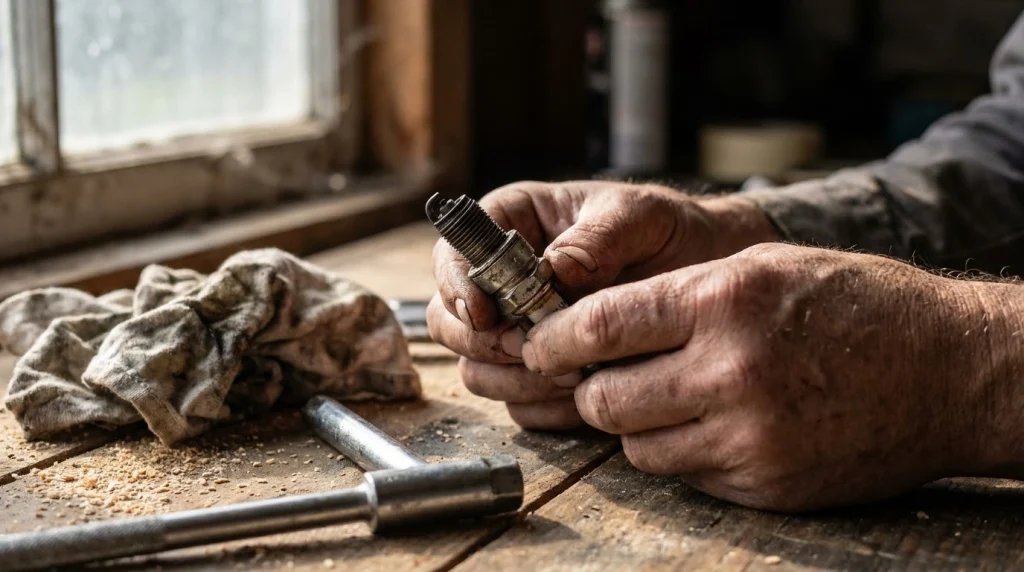
A worn, damaged, or fouled spark plug can prevent the fuel mixture inside a gas chainsaw from igniting.
The spark plug creates the electrical spark needed to begin combustion. Its condition can also provide clues about other engine problems.
With the engine cool and ignition disabled, follow the manufacturer’s instructions for accessing and inspecting the spark plug.
The following table explains common spark plug conditions and their possible meanings.
| Spark Plug Condition | Possible Cause | Recommended Check |
|---|---|---|
| Wet with fuel | Engine flooding or failed ignition | Starting procedure and ignition system |
| Black deposits | Carbon fouling | Air filter and fuel mixture |
| Dry electrode | Possible fuel delivery restriction | Fuel filter and carburetor |
| Damaged electrode | Wear or physical damage | Compatible replacement spark plug |
Spark plug appearance provides useful clues, but it cannot confirm the exact cause of a starting problem by itself.
Does the Spark Plug Need Replacement?
A spark plug may need replacement if its electrode is damaged, its insulator is cracked, or cleaning cannot restore its condition.
Use the spark plug type and electrode gap specified for your chainsaw model. An incompatible replacement can create additional operating problems.
A proper spark plug wrench helps you remove and install the plug without damaging its external surfaces.
Check the Air Filter for Blockages
A clogged air filter can restrict airflow and make a chainsaw difficult to start or keep running.
The air filter prevents sawdust and dirt from entering the engine. During cutting, debris can accumulate across the filter surface and reduce incoming airflow.
Inspect the filter for the following conditions:
- Accumulated sawdust and wood particles.
- Excessive dirt or oily residue.
- Damaged filter material.
- Incorrect filter installation.
- Debris around the air intake.
Clean or replace the filter using the procedure recommended for its material and design. Different filter types require different cleaning methods.
Do not operate the chainsaw without its air filter installed. Unfiltered debris can enter the engine and damage internal components.
Check Whether the Chainsaw Engine Is Flooded
A flooded chainsaw engine contains excessive fuel that interferes with normal ignition and prevents successful starting.
Flooding can happen when you repeatedly attempt to start the engine with the choke engaged. An ignition fault can also allow unburned fuel to accumulate.
What Are the Signs of a Flooded Chainsaw?
Common signs of flooding include a strong gasoline smell, a fuel-wet spark plug, and unsuccessful starting attempts.
- A noticeable smell of unburned gasoline.
- Excessive fuel on the spark plug.
- The engine fails to fire after repeated attempts.
- The engine briefly fires but does not continue running.
These symptoms suggest flooding, but fuel leakage and ignition problems can produce similar signs.
Stop repeated starting attempts and consult the flooded-engine recovery procedure in your owner’s manual.
The STIHL chainsaw troubleshooting FAQ explains how incorrect choke use can cause excess fuel to enter the engine.
Inspect the Chainsaw Fuel Delivery System

Fuel delivery problems become a possible cause when the chainsaw has suitable fuel but the engine still refuses to start.
The fuel system includes the tank, filter, fuel lines, tank vent, and carburetor. Each component contributes to delivering fuel into the engine.
Check the Fuel Filter
A restricted fuel filter can prevent sufficient gasoline from reaching the carburetor during starting.
The fuel filter sits within the fuel delivery system and collects contaminants before they reach sensitive components.
Inspect or replace an accessible fuel filter only according to the manufacturer’s service instructions.
Check the Fuel Lines
Damaged fuel lines can interrupt fuel delivery or allow unwanted air into the fuel system.
Look for visible cracks, disconnected hoses, and signs of leakage. Fuel lines can deteriorate as the chainsaw ages.
Stop using the chainsaw if you discover a fuel leak. Have the damaged components repaired before attempting another start.
Check the Carburetor
A contaminated or malfunctioning carburetor can prevent a chainsaw from receiving the correct air and fuel mixture.
The carburetor controls the mixture delivered to the engine. Internal deposits, damaged diaphragms, and other faults may interfere with this process.
Carburetor diagnosis should follow basic fuel, air filter, and ignition checks. Avoid changing adjustment screws without the manufacturer’s settings and service procedure.
Tip
Record the chainsaw model number before ordering fuel system parts. Filters, hoses, and carburetor components can differ between similar chainsaw models.
What Chainsaw Starting Symptoms Tell You
Identifying the exact starting symptom helps you decide which system to inspect next instead of replacing components at random.
If you
Pull the starter cord but hear no attempt to fire.
Choose starting control and ignition checks first, because the engine may not be producing combustion.
If you
Notice a strong gasoline smell after starting attempts.
Choose flooding and leak checks, because excessive or escaping fuel may be present.
If you
Hear the engine start briefly before stopping.
Choose fuel delivery and airflow checks, because the engine may not be receiving a sustained mixture.
If you
Cannot pull the starter cord normally.
Choose starter mechanism inspection, because mechanical resistance may prevent normal engine rotation.
These symptoms help narrow the troubleshooting process. However, several faults can produce the same symptom, so further inspection may still be necessary.
What to Check Based on When the Chainsaw Stopped Starting
The circumstances surrounding a starting failure can reveal which chainsaw components deserve attention first.
Chainsaw Won’t Start After Sitting
A chainsaw that refuses to start after storage should be checked for deteriorated fuel, restricted fuel delivery, and spark plug problems.
Extended storage can affect gasoline quality and leave deposits within the fuel system. Inspect these areas before assuming that the engine has suffered internal damage.
Chainsaw Won’t Start When Hot
A chainsaw that starts cold but refuses to restart when warm may have an incorrect starting setting, flooding, or another temperature-related fault.
Use the warm-engine starting procedure specified in your manual. If the problem occurs repeatedly, have the ignition and fuel systems examined.
Chainsaw Won’t Start After Refueling
A chainsaw that stops starting immediately after refueling should be checked for incorrect fuel, flooding, and problems with fuel delivery.
Confirm that you used the correct fuel mixture and secured the fuel cap. Inspect for spilled fuel or leakage before making another starting attempt.
Chainsaw Won’t Start After Running Out of Fuel
A chainsaw that runs out of gasoline may require the manufacturer’s normal refueling and priming procedure before restarting.
Allow the engine to cool and refill it with the correct mixture. Avoid excessive choke use when restarting an engine that remains warm.
Check Engine Compression and the Ignition System
Engine compression and ignition system faults should be investigated when the basic starting, fuel, and airflow checks fail.
Compression is the pressure created when the piston squeezes the air and fuel mixture inside the cylinder. Insufficient compression can prevent successful combustion.
Possible mechanical causes include worn piston rings, cylinder damage, and sealing problems. These faults require more detailed diagnosis than a routine maintenance check.
The Husqvarna chainsaw troubleshooting guide identifies compression and ignition faults among the possible causes of persistent starting difficulties.
A technician can use a suitable compression tester and ignition testing equipment to determine whether internal engine repairs are necessary.
What to Check First When an Electric Chainsaw Won’t Start

An electric chainsaw that refuses to start should be checked for power supply problems and incorrect safety control settings.
Electric chainsaws do not use gasoline, carburetors, or spark plugs. Their troubleshooting process therefore differs from gas-powered models.
Battery-Powered Chainsaw
A battery-powered chainsaw requires a compatible battery with sufficient charge and a secure electrical connection.
Check the following items before arranging a repair:
- Battery charge level.
- Correct battery installation.
- Battery and tool warning indicators.
- Power switch operation.
- Trigger lockout position.
- Chain brake position according to the manual.
Remove the battery before inspecting accessible electrical contacts or mechanical components. Never bypass a safety interlock to force the chainsaw to operate.
Corded Electric Chainsaw
A corded chainsaw requires an uninterrupted electrical supply through a suitable outlet and power cord.
With the chainsaw disconnected, inspect the cord and plug for damage. Confirm that any extension cord meets the manufacturer’s requirements.
Do not reconnect a chainsaw with damaged wiring or exposed electrical conductors. Arrange qualified repairs before further use.
When Should You Stop Troubleshooting a Chainsaw?
Stop troubleshooting when the chainsaw shows signs of serious mechanical damage, electrical faults, fuel leakage, or malfunctioning safety features.
Some starting problems require specialist equipment and repair knowledge. Continuing to force the engine to start may worsen an existing fault.
Arrange professional service if you notice any of these conditions:
- The starter cord remains stuck or unusually difficult to pull.
- Gasoline leaks from the fuel system.
- The ignition system remains faulty after basic checks.
- Internal engine damage is suspected.
- The chain brake or stop switch fails to operate.
- The electric motor produces smoke or a burning smell.
Record the symptoms and maintenance checks you have completed. Providing these details can help a technician narrow the diagnosis without repeating unnecessary work.
Chainsaw Spark Plug Wrench
A compatible spark plug wrench helps you remove the spark plug for inspection and routine chainsaw maintenance.
Frequently Asked Questions
Can a Chainsaw Start Without Bar Oil?
A conventional gas chainsaw may start without bar oil because chain lubrication and engine fuel delivery are separate systems. However, operating the saw without adequate bar oil can damage the guide bar and chain. Check the lubrication reservoir before cutting, even if the engine starts normally.
Can a New Chainsaw Have Starting Problems?
A new chainsaw can experience starting difficulties because of incorrect assembly, improper starting controls, unsuitable fuel, or an underlying manufacturing fault. Review the model-specific setup and starting instructions before removing components. Contact the retailer or authorized service provider if the problem continues under warranty.
Should I Use Starting Fluid in My Chainsaw?
Starting fluid should not be used in a chainsaw unless its manufacturer specifically approves the product and application method. Conventional two-stroke engines depend on suitable lubrication through their prescribed fuel mixture. Follow the manufacturer’s troubleshooting procedure instead of introducing unapproved chemicals into the engine.
Can a Chainsaw Have Spark but Still Not Start?
A chainsaw can produce an ignition spark but still fail to start because of fuel delivery problems, restricted airflow, or insufficient compression. A visible spark alone does not establish correct ignition performance under operating conditions. Continue diagnosing the other systems rather than assuming the ignition system is faultless.
Can a Clogged Exhaust Prevent a Chainsaw From Starting?
A severely restricted chainsaw exhaust can interfere with engine operation and contribute to starting difficulties or poor running performance. Carbon deposits may accumulate around the spark arrestor, a screen that limits escaping sparks. Inspect this component according to the manufacturer’s instructions after the exhaust has cooled.
Should I Replace the Carburetor Before Testing Other Parts?
Replacing a chainsaw carburetor should follow basic diagnostic checks because several unrelated faults can produce symptoms associated with carburetor problems. Confirm that the starting controls, fuel, air filter, and spark plug are suitable first. Professional fuel system testing can help prevent unnecessary parts replacement.
Conclusion
Knowing what to check first when a chainsaw won’t start helps you diagnose problems systematically and avoid unnecessary repairs. Begin with starting controls, fresh fuel, the spark plug, and the air filter. If these checks fail, arrange further diagnosis of the ignition, fuel delivery, and compression systems.
I write about chainsaw maintenance, troubleshooting, replacement parts, safety, and buying guides. My goal is to make chainsaw information simple, practical, and helpful for homeowners and professionals.