
Chainsaw Won’t Start After Maintenance? Checks and Fixes
Quick Answer
If your chainsaw won’t start after maintenance, inspect the components you recently cleaned, adjusted, or replaced. A disconnected spark plug boot, restricted fuel line, incorrectly installed air filter, or flooded engine can prevent starting. Check the starting controls and confirm that every serviced component is installed according to the owner’s manual.
- Inspect the parts disturbed during maintenance first.
- Check the spark plug and ignition connection.
- Verify fuel quality and fuel system connections.
- Check the air filter and starting controls.
- Stop troubleshooting if you discover fuel leaks or mechanical damage.
A chainsaw that worked before maintenance but refuses to start afterward can leave you wondering what went wrong. The problem may involve a small assembly mistake rather than a major engine failure.
This guide explains how to identify starting problems after chainsaw maintenance, inspect recently serviced components, and determine when professional repairs are necessary.
Why Won’t My Chainsaw Start After Maintenance?
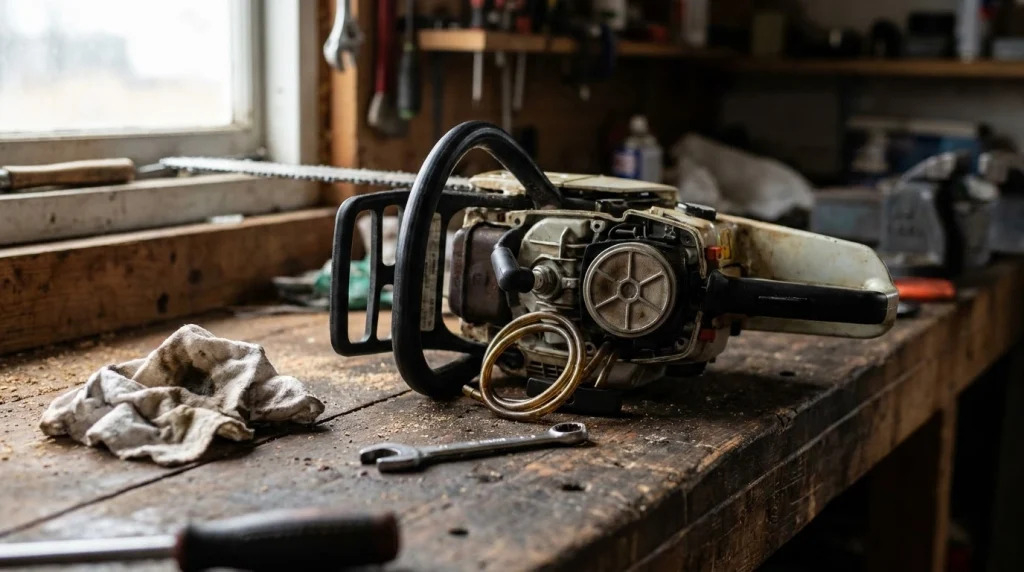
A chainsaw may fail to start after maintenance because a serviced component is disconnected, installed incorrectly, damaged, or adjusted outside its required settings.
A gasoline chainsaw needs a suitable fuel and air mixture, reliable ignition, and sufficient engine compression. Interrupting any of these conditions can prevent the engine from starting.
Begin by reviewing the maintenance you performed. The most useful starting point is the component you last removed or adjusted.
The following table connects common maintenance tasks with possible starting problems.
| Maintenance Task | Possible Problem | What to Check |
|---|---|---|
| Spark plug replacement | Loose ignition connection | Plug boot and compatibility |
| Air filter cleaning | Wet or incorrectly fitted filter | Filter condition and seating |
| Fuel filter replacement | Interrupted fuel supply | Fuel filter and hoses |
| Carburetor cleaning | Fuel delivery or assembly issue | Connections and approved settings |
| Starter repair | Starter mechanism binding | Starter housing and rope movement |
| Fuel replacement | Incorrect fuel mixture | Fuel type and mixture requirements |
Checking the serviced component first can help you avoid replacing parts that were working correctly before maintenance.
Initial Troubleshooting Checks After Chainsaw Maintenance
The initial troubleshooting checks should cover assembly, starting controls, ignition connections, and fuel delivery before you investigate internal engine problems.
Allow the chainsaw to cool before inspecting it. Switch off the engine and disconnect the spark plug boot before working on mechanical components.
- Confirm that all removed covers and components are correctly installed.
- Inspect the spark plug boot and visible electrical connections.
- Check the air filter for damage, moisture, or incorrect installation.
- Inspect accessible fuel hoses for leaks or sharp bends.
- Confirm that the fuel meets the manufacturer’s requirements.
- Reassemble the chainsaw and follow the model-specific starting instructions.
For gasoline chainsaws, fuel delivery, ignition, and airflow are useful diagnostic areas. The Husqvarna chainsaw troubleshooting guide explains how faults within these systems can affect engine operation.
Warning
Fuel leaks create a fire hazard during ignition. Do not attempt to start a chainsaw with leaking fuel, damaged fuel hoses, or loose fuel connections.
Chainsaw Won’t Start After Spark Plug Replacement
A chainsaw that stops starting after spark plug replacement may have an incompatible plug, an incorrect electrode gap, or a disconnected ignition boot.
Check the Spark Plug Boot
The spark plug boot connects the ignition wire to the spark plug. A loose connection can interrupt the electrical energy needed to ignite the fuel mixture.
With the engine switched off and cool, inspect the boot for damage. Confirm that the connection is secure before reassembling the chainsaw.
Verify Spark Plug Compatibility
A replacement spark plug must match the specifications listed in your chainsaw owner’s manual. Similar-looking plugs can have different dimensions, electrode designs, and heat ranges.
Compare the replacement part number with the manufacturer’s approved specification. Do not assume that a plug is compatible simply because it fits the cylinder opening.
Inspect the Spark Plug Gap
The spark plug gap is the distance between its electrodes. An incorrect gap can interfere with reliable ignition.
Use the gap specification for your exact chainsaw model. A spark plug gap gauge can help you verify the spacing without relying on a visual estimate.
Check for Spark Plug Damage
A cracked insulator, damaged electrode, or contaminated spark plug can contribute to starting difficulties. Inspect the replacement plug if the engine stopped starting immediately after installation.
If ignition problems remain after checking the plug and its connection, arrange a professional ignition system inspection.
Chainsaw Won’t Start After Air Filter Cleaning
A chainsaw may fail to start after air filter maintenance if the filter remains wet, restricts airflow, or interferes with nearby starting controls.
The air filter protects the engine from dust and other contaminants. Its condition affects the air supplied to the engine.
Make Sure the Air Filter Is Dry
A washable air filter should be completely dry before installation. Remaining moisture can restrict airflow or enter the intake system.
Follow the cleaning method specified for the filter material. Some filter designs require different cleaning procedures or replacement instead of washing.
Check Air Filter Installation
An incorrectly seated air filter may prevent proper cover installation or leave an opening for unfiltered air.
Inspect the filter’s mounting surface and retaining mechanism. Confirm that the filter sits securely without forcing the cover into position.
- Check the filter orientation.
- Inspect the sealing surface.
- Remove loose debris using the approved cleaning method.
- Replace damaged filter material.
- Confirm that the cover closes correctly.
Do not run the chainsaw without its required air filter. Dust entering the engine can damage internal components.
Check Fuel Delivery After Chainsaw Maintenance
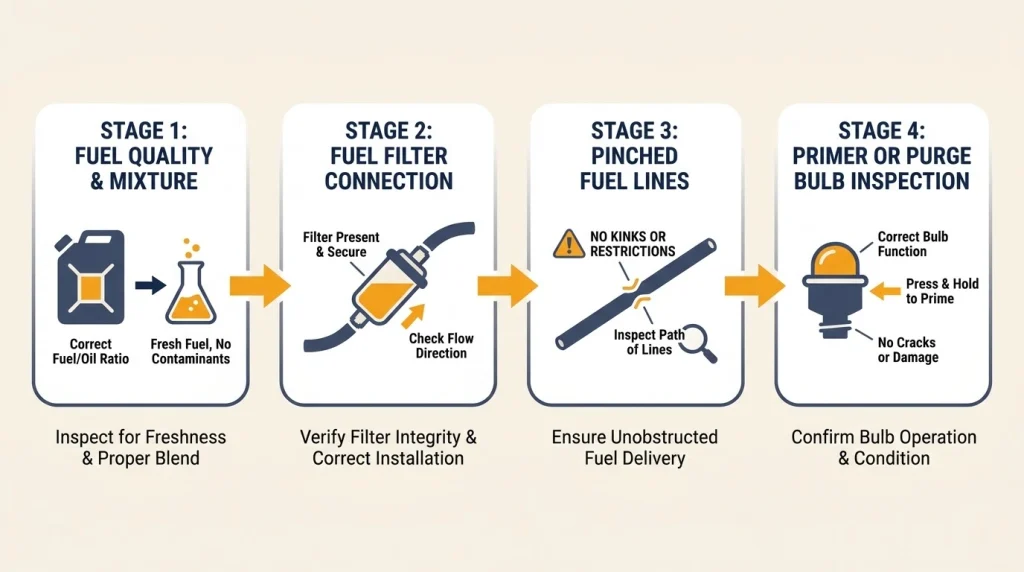
Fuel delivery problems can prevent a chainsaw from starting when maintenance disturbs the fuel filter, fuel hoses, primer bulb, or carburetor.
Check Fuel Quality and Mixture
Gasoline chainsaws require fuel that meets their engine specifications. Many models use a mixture of gasoline and approved two-stroke engine oil.
If you replaced the fuel during maintenance, confirm that you used the correct mixture. Do not use bar and chain lubricant as a substitute for two-stroke engine oil.
Replace contaminated or degraded fuel using the manufacturer’s recommended draining and refueling procedures.
Inspect the Fuel Filter Connection
The fuel filter removes contaminants before fuel reaches the engine. An obstructed filter or disconnected fuel hose can interrupt the fuel supply.
If you recently replaced the filter, check whether the replacement matches your model. Inspect accessible connections for signs of incorrect installation or leakage.
Look for Pinched Fuel Lines
A fuel hose trapped beneath a housing or bent sharply during reassembly may restrict fuel movement.
Review the routing of any hose you disturbed during maintenance. Damaged, leaking, or incorrectly routed hoses should be corrected according to the service instructions.
Inspect the Primer or Purge Bulb
A primer or purge bulb that fails to behave normally after maintenance may indicate a fuel supply or hose connection problem.
Inspect the bulb for cracks and confirm that its connections match the manufacturer’s diagram. Fuel routing varies between chainsaw models.
Chainsaw Won’t Start After Carburetor Cleaning
A chainsaw may refuse to start after carburetor cleaning because fuel passages remain obstructed, internal components are incorrectly assembled, or the settings have changed.
The carburetor controls the fuel and air supplied to the engine. Small assembly errors can interfere with its operation.
Review Carburetor Reassembly
Incorrectly installed carburetor gaskets or diaphragms can interfere with fuel delivery and sealing.
A diaphragm is a flexible membrane that helps control fuel movement inside certain carburetor designs. Its installation depends on the particular carburetor.
Compare the serviced assembly with the manufacturer’s service information. Have a qualified technician inspect the carburetor if you cannot confirm the correct arrangement.
Check Carburetor Adjustment Changes
Incorrect carburetor adjustments can make the fuel mixture unsuitable for starting or normal operation.
Some chainsaws have adjustable carburetors, while others use electronically managed systems. Their adjustment procedures are not interchangeable.
Avoid turning adjustment screws at random. Incorrect settings may cause unsafe engine speeds or internal engine damage.
Could the Chainsaw Engine Be Flooded?
A flooded chainsaw engine contains excess fuel that interferes with normal ignition. Repeated unsuccessful starting attempts can contribute to flooding.
Flooding may occur when you repeatedly attempt to start the engine using an unsuitable choke setting.
Possible signs of flooding include:
- A strong gasoline smell without visible leakage.
- A fuel-wet spark plug.
- Repeated unsuccessful starting attempts.
- An engine that briefly fires but does not continue running.
These signs are not proof of flooding because ignition faults can produce similar symptoms.
Stop repeated starting attempts and follow the flooded-engine recovery procedure in your owner’s manual. Do not use starting fluid or exposed flames to assist ignition.
What Different Starting Symptoms Tell You
Different starting symptoms can help distinguish a fuel or ignition problem from a mechanical fault after chainsaw maintenance.
If you
Can pull the starter rope normally, but the engine never fires.
Check ignition connections and fuel delivery first.
If you
Notice that the engine starts briefly and then stops.
Check fuel supply and airflow restrictions.
If you
Cannot pull the starter rope normally.
Stop starting attempts and arrange a mechanical inspection.
Chainsaw Starts and Immediately Dies
A chainsaw that starts and immediately dies may have restricted fuel delivery, insufficient airflow, or an unsuitable fuel mixture.
Revisit the air filter, fuel filter, and hoses that you serviced. The Husqvarna engine stalling guide also identifies degraded fuel and exhaust restrictions as possible causes.
Chainsaw Starter Rope Is Hard to Pull
A starter rope that becomes unusually difficult to pull after maintenance may indicate a starter assembly problem or internal mechanical resistance.
Do not force the rope. If the problem began after starter housing repairs, have the recoil starter and its installation inspected before further attempts.
Chainsaw Has Unusually Low Starter Resistance
Unusually low resistance when pulling the starter rope may indicate a starter engagement problem or insufficient engine compression.
Compression is the pressure created inside the cylinder as the piston moves. A qualified technician can determine whether compression loss or another mechanical fault is responsible.
When Should You Seek Professional Chainsaw Repair?
Professional chainsaw repair is appropriate when starting problems continue after basic inspections or when maintenance reveals damaged fuel, ignition, or internal engine components.
Stop troubleshooting if you encounter any of these conditions:
- Fuel leaking from the carburetor or hoses.
- A starter rope that becomes stuck.
- Damaged ignition wiring.
- Suspected internal engine damage.
- Uncertain carburetor reassembly.
- A malfunctioning chain brake or throttle control.
- Unexpected chain movement when the engine idles.
Tell the technician which components you serviced and whether the chainsaw started before maintenance. Include any parts you replaced or adjustments you made.
How to Prevent Starting Problems After Maintenance
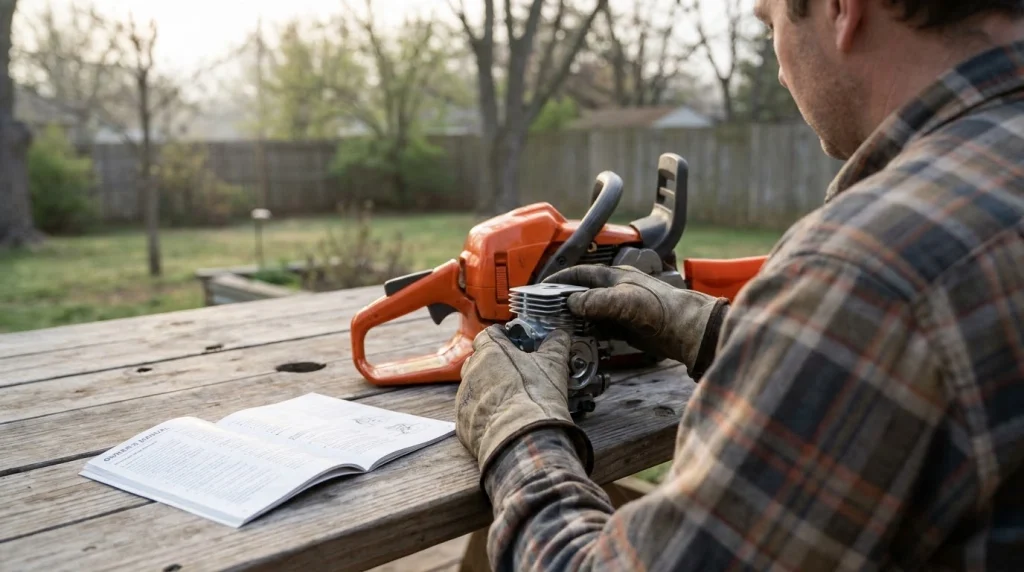
You can reduce maintenance-related starting problems by following model-specific service instructions, checking replacement parts, and inspecting the chainsaw before returning it to use.
Do
- Use compatible replacement parts.
- Photograph connections before disassembly.
- Follow manufacturer maintenance instructions.
Avoid
- Forcing components into position.
- Making random carburetor adjustments.
- Starting the engine with missing safety components.
Keep a record of completed maintenance tasks and replacement part numbers. This information makes it easier to identify the source of future starting problems.
Before restarting, confirm that the chainsaw is fully assembled and all safety devices are functional. Start outdoors using the approved procedure with the chain clear of surrounding objects.
Spark Plug Gap Gauge
A spark plug gap gauge helps you check electrode spacing against the specification in your chainsaw owner’s manual.
Frequently Asked Questions
Can pressure washing cause chainsaw starting problems?
Pressure washing can contribute to chainsaw starting problems if water enters sensitive ignition components, the air intake, or other protected areas. Avoid directing pressurized water into the engine housing. Use the cleaning methods approved by the chainsaw manufacturer and allow affected components to dry before inspection.
Why won’t my battery chainsaw start after cleaning?
A battery chainsaw may refuse to start after cleaning because the battery is incorrectly seated, discharged, or a safety interlock remains engaged. Remove the battery before inspecting accessible connections and controls. Consult the model’s instructions if moisture entered the electrical housing or the battery compartment.
Can changing chain oil prevent the engine from starting?
Replacing bar and chain oil does not normally prevent a gasoline chainsaw engine from starting because the lubrication system operates separately. However, accidentally adding chain lubricant to the fuel tank can cause engine problems. Confirm that each fluid was added to the correct reservoir before starting.
Should I replace every part if maintenance fails?
Replacing every possible component is unnecessary when a chainsaw develops starting problems immediately after a specific maintenance task. Begin with the components you disturbed and verify their installation. Targeted inspection can identify assembly mistakes without introducing additional faults through unnecessary replacement work.
Can cold weather affect starting after maintenance?
Cold weather can make gasoline chainsaw starting more difficult even when the maintenance work was performed correctly and all components are functional. Use the cold-start procedure specified for your model. Consider the engine temperature before choosing choke settings or interpreting an unsuccessful starting attempt.
Should I return my chainsaw to the service shop?
A chainsaw that stops starting immediately after professional servicing should be returned to the service provider when basic operating checks do not resolve the issue. Explain how the symptoms changed after servicing. Avoid further disassembly until you understand the shop’s repair terms and any applicable warranty conditions.
Conclusion
If your chainsaw won’t start after maintenance, begin by inspecting the components you cleaned, adjusted, or replaced. Check assembly, ignition connections, fuel delivery, and starting controls before investigating internal faults. Arrange professional repairs if basic inspections fail or you discover mechanical damage.
I write about chainsaw maintenance, troubleshooting, replacement parts, safety, and buying guides. My goal is to make chainsaw information simple, practical, and helpful for homeowners and professionals.