
Chainsaw Won’t Start After Running Out of Fuel? Fixes
Quick Answer
If your chainsaw won’t start after running out of fuel, the fuel system may need priming, or the engine may be flooded. Refill the tank with fresh, correctly mixed fuel and follow the appropriate starting procedure. If the engine still refuses to start, inspect the fuel delivery system and spark plug.
- Refill the fuel tank with the correct gasoline and oil mixture.
- Use the primer or purge bulb if your chainsaw has one.
- Choose the starting procedure for the engine temperature.
- Check for flooding, fuel restrictions, and spark plug problems.
- Stop troubleshooting if you discover fuel leakage or mechanical damage.
Running out of gas during a cutting job can leave your chainsaw difficult to restart, even after refilling the tank. The problem may involve interrupted fuel delivery, incorrect choke settings, or an existing fault in the fuel system.
This guide explains how to identify the cause, restart your chainsaw safely, and prevent the same problem from happening again.
In this article
- Why a chainsaw won’t start after running out of fuel
- Common causes of starting failure
- How to restart a chainsaw after running out of gas
- Fuel starvation vs. engine flooding
- Primer bulb problems
- Spark plug inspection
- Hot engine starting problems
- Chainsaw starts and then dies
- Troubleshooting mistakes to avoid
- Can running out of fuel damage a chainsaw?
- When professional repair is necessary
- How to prevent starting problems
- Frequently Asked Questions
- Conclusion
Why Won’t a Chainsaw Start After Running Out of Fuel?
A chainsaw may refuse to start after running out of fuel because gasoline is no longer reaching the engine correctly. Incorrect restart procedures can also cause flooding and prevent ignition.
A gasoline chainsaw needs fuel, air, compression, and an ignition spark to operate. Running out of gasoline interrupts the fuel supply, stopping combustion inside the engine.
Refilling the tank restores the fuel supply inside the tank. However, fuel may still need to travel through the filter, fuel lines, and carburetor before reaching the engine.
The carburetor controls the mixture of fuel and air entering the engine. A restriction or fault in this component can prevent a successful restart.
If your chainsaw operated normally before running dry, begin with refueling and starting procedures. Avoid replacing parts until you identify evidence of a fault.
Common Reasons a Chainsaw Won’t Start After Refueling
Common causes include interrupted fuel delivery, engine flooding, incorrect choke use, contaminated gasoline, and restricted fuel filters. The engine temperature also affects the correct restart procedure.
Fuel Has Not Reached the Carburetor
Fuel may not reach the carburetor immediately after you refill an empty tank. The starting system must restore fuel circulation before normal combustion can resume.
Chainsaws equipped with a purge bulb can use that component to help restore circulation. Models without a bulb rely on their own fuel delivery and starting systems.
A failure to restart after following the correct procedure may indicate a fuel delivery restriction rather than an empty tank alone.
The Engine Is Flooded
A flooded chainsaw contains more fuel than the engine can ignite successfully. Repeated starting attempts with excessive choke can create this condition.
The choke restricts incoming air to help a cold engine start. Continued use after the engine fires can make the mixture too rich for normal combustion.
Flooding can occur even when the original problem was fuel starvation. Repeated attempts to compensate for an empty fuel system may eventually introduce excessive gasoline.
The Choke Is in the Wrong Position
An incorrect choke setting can prevent a chainsaw from restarting after refueling. A warm engine may require a different starting position than a cold engine.
Use the control positions described in your owner’s manual. Electronically controlled carburetors may have different procedures from conventional carburetors.
The Fuel Filter Is Restricted
A restricted fuel filter can prevent gasoline from reaching the carburetor even when the tank contains enough fuel. Dirt, deposits, or deterioration may reduce fuel flow.
The fuel filter sits inside the tank on many gasoline chainsaws. Its purpose is to keep contaminants out of the fuel delivery system.
Inspect or replace the filter according to your manufacturer’s maintenance instructions if fuel delivery problems continue.
The Fuel Lines Are Damaged
Damaged fuel lines can interrupt gasoline delivery or allow air into the fuel system. Cracked, loose, or disconnected hoses may prevent normal fuel circulation.
Refilling an empty tank does not repair a damaged hose. Persistent starting problems accompanied by an empty purge bulb deserve further fuel system inspection.
The Replacement Fuel Is Unsuitable
Old, contaminated, or incorrectly mixed gasoline can prevent a chainsaw from starting after refueling. The replacement fuel must meet the engine manufacturer’s specifications.
Most gasoline chainsaws use a two-stroke engine that requires gasoline mixed with suitable engine oil. Always follow the fuel requirements for your specific model.
Do not confuse two-stroke engine oil with bar and chain oil. These products serve different purposes and are not interchangeable.
How to Restart a Chainsaw After Running Out of Gas
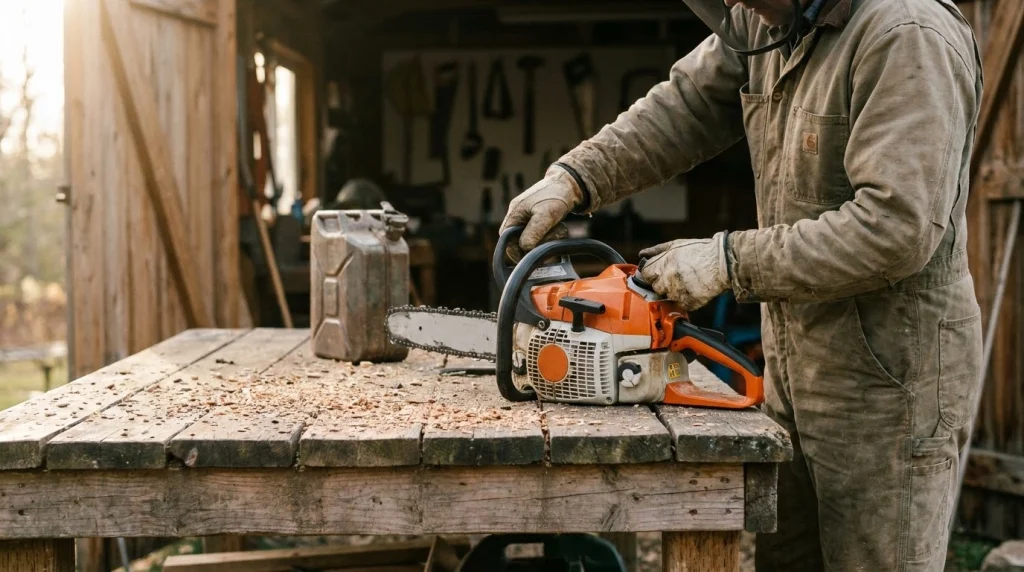
Restart a chainsaw by adding suitable fuel, restoring fuel circulation, and following the correct cold or warm starting procedure. Check for leaks before attempting to start the engine.
Step 1
Switch Off the Engine and Allow It to Cool
Place the chainsaw on a stable surface outdoors. Allow hot engine components to cool before refueling.
Step 2
Refill With Correctly Mixed Fuel
Use fresh gasoline and the correct engine oil mixture. Secure the fuel cap and remove spilled fuel before starting.
Step 3
Restore Fuel Circulation
Operate the primer or purge bulb according to the manufacturer’s instructions if your chainsaw has one.
Step 4
Select the Correct Starting Position
Choose the cold or warm starting procedure specified for your engine temperature and chainsaw model.
Step 5
Engage the Chain Brake and Start Safely
Move away from the refueling area, stabilize the saw, and keep the cutting attachment clear. Follow the approved starter cord procedure.
Step 6
Check the Engine Response
If the engine does not fire, stop repeated starting attempts. Check for flooding, fuel delivery faults, or ignition problems.
The STIHL chainsaw starting guide explains safe starting positions, fuel pump operation, and the use of starting controls.
Warning
Gasoline vapors can ignite near hot surfaces, flames, or sparks. Never refuel a running chainsaw or attempt to start a saw with leaking fuel.
Fuel Starvation vs. Engine Flooding
Fuel starvation occurs when the engine receives insufficient gasoline, while flooding occurs when excessive fuel prevents normal ignition. Both conditions can make a chainsaw difficult to start.
The following table compares the symptoms and appropriate responses.
| Symptom | Possible Cause | Recommended Action |
|---|---|---|
| Dry spark plug | Insufficient fuel delivery | Inspect the fuel system |
| Fuel-wet spark plug | Flooding or ignition failure | Follow the model-specific diagnostic procedure |
| Purge bulb remains empty | Interrupted fuel circulation | Check fuel level, hoses, and filter |
| Strong gasoline smell from exhaust | Possible engine flooding | Stop repeated choked starting attempts |
| Engine fires and stalls | Restricted fuel or airflow | Inspect accessible filters and fuel quality |
These symptoms provide diagnostic clues rather than proof of a specific fault. Check the suspected system before purchasing replacement components.
How to Recognize a Flooded Chainsaw
A flooded chainsaw may produce a strong gasoline odor from the exhaust, repeated unsuccessful starting attempts, or a fuel-wet spark plug.
The Husqvarna flooded engine guidance identifies these symptoms as common signs of excess fuel inside the engine.
Stop adding fuel through unnecessary starting attempts. Follow the flooded-engine restart procedure in your owner’s manual because control settings differ between models.
Why Is the Chainsaw Primer Bulb Not Filling With Fuel?
A primer or purge bulb may remain empty because of a fuel restriction, damaged hose, insufficient fuel, or a problem within the bulb assembly.
On many chainsaws, the purge bulb moves fuel through the carburetor and returns excess gasoline to the tank. This helps prepare the fuel system for starting.
The condition of the bulb provides useful clues about the fuel delivery system.
- Bulb remains compressed: A restriction may prevent normal fuel circulation.
- Bulb moves but stays empty: Check the fuel level and possible air leaks.
- Bulb is cracked: The damaged component may require replacement.
- Bulb is difficult to press: Incorrectly connected or restricted lines may be responsible.
According to Husqvarna’s purge bulb troubleshooting guide, circulation problems can involve the filter, hoses, or carburetor.
Do not force a stiff bulb or continue operating a damaged one. Arrange an inspection if normal circulation cannot be restored.
What Does the Spark Plug Tell You About the Problem?
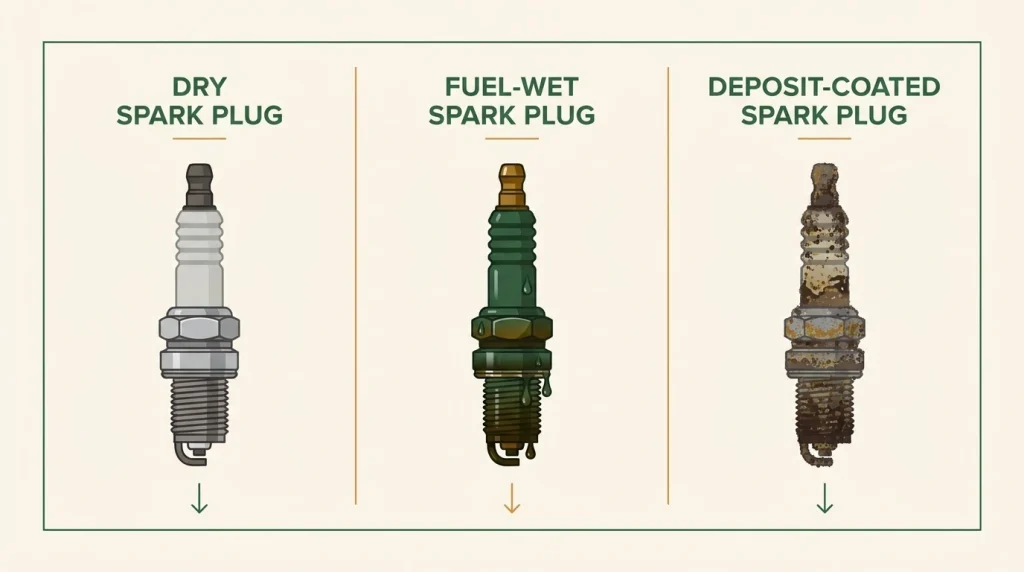
The spark plug can help distinguish a possible fuel delivery problem from flooding or ignition failure. Its condition provides clues about what happens inside the combustion chamber.
Switch off the chainsaw and allow the engine to cool before inspecting the plug. Disconnect the spark plug boot according to the manufacturer’s maintenance instructions.
The Spark Plug Is Dry
A dry spark plug after unsuccessful starting attempts may indicate that insufficient gasoline is reaching the combustion chamber. Check the fuel delivery system before assuming the carburetor needs replacement.
Possible causes include a restricted filter, damaged fuel hose, or carburetor fault. Incorrect starting control settings may also contribute.
The Spark Plug Is Wet With Gasoline
A fuel-wet spark plug suggests that gasoline reaches the combustion chamber but does not burn successfully. Flooding and ignition faults are possible explanations.
Follow the manufacturer’s instructions for inspecting and servicing the plug. Avoid creating exposed ignition sparks near gasoline or fuel vapors.
The Spark Plug Has Heavy Deposits
Heavy carbon or oily deposits can interfere with normal spark plug operation. Incorrect fuel mixtures and engine operating problems may contribute to deposit formation.
Use the replacement plug type and electrode gap specified in your owner’s manual. Spark plug specifications are not universal across chainsaw models.
Why Won’t a Hot Chainsaw Restart After Refueling?
A hot chainsaw may refuse to restart because of inappropriate choke use, engine flooding, or heat-related fuel delivery problems. Engine temperature helps determine the correct starting procedure.
A chainsaw that stops during cutting may retain considerable heat after running out of gasoline. Using a cold-start procedure on a warm engine can introduce more fuel than necessary.
Allow the engine to cool safely when needed. Consult the warm-start instructions for your particular chainsaw before attempting another restart.
If you
Have a cooled chainsaw that has been sitting unused.
Choose the cold-start procedure, because the engine requires its specified cold starting conditions.
If you
Have a warm chainsaw that stopped during cutting.
Choose the model-specific warm-start procedure, because excessive choke may flood the engine.
If you
Notice signs of flooding after repeated starting attempts.
Choose the flooded-engine procedure, because continued choke use may worsen the problem.
Repeated hot-start failures may indicate a fault that requires professional diagnosis, especially when the chainsaw starts normally after cooling.
Why Does a Chainsaw Start and Then Die After Refueling?
A chainsaw that starts and immediately dies may receive enough fuel for initial ignition but not enough to sustain normal operation. Restricted airflow can produce similar symptoms.
This behavior differs from an engine that never fires. A brief start indicates that combustion occurred, even though the engine could not continue running.
Inspect these possible causes:
- Restricted fuel filter.
- Damaged or disconnected fuel line.
- Contaminated gasoline.
- Dirty air filter.
- Restricted exhaust system.
- Carburetor malfunction.
Begin with accessible maintenance items described in the owner’s manual. Confirm that the fuel mixture is correct and the starting controls return to their normal operating positions.
If the chainsaw repeatedly stalls, discontinue cutting until the cause has been identified. Unpredictable engine operation makes the tool harder to control.
Mistakes to Avoid When Restarting an Empty Chainsaw
Repeated choking, unsuitable starting fluids, and unnecessary carburetor adjustments can complicate a simple fuel delivery problem. Use the manufacturer’s procedures before attempting more advanced repairs.
Do
- Confirm the correct fuel mixture.
- Match the starting procedure to engine temperature.
- Inspect for fuel leaks and damaged components.
Avoid
- Using full choke repeatedly without checking the engine response.
- Pouring gasoline directly into the cylinder.
- Changing carburetor settings without proper diagnosis.
Running out of gasoline does not automatically change the carburetor adjustment. Altering its settings without identifying a fault can introduce additional operating problems.
Can Running Out of Fuel Damage a Chainsaw?
Running out of fuel during normal operation does not automatically mean your chainsaw has suffered engine damage. A failure to restart may instead involve fuel delivery or starting conditions.
However, gasoline-powered two-stroke engines depend on their specified fuel and oil mixture for internal lubrication. Operating with incorrect fuel or a persistent fuel system fault can contribute to engine damage.
Watch for symptoms that extend beyond ordinary starting difficulty:
- Unusual metallic noises before the engine stopped.
- A starter cord that suddenly becomes difficult to move.
- A starter cord that feels unusually loose.
- Persistent failure after basic fuel and ignition checks.
- Abnormal engine performance before running out of fuel.
These symptoms can indicate mechanical or compression problems. They do not establish that running out of gasoline caused the damage.
Do not force a starter cord that appears stuck. Have the chainsaw inspected before attempting to operate it again.
When Should You Take the Chainsaw for Professional Repair?
Professional repair is appropriate when correct refueling, approved starting procedures, and basic maintenance checks do not restore normal operation. Fuel leaks and abnormal mechanical resistance require particular attention.
A qualified technician can inspect the carburetor, ignition system, fuel delivery system, and engine compression using suitable diagnostic equipment.
Arrange professional service if you notice any of the following conditions:
- Persistent fuel leakage.
- A damaged or disconnected internal fuel line.
- Repeated flooding despite correct starting procedures.
- Suspected ignition failure.
- Unusual starter cord resistance.
- Repeated stalling after the engine starts.
Provide the technician with details about how the engine stopped. Explain whether the chainsaw ran normally before running out of gasoline and what happened after refueling.
These details help narrow the possible causes without unnecessary component replacement.
How to Prevent Starting Problems After Refueling

Proper fuel management, regular maintenance, and correct starting procedures can reduce the likelihood of restart problems after a chainsaw runs out of gasoline.
Monitor the Fuel Level
Checking the fuel level before a cutting session helps prevent unexpected interruptions. Stop the engine safely when refueling becomes necessary.
Avoid opening the fuel cap while the engine is running or hot. Follow the refueling precautions provided by your chainsaw manufacturer.
Prepare the Correct Fuel Mixture
Fresh fuel mixed to the manufacturer’s specifications supports normal combustion and internal lubrication. Use a suitable fuel mixing bottle or approved measuring container to prepare the mixture accurately.
Store fuel in an approved container intended for gasoline. Keep contaminated or unsuitable fuel away from the chainsaw’s tank.
Maintain the Fuel Filter and Lines
Regular fuel system maintenance helps prevent restrictions and leaks that interfere with starting. Inspect accessible components at the intervals recommended in the owner’s manual.
Replace deteriorated hoses, damaged bulbs, and restricted filters with compatible parts when necessary.
Keep the Air Filter and Spark Plug Maintained
A clean air filter and correctly specified spark plug support reliable combustion. Follow the manufacturer’s inspection and replacement schedules.
Different filter materials require different cleaning methods. Avoid using a cleaning product unless the manufacturer approves it for your filter.
Learn the Correct Restart Procedure
Understanding cold, warm, and flooded-engine starting procedures helps avoid unnecessary pulling and excessive choke use. Keep your chainsaw’s operating instructions available for reference.
Correct starting habits are particularly useful when the saw stops unexpectedly during a cutting session.
Two-Stroke Fuel Mixing Bottle
A suitable fuel mixing bottle helps you measure gasoline and two-stroke engine oil according to your chainsaw manufacturer’s specified mixture.
Frequently Asked Questions
Can a Chainsaw Restart Without a Primer Bulb?
Chainsaws manufactured without a primer bulb can restart after running out of gasoline using their designed fuel delivery and starting systems. These models do not require a manual priming component. Follow the manufacturer’s starting sequence rather than attempting to add fuel directly to the carburetor.
Should I Replace the Carburetor After Running Out of Gas?
Carburetor replacement is unnecessary solely because a chainsaw has run out of gasoline and refuses to restart after refueling. Begin with the correct starting procedure and basic maintenance checks. Replace or repair the carburetor only when inspection establishes a fault in that component.
Can Air in Fuel Lines Prevent Starting?
Air within a chainsaw’s fuel delivery system may temporarily interfere with fuel circulation after the gasoline tank runs empty. Normal priming may restore circulation on equipped models. Persistent air entry can indicate a damaged hose or connection that requires further inspection.
Can I Use Starting Fluid to Restart My Chainsaw?
Starting fluid should not be used in a chainsaw unless the manufacturer specifically approves the product and its application. Unsuitable starting fluids can introduce lubrication and ignition risks in two-stroke engines. Restore normal fuel delivery and investigate the underlying starting problem instead.
Can an Empty Bar Oil Tank Stop the Engine?
An empty bar oil tank generally affects cutting attachment lubrication rather than gasoline delivery to a conventional chainsaw engine. However, operating without chain lubrication can damage the guide bar and chain. Refill the oil reservoir and confirm proper lubrication before resuming cutting.
Should I Open the Fuel Cap to Diagnose Starting Problems?
Opening a chainsaw fuel cap is not a suitable universal diagnostic method, particularly when the engine is hot or running. Fuel vapors and pressure can create hazards during improper handling. Suspected tank ventilation faults should be investigated using the manufacturer’s approved service procedure.
Can I Mix Leftover Fuel With Fresh Chainsaw Fuel?
Combining leftover fuel with fresh gasoline does not reliably restore old or contaminated fuel to the condition required for starting. The existing mixture may have deteriorated or become contaminated during storage. Prepare fresh fuel that meets your manufacturer’s requirements and dispose of unsuitable fuel safely.
Conclusion
If your chainsaw won’t start after running out of fuel, check the fuel mixture, priming system, starting controls, and signs of flooding. If the correct restart procedure fails, arrange an inspection of the fuel delivery and ignition systems before replacing parts.

I write about chainsaw maintenance, troubleshooting, replacement parts, safety, and buying guides. My goal is to make chainsaw information simple, practical, and helpful for homeowners and professionals.