
Chainsaw Won’t Start After Sitting for Months: Fixes
Quick Answer
If your chainsaw won’t start after sitting for months, check the fuel, carburetor, spark plug, fuel lines, and air filter. Old gasoline and restricted fuel delivery are common storage-related problems. Replace stale fuel, follow the correct cold-start procedure, and inspect accessible components before considering major engine repairs.
- Remove old fuel and refill with the correct fresh fuel mixture.
- Inspect the fuel filter, fuel lines, and primer bulb.
- Check the spark plug and air filter.
- Follow the manufacturer’s cold-start procedure.
- Seek professional service if fuel delivery, ignition, or compression problems persist.
A chainsaw that worked before storage may refuse to start when you need it again. Fuel deterioration, clogged passages, and neglected maintenance can prevent the engine from running after a long period of inactivity.
This guide explains how to diagnose a gas-powered chainsaw after extended storage and determine which components need attention before replacing expensive parts.
In this article
- Why a chainsaw won’t start after storage
- What to inspect before starting
- Old gasoline and fuel mixture
- Clogged carburetor
- Fuel filter, lines, and primer bulb
- Spark plug and ignition system
- Air filter and exhaust restrictions
- Correct starting procedure
- Troubleshooting by symptom
- Compression and mechanical problems
- Preventing future starting problems
- Frequently Asked Questions
Why Won’t a Chainsaw Start After Sitting for Months?
A chainsaw may fail to start after extended storage because its fuel has deteriorated or its fuel, air, or ignition system is no longer functioning correctly.
Gasoline does not remain usable indefinitely. Fuel left inside the tank and carburetor can deteriorate and interfere with engine operation.
Storage-related starting problems commonly involve the following components:
- Fuel mixture: Old gasoline may become unsuitable for reliable combustion.
- Carburetor: Fuel residue can restrict small internal passages.
- Fuel filter: Contamination may restrict gasoline flow.
- Fuel lines: Aging hoses may crack or develop leaks.
- Spark plug: Deposits or damage may interfere with ignition.
- Air filter: Dirt and sawdust can reduce airflow.
- Engine compression: Internal engine damage may prevent combustion.
According to Husqvarna’s chainsaw starting guidance, incorrect fuel, spark plug faults, flooding, and incorrect switch positions can all cause starting difficulties.
Begin with accessible components rather than assuming the carburetor or engine needs replacement.
What Should You Check Before Starting a Stored Chainsaw?
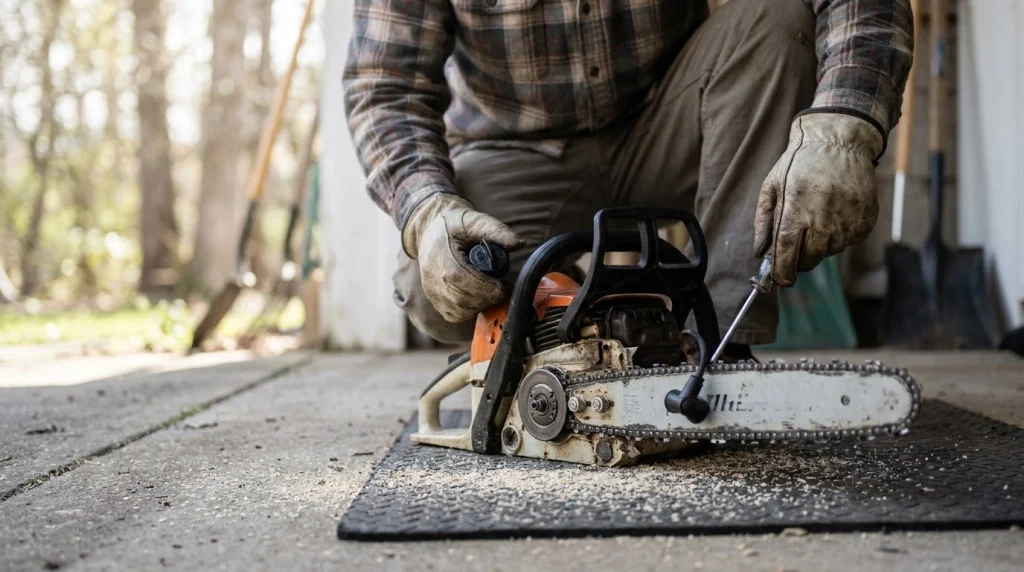
Inspect the chainsaw for fuel leaks, damaged components, loose connections, and cutting equipment problems before attempting to restart the engine.
A chainsaw can develop mechanical or safety problems while sitting unused. Starting it without inspecting these areas can create unnecessary risks.
- Check the fuel tank and cap for visible damage or leakage.
- Inspect accessible fuel hoses and connections.
- Check the condition and tension of the chain.
- Confirm that the chain brake operates correctly.
- Inspect the guide bar and chain oil reservoir.
- Remove accumulated dirt from accessible external surfaces.
- Check that the stop switch and starting controls operate normally.
Keep the engine off and disconnect the spark plug boot before carrying out maintenance that could cause accidental starting.
Reconnect the boot only when the chainsaw is ready for a safe starting attempt.
Warning
Leaking gasoline can ignite. Do not attempt to start a chainsaw with damaged fuel lines, a leaking tank, or spilled fuel until the problem has been resolved.
Check for Old Gasoline and Stale Fuel Mixture
Replacing stale gasoline is a sensible first step when a gas-powered chainsaw refuses to start after several months of storage.
Fuel quality affects how easily an engine starts and continues running. Gasoline stored inside the chainsaw can lose its suitability for normal operation.
How Does Old Gasoline Affect a Chainsaw?
Old gasoline can make a chainsaw difficult to start and contribute to deposits that restrict fuel delivery.
Even when the fuel tank contains gasoline, the engine may not receive a mixture suitable for reliable combustion.
Adding fresh gasoline to a tank containing deteriorated fuel does not remove the old fuel or existing contamination.
Signs of a Storage-Related Fuel Problem
Storage-related fuel problems may cause an engine to sputter, start briefly, or fail to respond to normal starting attempts.
- Gasoline remained inside the tank throughout storage.
- The fuel contains visible sediment or contamination.
- The engine briefly starts and then stops.
- The chainsaw requires repeated starting attempts.
- The engine worked normally before extended storage.
These symptoms suggest a possible fuel problem, but they do not identify the exact faulty component.
How to Replace Old Chainsaw Fuel
Replace old chainsaw fuel by safely removing the existing mixture and refilling the tank with fresh fuel approved for your engine.
- Allow the engine to cool completely.
- Move the chainsaw to a suitable outdoor work area.
- Drain the old gasoline into an approved fuel container.
- Inspect the tank for visible contamination.
- Prepare fresh fuel using the manufacturer’s specified mixture.
- Refill the tank and secure the fuel cap.
- Follow the recommended cold-start procedure.
Dispose of unwanted gasoline through an appropriate local hazardous waste collection service. Never pour gasoline onto the ground or into a drain.
Most conventional gasoline chainsaws require fuel mixed with suitable engine oil. Always use the ratio specified in your owner’s manual.
Inspect the Carburetor for Storage-Related Blockages
A clogged carburetor can prevent a chainsaw from starting after months of storage, even when the fuel tank contains fresh gasoline.
The carburetor controls the fuel and air mixture supplied to the engine. Small internal passages allow the correct amount of fuel to enter the combustion process.
Residue from deteriorated gasoline may interfere with these passages.
How Can You Identify a Possible Carburetor Problem?
A carburetor problem becomes more likely when fresh fuel and basic maintenance checks fail to restore normal engine operation.
Common symptoms include:
- The engine fires briefly but does not continue running.
- The chainsaw starts only with the choke engaged.
- The engine stalls when you attempt to accelerate.
- The chainsaw has a history of extended storage with fuel inside.
- Basic fuel and ignition checks do not resolve the problem.
Similar symptoms can also result from restricted fuel lines, blocked filters, or air leaks. Avoid diagnosing the carburetor from a single symptom.
Does the Carburetor Need Cleaning or Replacement?
A contaminated carburetor may need cleaning, while damaged internal components may require rebuilding or replacement.
Carburetor diaphragms are flexible internal parts that help manage fuel delivery. Aging or damaged diaphragms can interfere with fuel movement.
Professional inspection can determine whether cleaning, rebuilding, or replacement is appropriate for your chainsaw.
Do not randomly adjust carburetor screws to compensate for a fuel blockage. Incorrect settings may create additional running problems or engine damage.
Check the Fuel Filter, Fuel Lines, and Primer Bulb
The fuel delivery system can prevent a stored chainsaw from starting when filters become restricted, hoses develop leaks, or the primer system fails.
Fresh gasoline cannot solve a starting problem if fuel cannot travel from the tank to the engine.
Inspect the Fuel Filter
A restricted fuel filter can reduce the amount of gasoline reaching the carburetor.
The fuel filter normally sits inside the fuel tank and helps keep debris out of the fuel system.
Inspect or replace the filter according to the manufacturer’s maintenance instructions. Use a replacement compatible with your chainsaw model.
Inspect the Fuel Lines
Damaged fuel lines can interrupt fuel delivery or allow unwanted air into the fuel system.
Older hoses may become brittle, cracked, or loose around their connections. Inspect accessible sections without pulling or damaging the hoses.
Replace damaged fuel lines before attempting to operate the chainsaw.
Check the Primer or Purge Bulb
A damaged primer or purge bulb may interfere with the fuel system on chainsaws equipped with this component.
Inspect the bulb for cracking, leakage, or visible deterioration. A bulb that does not respond normally may indicate a problem elsewhere in the fuel system.
Not every chainsaw uses a primer bulb. Follow the starting instructions for your particular model.
The Husqvarna chainsaw troubleshooting guide identifies restricted filters, deteriorated hoses, and carburetor faults as areas to inspect during fuel system diagnosis.
Inspect the Spark Plug and Ignition System
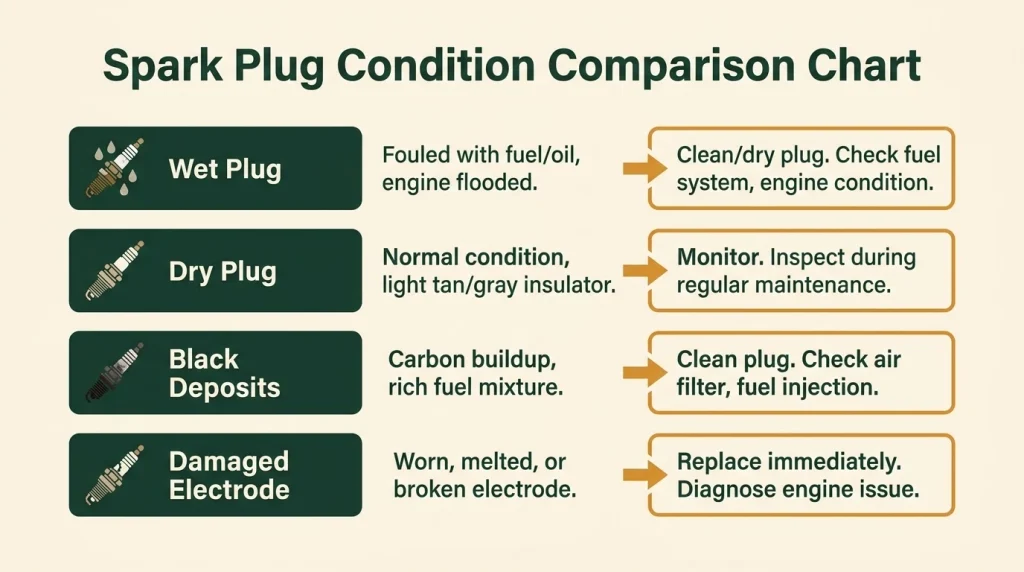
A damaged, contaminated, or incorrectly fitted spark plug can prevent a chainsaw from starting after storage.
The spark plug ignites the compressed fuel and air mixture inside the engine. An ignition fault can prevent combustion even when the fuel system works correctly.
What Does the Spark Plug Condition Tell You?
The appearance of a spark plug can provide clues about fuel delivery, flooding, and combustion problems.
The following table explains how different spark plug conditions may relate to starting difficulties.
| Spark Plug Condition | Possible Cause | Next Action |
|---|---|---|
| Wet with fuel | Flooding or ignition fault | Follow the flooding procedure and inspect ignition. |
| Dry after starting attempts | Possible fuel delivery restriction | Inspect the fuel system. |
| Black deposits | Fouling or incomplete combustion | Inspect or replace the plug as specified. |
| Damaged electrode or insulator | Physical damage or wear | Replace with an approved spark plug. |
Spark plug appearance provides diagnostic clues, but additional testing may be necessary to confirm the underlying fault.
What If a New Spark Plug Does Not Help?
A chainsaw that still fails to start with a suitable replacement spark plug may have another ignition or engine problem.
Inspect the spark plug boot for a loose connection or visible damage. Make sure the stop switch is set to the correct starting position.
An ignition coil, which supplies electrical energy for the spark, may require professional testing if basic checks do not solve the problem.
Avoid creating exposed sparks near gasoline or fuel vapors. Use the diagnostic procedure specified by the manufacturer.
Check the Air Filter and Exhaust System
A restricted air filter or exhaust system can interfere with the airflow needed for a chainsaw engine to start and run.
Storage does not remove dirt or sawdust collected during previous use. Contamination may remain inside the air filter or exhaust system until maintenance is performed.
Inspect the Air Filter
A dirty air filter can restrict the air entering the engine and interfere with the fuel and air mixture.
Remove the filter according to the owner’s manual. Check for packed sawdust, dirt, oil contamination, and physical damage.
Use the cleaning method recommended for the filter material. Replace the filter if it is damaged or cannot be cleaned adequately.
Do not operate the chainsaw without its required air filter.
Inspect the Spark Arrestor Screen
A blocked spark arrestor screen can restrict exhaust flow and contribute to poor engine operation.
The spark arrestor is a screen inside the exhaust system designed to reduce the escape of hot particles.
Inspect the screen only when the engine and muffler are completely cool. Clean or replace it according to the manufacturer’s instructions.
Do not permanently remove the spark arrestor to improve engine performance.
How to Start a Chainsaw After Long-Term Storage
Restart a stored chainsaw by completing the necessary inspections, supplying fresh fuel, and following the cold-start sequence specified for your model.
Starting controls differ between chainsaws. The following sequence provides a general diagnostic framework rather than a replacement for your owner’s manual.
Step 1
Complete the safety inspection
Check for fuel leaks, damaged parts, correct chain tension, and proper operation of the chain brake.
Step 2
Add fresh fuel and chain oil
Use the specified fuel mixture and fill the separate bar and chain oil reservoir.
Step 3
Prepare the starting controls
Engage the chain brake and set the stop switch, choke, and other controls according to the manual.
Step 4
Attempt a controlled start
Secure the chainsaw using the approved starting position and follow the model-specific starter procedure.
Step 5
Observe the engine response
Note whether the engine fires, starts briefly, stalls, or fails to respond. Use these symptoms to guide further diagnosis.
If the engine fires briefly during a cold start, move the choke to the position specified by your manufacturer before continuing.
What If the Chainsaw Engine Becomes Flooded?
A flooded chainsaw contains excess fuel in the combustion chamber, which can prevent normal ignition.
Repeated starting attempts with incorrect choke settings may create this condition. A strong fuel smell or wet spark plug can indicate possible flooding.
Stop repeated starting attempts and follow the manufacturer’s flooding recovery instructions before trying again.
Diagnose Starting Problems by Engine Symptoms
The way a chainsaw responds to a starting attempt can help identify which system deserves further inspection.
Use the following table to narrow down possible causes without replacing unrelated components.
| Starting Symptom | Possible Problem | What to Check |
|---|---|---|
| Engine turns but does not fire | Fuel or ignition fault | Fuel quality, spark plug, and stop switch |
| Starts and immediately stops | Restricted fuel delivery | Fuel filter, hoses, and carburetor |
| Runs only with choke engaged | Insufficient fuel or unwanted air | Fuel passages and possible air leaks |
| Strong gasoline smell | Flooding or fuel leakage | Stop starting and identify the cause. |
| Starter rope will not move | Starter or mechanical problem | Stop pulling and arrange inspection. |
Use symptoms to prioritize inspections rather than treating them as proof that a particular component has failed.
Check for Compression and Mechanical Problems
Insufficient engine compression or internal mechanical damage can prevent a chainsaw from starting after other systems have been checked.
Compression is the pressure created inside the cylinder as the piston compresses the fuel and air mixture.
Worn piston rings, cylinder damage, and other internal faults may prevent the engine from generating enough compression for normal combustion.
Extended storage alone does not establish that the engine has lost compression. Previous engine damage may become apparent when you attempt to restart the chainsaw.
When Should You Stop Troubleshooting at Home?
Professional chainsaw service is appropriate when basic maintenance fails or the engine displays signs of mechanical damage.
- The starter rope becomes unusually difficult to move.
- The engine produces abnormal mechanical sounds.
- Fuel continues leaking after basic inspection.
- The chainsaw fails to start despite fresh fuel and ignition checks.
- The engine requires internal carburetor or compression testing.
A service technician can inspect compression, fuel delivery, ignition performance, and internal engine condition before recommending repairs.
Do not force a stuck starter rope or attempt to overcome mechanical resistance through repeated pulling.
How to Prevent Starting Problems During Future Storage
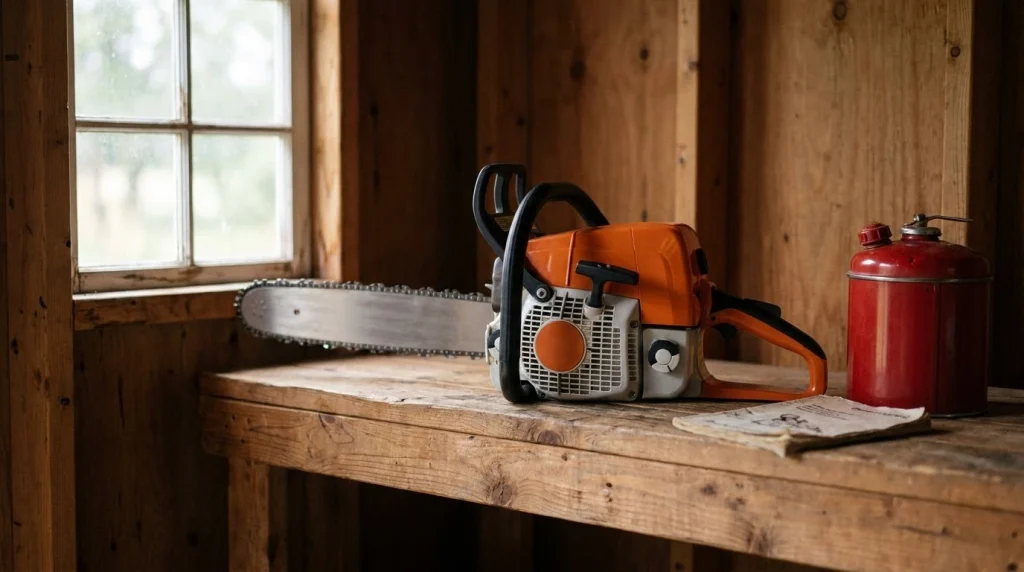
Proper fuel management and routine maintenance can reduce the likelihood of chainsaw starting problems after extended storage.
Prepare the chainsaw before putting it away rather than waiting until the next time you need to use it.
- Follow the manufacturer’s long-term fuel storage instructions.
- Clean the air filter and accessible external surfaces.
- Inspect the spark plug and replace it when required.
- Remove accumulated sawdust from the guide bar area.
- Maintain the chain and cutting equipment.
- Store the chainsaw in a suitable dry and secure location.
- Keep the owner’s manual available for future maintenance.
Some manufacturers recommend emptying the fuel system before extended storage. Others may provide specific instructions for approved storage fuels.
For example, STIHL’s chainsaw maintenance guidance recommends dry storage for extended periods and preparing the air filter, spark plug, and cutting equipment before storage.
Always follow the storage instructions for your chainsaw model and fuel type.
Tip
Keep a maintenance record showing which filters, spark plugs, and fuel system components were serviced before storage. Use it to prioritize inspections when restarting your chainsaw.
A compatible replacement spark plug can be useful when inspection reveals electrode damage or fouling that cannot be corrected through approved maintenance.
Chainsaw Spark Plug
A compatible replacement spark plug can help restore ignition when the original plug is worn or damaged.
Frequently Asked Questions
Can a Chainsaw Go Bad From Sitting Unused?
A chainsaw can develop fuel system deterioration and other maintenance problems while sitting unused, but storage does not automatically ruin the engine. Its condition depends on preparation, storage conditions, fuel quality, and previous maintenance. A properly maintained chainsaw may only need routine checks before returning to service.
Can I Use Starting Fluid on a Stored Chainsaw?
Starting fluid should not be used on a stored chainsaw unless the manufacturer specifically approves that product and starting method. Conventional two-stroke chainsaws rely on lubricated fuel mixtures for engine operation. Use approved fuel and investigate the underlying starting problem instead of relying on unapproved starting aids.
Will Fuel Stabilizer Make Old Gasoline Usable Again?
Fuel stabilizer is intended to help preserve suitable fuel during storage rather than restore gasoline that has already deteriorated. Adding stabilizer cannot reliably reverse existing contamination or remove deposits from restricted fuel passages. Replace unsuitable fuel and follow the manufacturer’s recommendations for future storage.
Can an Empty Chain Oil Tank Prevent Starting?
An empty bar and chain oil reservoir does not normally prevent a conventional gasoline chainsaw engine from starting. The reservoir supplies lubrication to the cutting equipment rather than the engine’s combustion system. However, operating without adequate chain oil can damage the guide bar and chain.
Should I Replace Every Filter After Long Storage?
Chainsaw filters do not automatically require replacement simply because the equipment has remained unused for an extended period. Inspect each filter for contamination, damage, and restrictions according to the manufacturer’s maintenance schedule. Replace filters that cannot be restored through approved cleaning or servicing methods.
Can Moisture in Stored Fuel Cause Starting Problems?
Moisture contamination can interfere with gasoline quality and make a stored chainsaw difficult to start or keep running. Fuel containing visible water or other contamination should not be used. Remove unsuitable gasoline safely and refill the chainsaw with the correct fresh mixture before further diagnosis.
Is an Old Chainsaw Worth Repairing After Storage?
A chainsaw that refuses to start after storage may be worth repairing when the fault involves routine maintenance or accessible fuel system components. The decision depends on the engine’s condition, repair requirements, replacement part availability, and overall safety. Obtain a repair assessment before replacing a chainsaw with suspected internal damage.
Conclusion
If your chainsaw won’t start after sitting for months, begin with fresh fuel, correct starting controls, and basic maintenance inspections. If the engine remains unresponsive after these checks, arrange professional fuel system, ignition, and compression testing before replacing major components.

I write about chainsaw maintenance, troubleshooting, replacement parts, safety, and buying guides. My goal is to make chainsaw information simple, practical, and helpful for homeowners and professionals.